











KM-banner1.jpg
KM-banner9.jpg
KM-banner10.jpg
KM-banner11.jpg
KM-banner12.jpg
KM-banner13.jpg
KM-banner14.jpg
KM-banner15.jpg
KM-banner16.jpg
KM-banner25.jpg
KM-banner24.jpg
KM-banner23.jpg
KM-banner22.jpg
KM-banner21.jpg
KM-banner20.jpg
KM-banner2.jpg
KM-banner19.jpg
KM-banner18.jpg
KM-banner17.jpg
KM-banner26.jpg
KM-banner27.jpg
KM-banner28.jpg
KM-banner29.jpg
KM-banner3.jpg
KM-banner30.jpg
KM-banner31.jpg
KM-banner4.jpg
KM-banner5.jpg
KM-banner6.jpg
KM-banner8.jpg
KM-banner7.jpg
Shadow

The Senior Sangha Lunch

A distinct feature of each Kagyu Monlam is the formal daily lunch in Tergar shrine room specially prepared and offered to fully ordained Sangha, those who hold the vows of gelong [bhikshu] or gelongma [bhikshuni]. All gelong and gelongma are expected to attend.

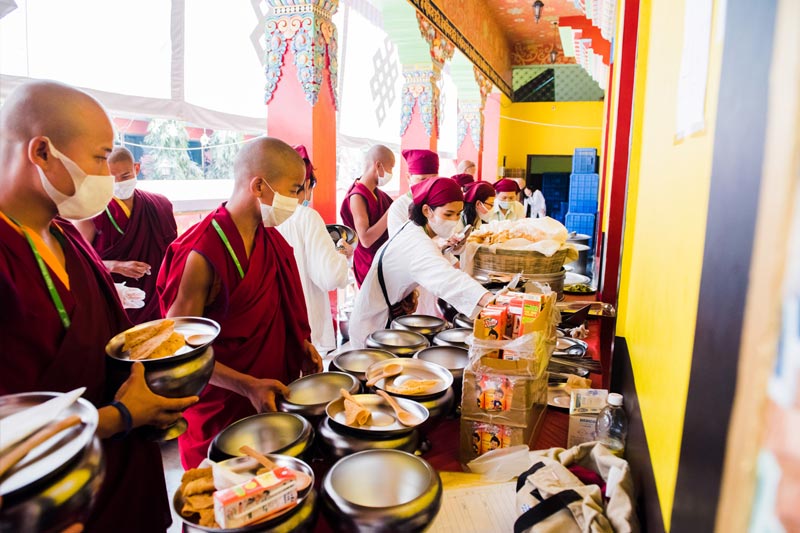
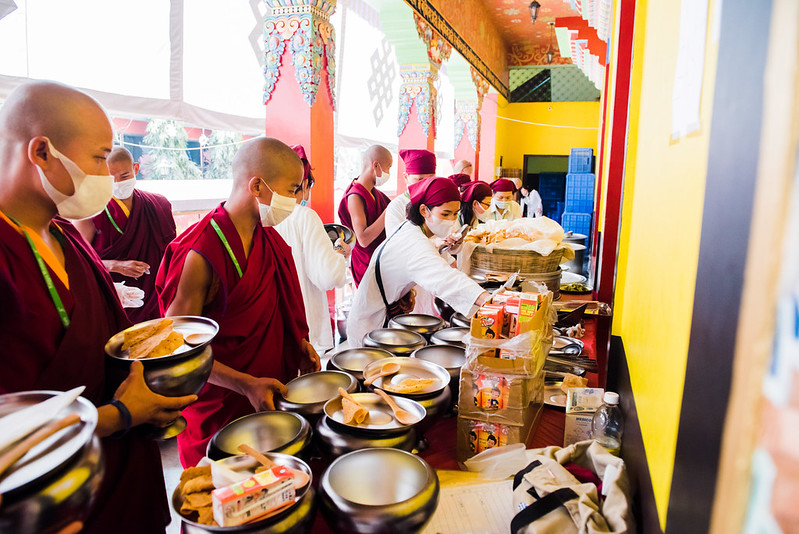
In the Tergar Shrine room, rows of carpet-covered cushions awaited with places already laid when the 300 monks and 11 nuns arrived directly from the morning’s prayer session. Each place setting had a large metal alms bowl, a small plate holding two papadums, a tea bowl, and a small carton of fruit juice.

Having put on their yellow chögü, the monks and nuns filed into the shrine room silently, and took their seats according to seniority. The eleven nuns sat in single file on the far right-hand side of the shrine room. The most senior monks occupied seats to both sides of the central aisle with Rinpoches and senior khenpos seated at small tables at the head of the assembly.

Immediately the servers set to work: laypeople dressed in Mahayana Sojong white and young monks traversed the rows of seated Sangha, distributing rice, dal and vegetables from stainless steel buckets, as much as anyone wanted. Rice was served first and each monk and nun carefully put aside some of this rice as an offering, pressing it with their right hand into a shape of five sections. After reciting The Sutra of Recollecting the Three Jewels, lunch began. The Sangha ate mindfully in silence.

As they ate, Khenpo Kelsang Nyima from Rumtek Monastery delivered a short address, reminding them that they should remember the kindness of the sponsors and of their special responsibility during the Monlam to set an example and uphold the Vinaya codes.

The staccato beating of a wooden bell signalled the end of lunch at 11.30am. In unison, the Sangha laid down their spoons and placed the lids on their alms bowls. While they recited the Heart Sutra, young monks collected the rice offerings and took them outside to be offered to the Queen of Pretas and her 500 hungry children. This custom is based on a story found in the Vinaya Pitaka. The rice offerings are a substitute for the human babies that the demoness used to kill in order to feed the 500.

Dedication prayers and prayers for auspiciousness concluded the meal. Maintaining their dignified silence, the monks and nuns took off their chögü, folded them carefully and placed them over their left shoulders, then filed outside. Lunch was finished and their daily fast had begun. They would not eat again until after daybreak the following day.
20170213AM_Sangha Lunch

The Opening Session of the 34th Kagyu Monlam Chenmo in Bodhgaya

Thriving Aspirations for the World come from a Peaceful Mind

Just before the break of dawn, His Holiness the 17th Gyalwang Karmapa led the assembly of many thousands into the seven days of virtue and pure aspirations of the 34th Kagyu Monlam.

With a wish to re-establish ancient connections, His Holiness has instated Sanskrit chants at the beginning of the first session. The impressive Sanskrit sounds resounded in harmony through the dark of the Bodhgaya morning, reminiscent of Buddhism’s origins.

“This is the Vajra Seat, the essence of enlightenment,” the Karmapa said and initiated this Monlam by imparting the Sojong vows followed by advice on how to make our aspirations truly fruitful.

He inspired those gathered there with his advice on the need to bring peace to one’s own mind in order to bring peace to the world. You need to have peace in your mind, endowed with love and compassion, to be able to make aspirations from the depths of your heart,”; he counselled and added that, at least for these seven days, we need to be our best selves.

He talked about the people he met who had come from Tibet. Though ordinary people, they wished for peace in the world wholly and honestly, from the bottom of their hearts.

“It is very rare to find that type of person. When I see people like that, I think: maybe there is still hope for the world, for sentient beings.”

He laid bare the perils of convincing oneself of being a bodhisattva but acting out of selfishness. It makes one’s mind fixed and ill-suited for change. “It is really dangerous to pretend to be a protector of beings,” he warned.

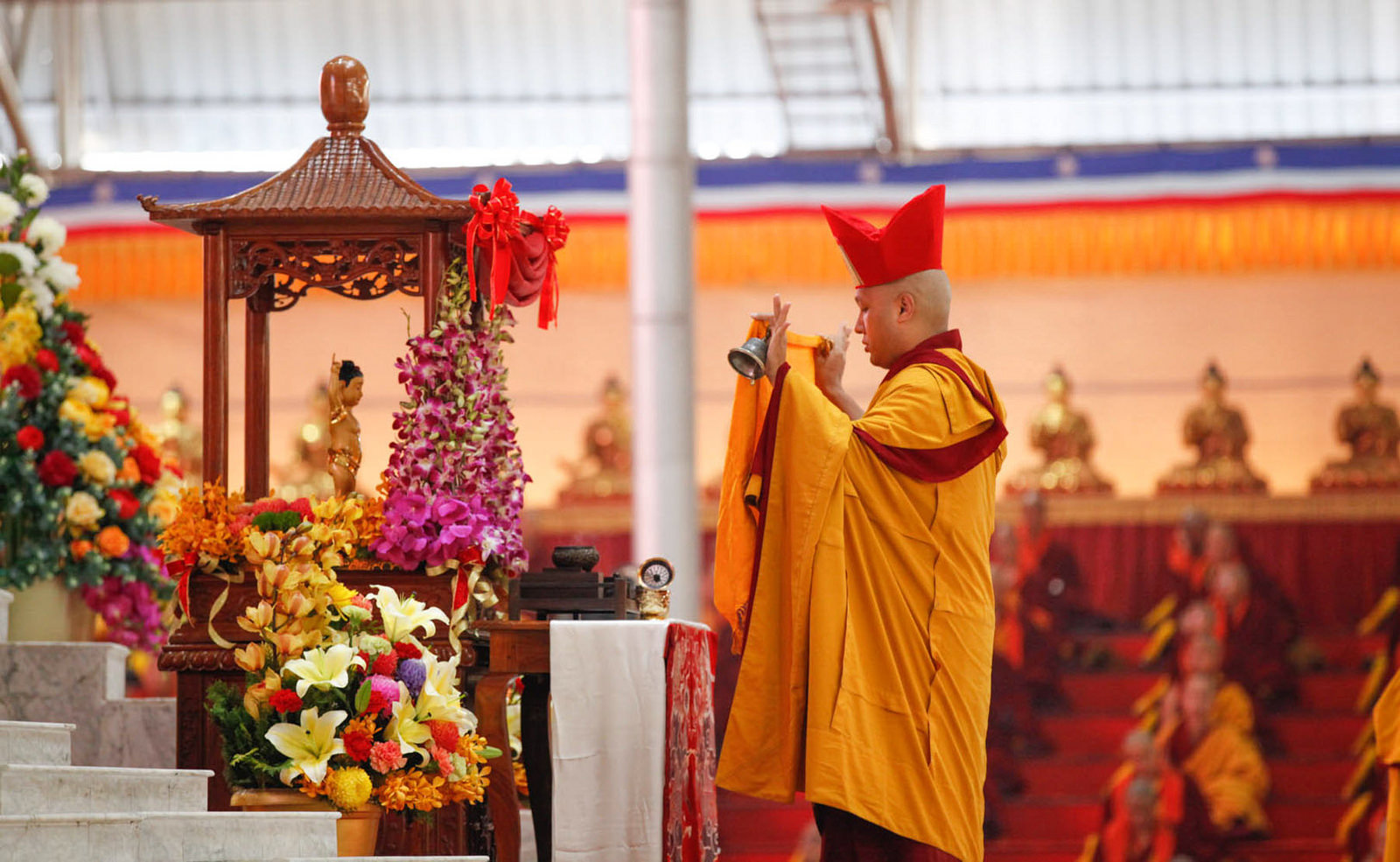
He personally assumed the role of chöpon for the opening rituals of the first session. He walked through a royal court-like setting of Khenpos, Rinpoches and Tulkus, flanked by hundreds of gelong and a handful of gelongma on the wings of the stage, up the steps to a small, elegant wooden mandala where a statue of Buddha as an infant was placed.

After the gathering chanted invitations to the Sugatas, the Gyalwang Karmapa performed the rites of washing, drying, and offering clothes and anointment, then completed the ritual with prostrations.

During this time H.E. Goshir Gyaltsap Rinpoche was absent; he had gone to simultaneously perform a special offering at the Mahabodhi Temple.

The assembly chanted Praises from the Sutra of Ornamental Appearance, repeating the words: “I prostrate to you who rely on nothing”.

In a short teaching the Karmapa gave on The Sutra in Three Sections, the essential practice for restoring the Bodhisattva Vows, he recounted an old anecdote. In ancient India, this sutra was recited by those who committed great misdeeds. But Tibetans recited it daily. When certain Indian masters arrived in Tibet, they noted humorously that Tibetans must have transgressed a lot.

But, the Karmapa explained, in the billion-fold universe, our misdeeds are countless. Among all of them, the greatest are the violations of the three vows which are repaired through reading this sutra.

The first section is confession. He advised us to read this while thinking we are in the presence of the 35 Buddhas, taking them as the power of support, offering prostrations and confessing to them all of our misdeeds from beginningless time. The second section focuses on rejoicing. It is said that rejoicing and meditating on the merit of all buddhas, bodhisattvas, pratyekabuddhas and shravakas, bring an incalculable amount of merit. It is one of the easiest and most powerful ways of gathering merit. Dedication for all beings to attain enlightenment, the topic of the third section, is paramount for preventing the loss of virtue due to anger or regretting having done a virtuous deed.

Immersed in this sublime atmosphere, in the grandeur of the Monlam Pavilion, over 10 000 people from more than 50 countries chanted in harmony for peace in the world, and the 34th Kagyu Monlam was opened, leaving us nothing else to do but rejoice.

20170213AM_Monlam Day One Report on first session,sojong,HHGKs opening remarks Teaching on The Sutra in Three Sections

Special Features of the 34th Kagyu Monlam: The Welcome Gate


Monlam Pavilion, Bodhgaya

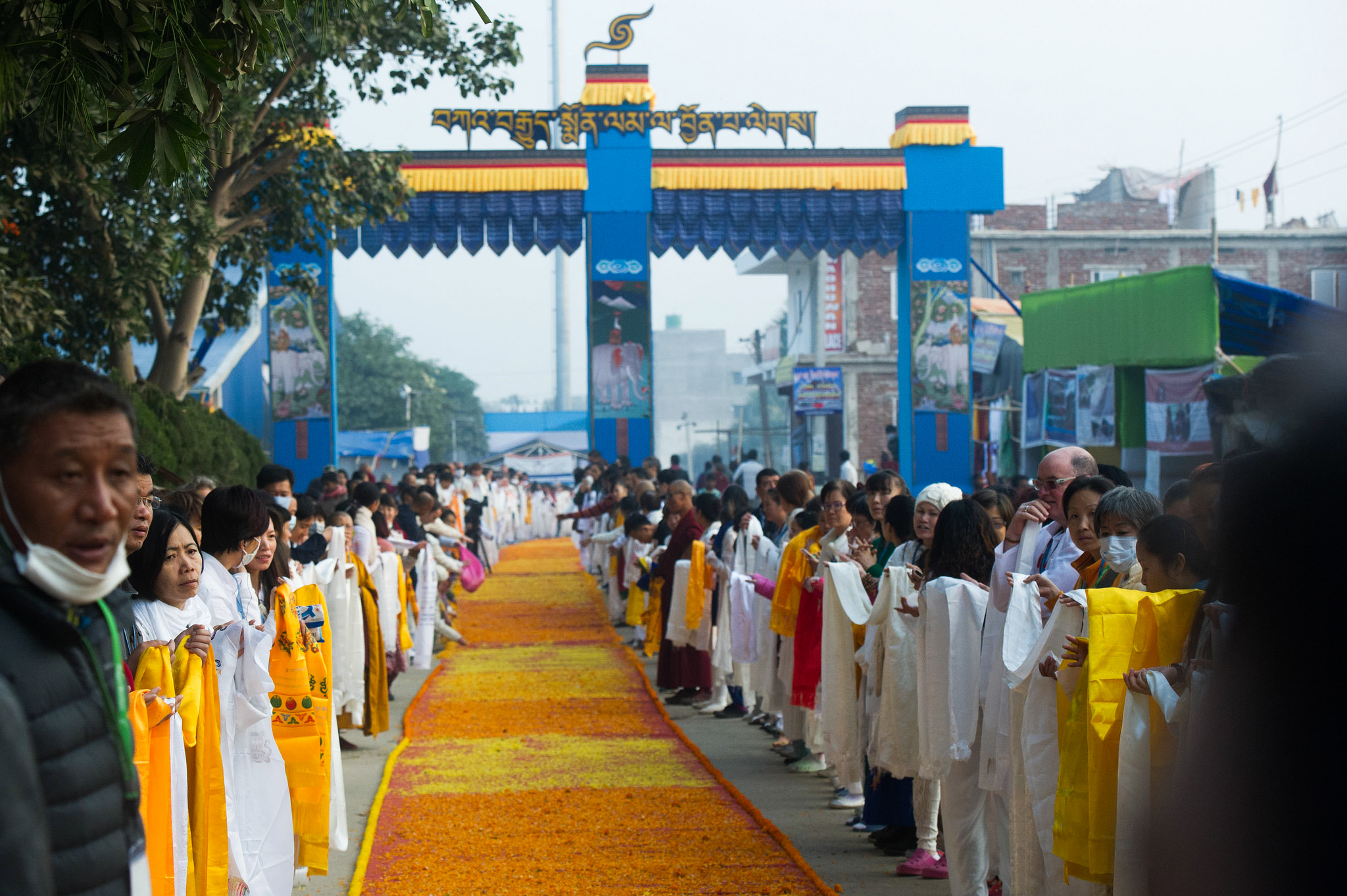
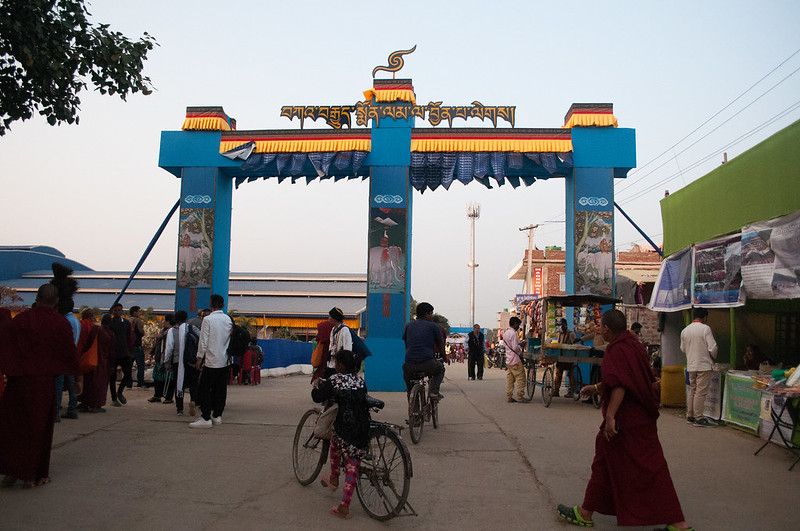
All those approaching the Kagyu Monlam Pavillion along the road must first pass under the welcome gate. This year once more it is a simple structure of bamboo covered by cloth, bearing the message “Welcome to the Kagyu Monlam” and the Kagyu Monlam symbol. However, this year’s  gate is painted blue, a colour chosen personally by the Karmapa, and each of the three columns  is decorated front and back by a colourful painted scroll of the thunpa punshi. The story of these Four Harmonious Friends—the bird, the hare, the monkey and the elephant—is found in the Vinaya Pitaka and is used as an example of the benefits of collaboration and unselfishness. One version explains how the huge tree was the result of the concerted effort of these four: the bird planted the seed, the hare watered it, the monkey fertilised it, and the elephant protected it – till it grew into a tall, strong tree heavy with fruit. Forming a pyramid the friends were able to reach the best fruit, and, sharing it between themselves, there was plenty for everyone to eat. Another version tells how at first there was just a bird. The bird would scratch around the sapling and find food. But the bird was unable to fly so as the sapling grew taller, he could no longer find enough to eat. Then the hare arrived and offered to help him. By standing on the hare’s back, the bird could reach food. As the tree grew higher, more help was needed and first a monkey and then an elephant joined to assist them.

The story demonstrates the fundamental interdependence of all living things which inhabit this earth and teaches that if we work in harmony and prioritise the needs of others above our own we will succeed. In benefitting others we will also benefit ourselves because when we work for the happiness of others, we ourselves find happiness. It is a fitting message for those attending the International Kagyu Monlam, an event which brings together people from more than 50 countries and many different races and cultures.

As people pass under the gate, they are blessed by the mantra on the prayer flags. Traditionally, this particular mantra has the power to purify the negative karma of 1000 lifetimes each time they pass under it!

20170220_Welcome gate

Special Features of the 34th Kagyu Monlam: The Garchen and the New Kitchen

The Garchen

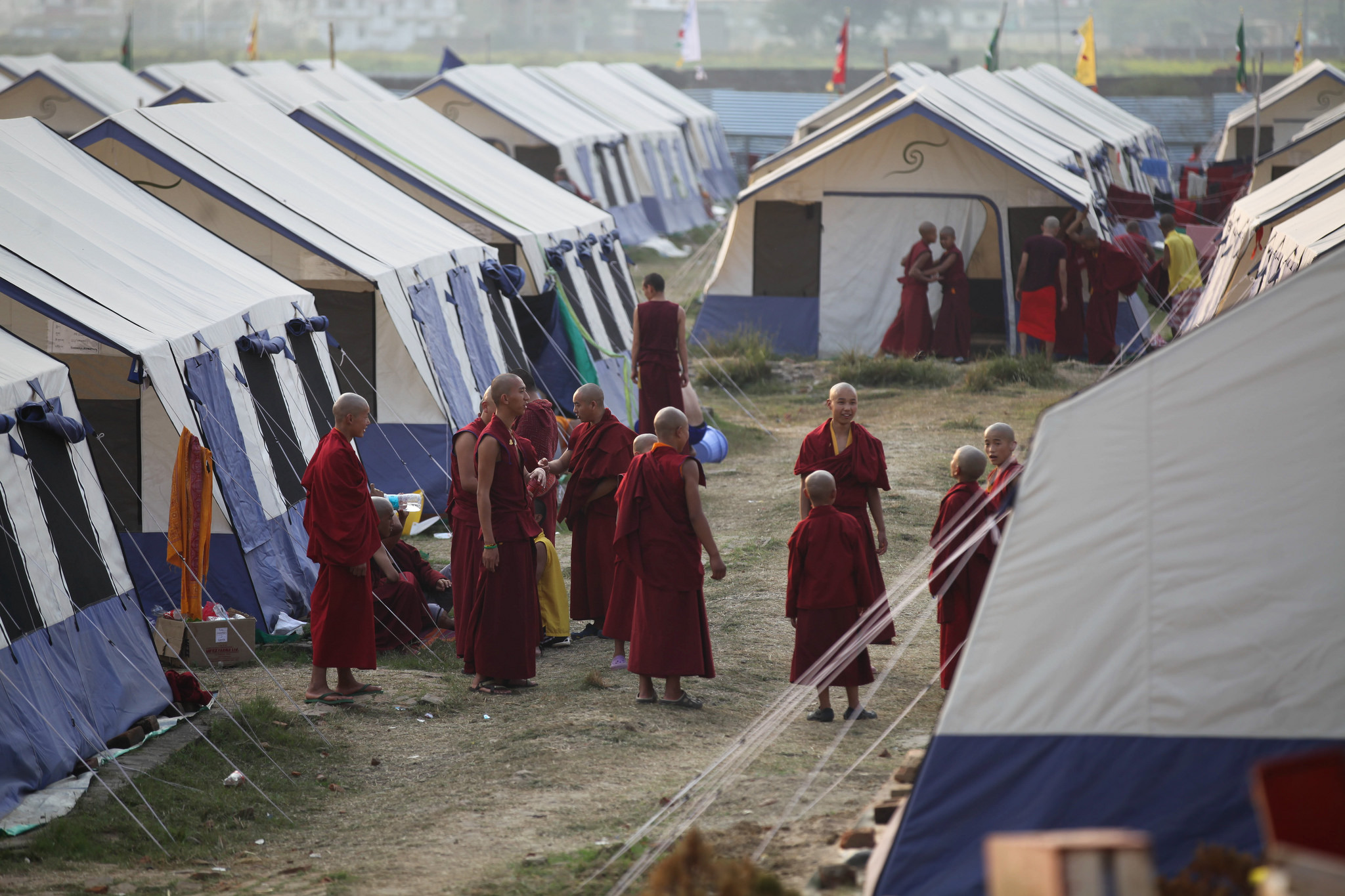
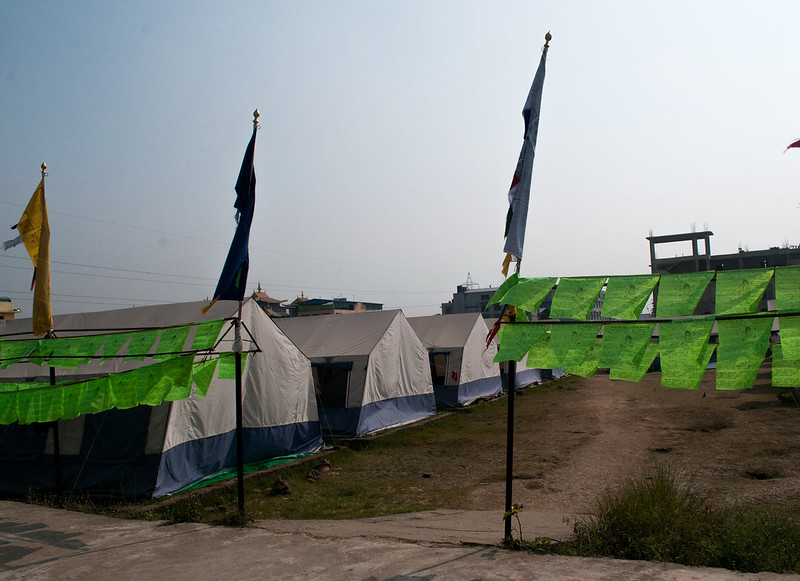
The Garchen has expanded to 260 tents, erected in December in order to accommodate the thousands of monks from South India who stayed in the encampment during the Kalachakra Empowerment. Eighteen of the tents have been set aside for nuns. In addition, this year, His Holiness has reinstated the Garchen Riding Hat. This special hat was worn by Lamas and Khenpos in the Great Encampment in Tibet during the time of the 7th Karmapa Choedrak Gyatso. His Holiness designed the hats and had them made specially. He has gifted them personally to members of Tsurphu Labrang staff, to monks and nuns in the Kagyu Monlam Working Team, and to the Cotton-Clad retreat lamas who are taking part in the Six Yogas of Naropa sessions each evening.

The New Kitchen and Dining Facility

Though not yet completed, this three-storey addition to the Monlam facilities has been fully operational since the Kalachakra Empowerment in Bodhgaya. During that time, the kitchen provided food for thousands of monks and laypeople who were staying in the Garchen encampment or in specially constructed sleeping areas within the Monlam Pavillion.

Now, during the 34th Monlam, it is continuing to provide three meals a day for thousands of monks, nuns and laypeople. Food is served to everyone without question. The top floor will be used in future by Friends of Kagyu Monlam Members and the middle floor is reserved for Rinpoches, VIPs and high lamas.

20170220_Garchen

Special Features of the 34th Kagyu Monlam: The Stage

Monlam Pavilion

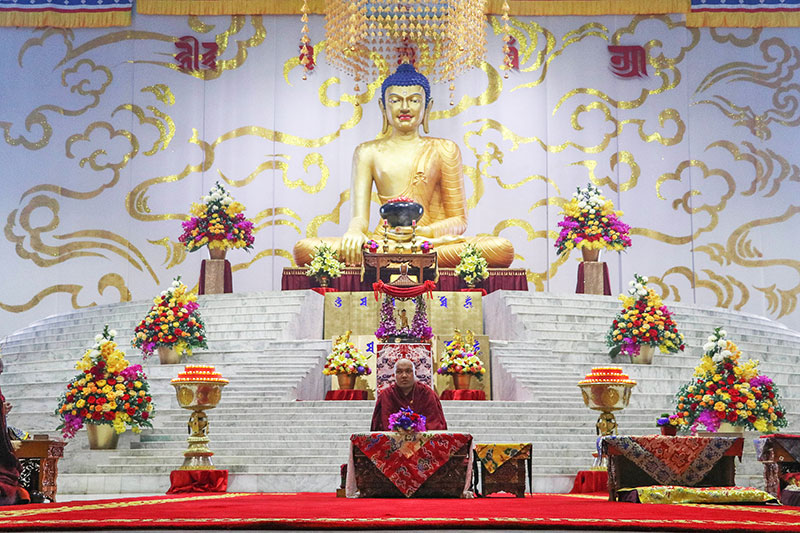
For those who were used to seeing the Buddha flanked by the great tormas, Mount Kailash rising behind, and masses of flowers arranged on all tiers of the stage, this year’s design must have come as something of a surprise.

The stage and its backdrop are a magnificent fusion of classical Chinese elements and the uncluttered clear-cut lines of modern design. The arrangement is a co-production between His Holiness the Karmapa and a professional stage designer from Shanghai, who first met His Holiness at Tsurphu Monastery in Tibet in 1999.

In an interview, the stage designer explained how, traditionally, Tibetan settings use rich, strong colours, are very elaborate, very expressive and powerful. They are stunning and have great visual impact. When the Karmapa first suggested that the two of them should collaborate on designing the stage for the 34th Kagyu Monlam, the designer focused on how to capture in a new way the grandeur and solemnity of the pujas offered during the Monlam. He wanted to emphasise those particular aspects, and, so the backdrop was originally designed in very stark black and white. Later it was changed to gold and white.

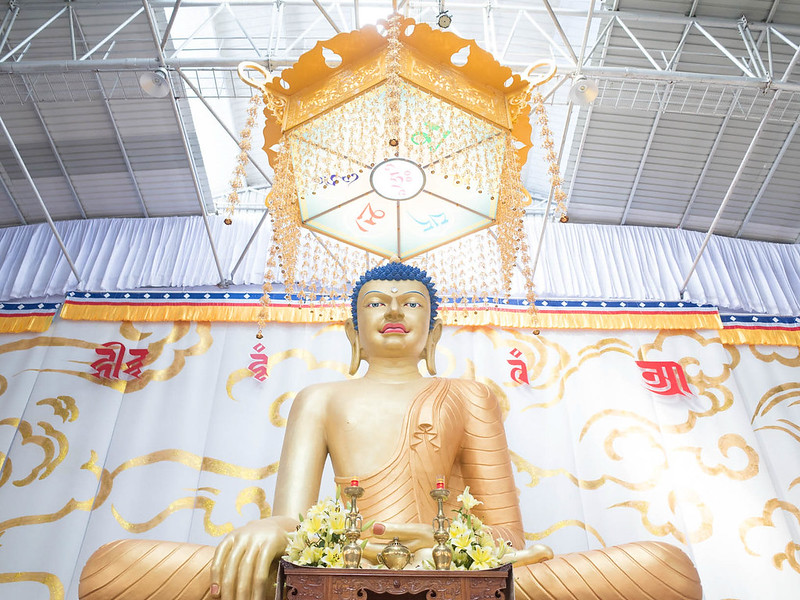
The backdrop is made of heavy white canvas in order to resonate with the colour of the marble flooring of the stage and its tiers, and is covered in a pattern of highly stylised, auspicious golden clouds, painted according to those found in classical Chinese texts. These clouds symbolise brightness, vastness and unhurriedness, and are intended to reflect the qualities of Lord Buddha. The motif is continued into each corner of the stage, either side of the huge screens, and a Tibetan-style frieze, unifies the whole.

The seed syllables of the five Buddha families hang in front of the backdrop, in accordance with special instructions from His Holiness. The colour red was chosen for them because it creates a focal point for our attention and also uplifts the spirit. [After the Monlam, during the Gutor, the backdrop will be changed into one which is mainly dark indigo with a drawing of the fire mudra which symbolises Mahakala.]

The tormas have been moved down from their previous position where they flanked the Buddha on to the main stage. This clears the area around the Buddha image, creating an additional sense of spaciousness and open-ness, but also brings more focus onto the tormas themselves.

Visual distractions have been reduced and flower displays kept to a minimum.
The tiers on the wings, where the gelong and gelongma sit, have been covered in red carpet and the risers have been painted red; changes intended to create an holistic harmony.

Above the Buddha, suspended from the girders, as if floating in mid-air, is a huge intricately designed chhatra or parasol. An ancient Indian symbol of kingship, it is depicted above the heads of Indian royalty, Hindu deities, Lord Buddha and the bodhisattvas. The chhatra is in an ornate Chinese style and made from gilded copper. Inside, directly above the Buddha’s head, is a mandala of the Mani prayer, Om Mani Padme Hum, the sacred mantra of Avalokiteshvara.

20170220_Backdrop