In the beginning, the Karmapa was invited to speak, and after extending a warm welcome to everyone, he spoke about the purpose of the Kagyu Monlam.
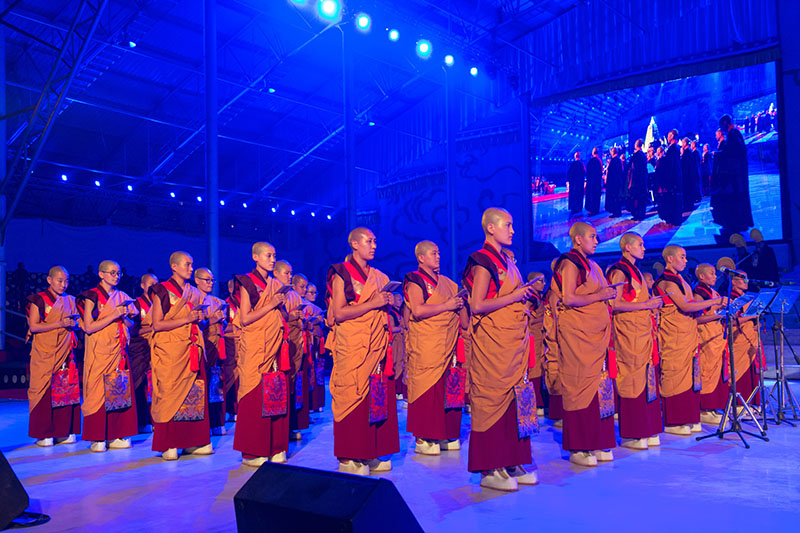
The Marme Monlam began with the practice of Avalokiteshvara known as Benefitting Beings Throughout Space. The nuns from Drupde Palmo Chökyi Dingkhang Nunnery in Bhutan were joined by monks from the Vajra Vidya Institute to perform traditional chanting that shifted into a lovely western harmony.
Afterward, Mr. Zheng Yong Chen on the suano (resembling a simple, straight trumpet) and Ms. He Yi Jie on the mouth organ played a traditional Taiwanese melody entitled, The Hundred Birds and the Phoenix.
Li Kong Yuan from Taiwan, composed the song, Flowing Water, for the zither, a stringed musical instrument, placed and played horizontally.
The well-known Bhutanese singers, Mr. Karma Phunstok and Ms. Chimi Wangmo, performed a new duet composed especially for the Marme Monlam entitled, A Song Dedicated to the Karmapa.
Next two Mongolian artists performed a song that touched on the relationship between humans and animals. As Mrs. Khongor Zul sang in a piercing, high voice, Mr. Munkhzaya played the Mongolian horse-head fiddle.
The well-known composer/performer Nitin Sawhney was joined by special guests Aref Durvesh on tabla, Ashwin Srivasen on Bansuri flute, and Kara Marni, on vocals as they performed two songs, Sunset and the famous River Pulse.
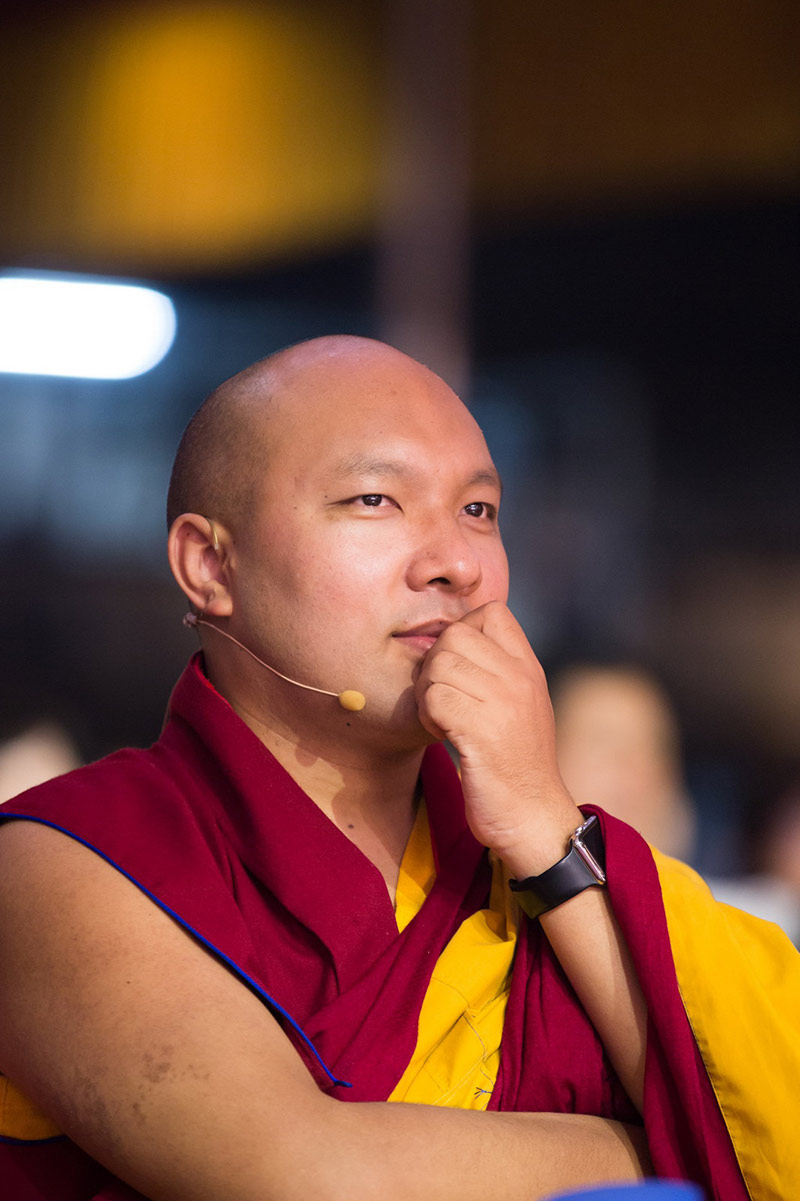
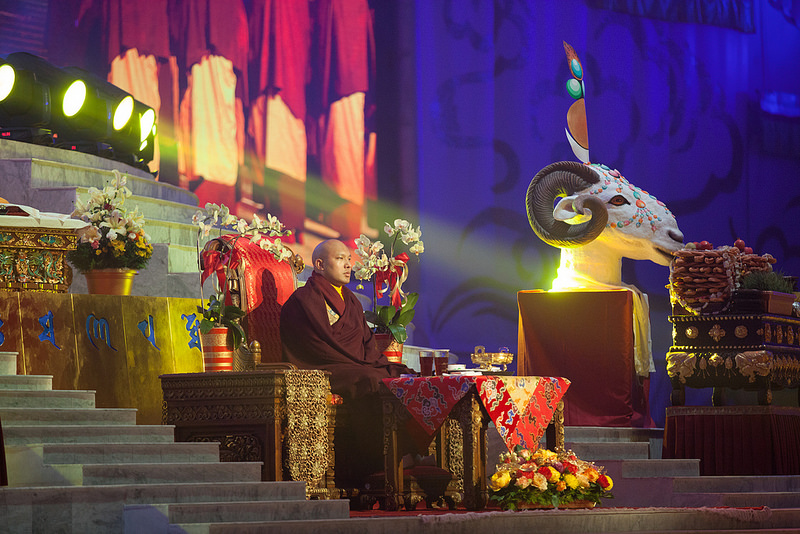
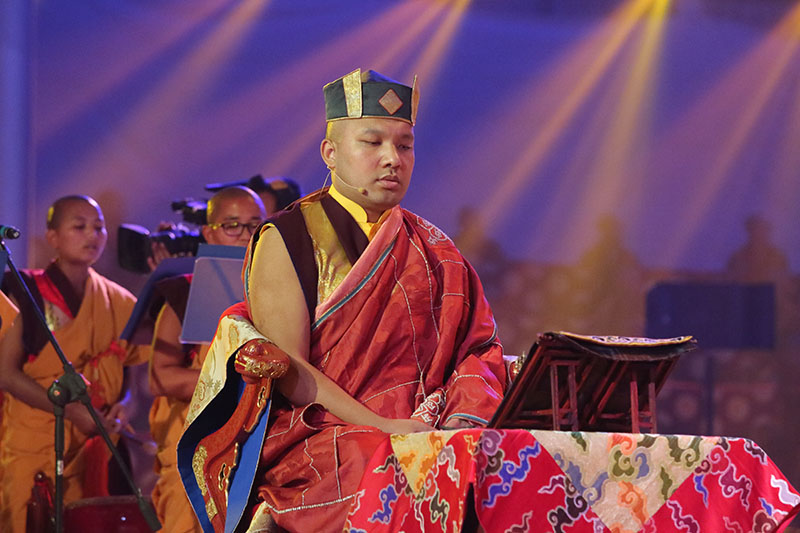
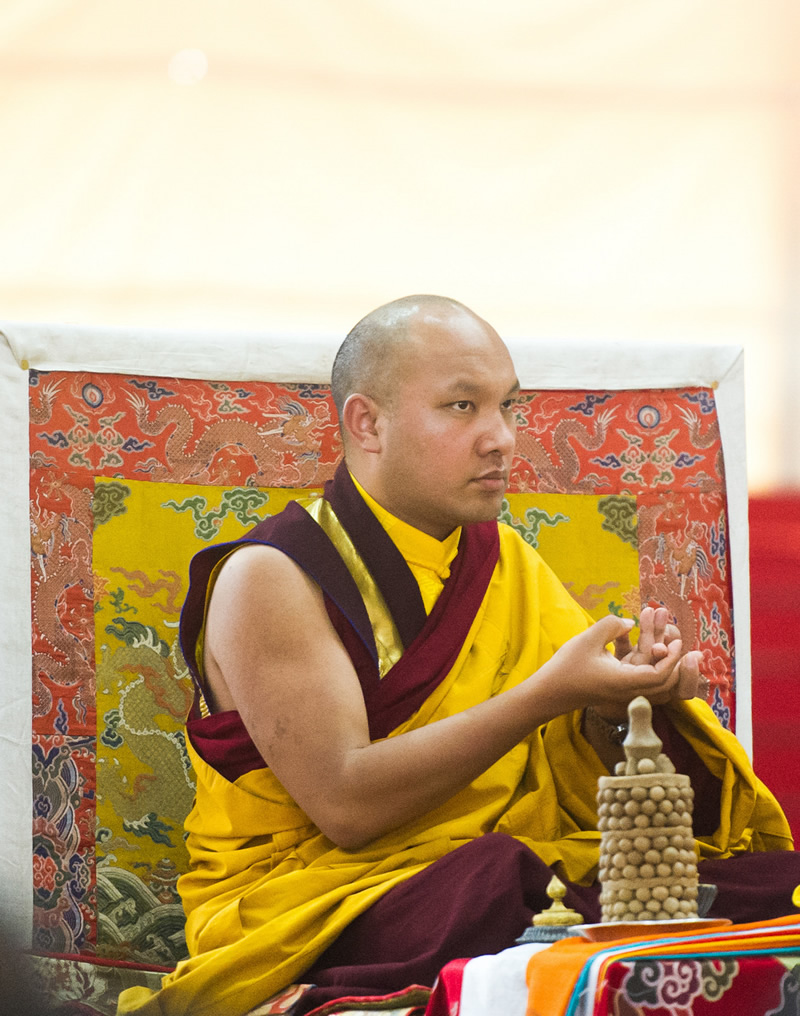
The 17th Gyalwang Karmapa enjoys the performance.
The Mongolian musicians returned augmented by Mr. Liter and Mr. Yavgaan—famous throughout his homeland for his throat singing. The group performed a song about the Mongolian landscape and nomadic life.
The penultimate act included two well-renowned guitarists and twenty performers. These musicians from China and artists from the Tibetan Institute of Performing Arts (TIPA) performed two songs about recalling and supplicating the guru with devotion, and beseeching the great master for blessings.
The final song was a rock performance that began with dueling guitars that transitioned into Chinese lyrics with the refrain Karmapa Khyenno. A young Tibetan monk and Chinese child performer stole the final act with their eager smiles and earnest off-beat clapping.
The Karmapa was all smiles during this performance.
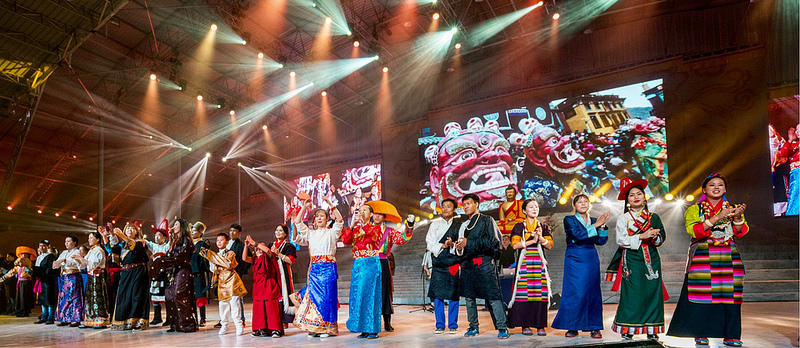
For the finale, all the performers descended the stairs and lined up across the front of the stage, bringing the performances to an up-beat and lively closure before a final supplicating bow to His Holiness.
His Holiness heartily applauds the performance, with Goshir Gyaltsab Rinpoche on his left and Mingyur Rinpoche on his right.
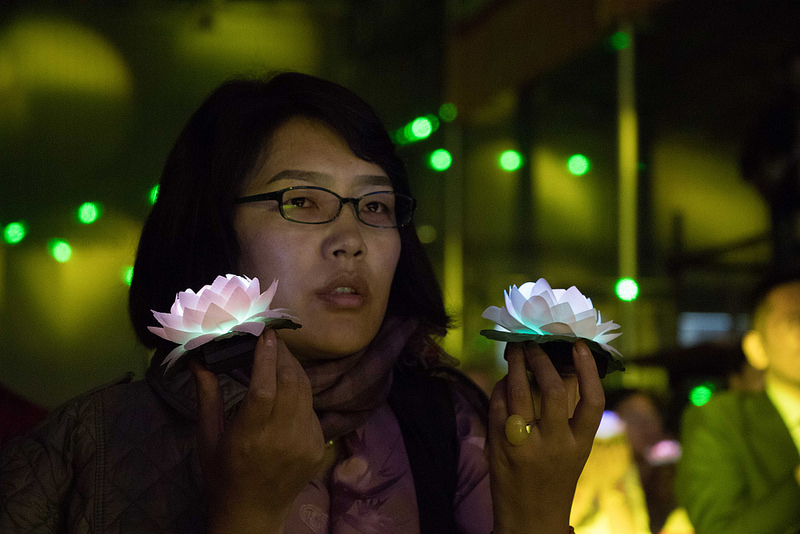
As usual, the evening closed with the offering of lights. The Karmapa’s sister, Chamsing-la, holds two lotus lamps during the Lamp Prayer.
His Eminence Gyaltsab Rinpoche holds a beautiful red lotus lamp.
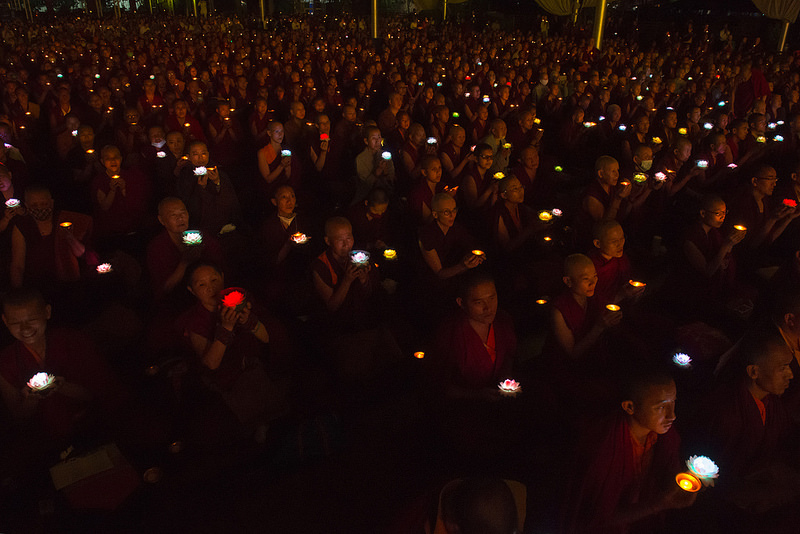
The Pavilion was transformed into a sea of lights.
The Karmapa held his lotus lamp at his heart as the last prayer resounded: May the essence of the teachings, the teachings of the Karmapa, The activity of the victors, victorious over the four maras, In uninterrupted fullness fill all directions to their ends. May this always flourish and may this flourishing be auspicious!
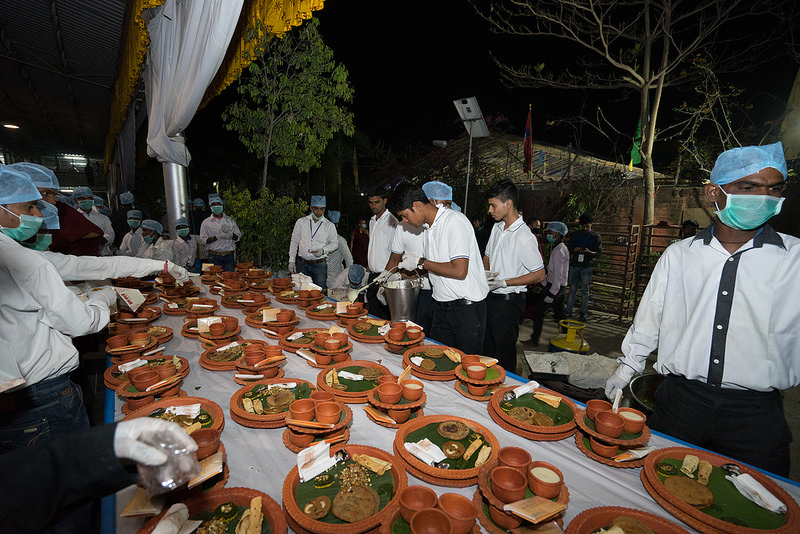
Long tables laid with impressive terra cotta place settings framed one side of the Pavilion. The Losar Feast would be shared by all in attendance.
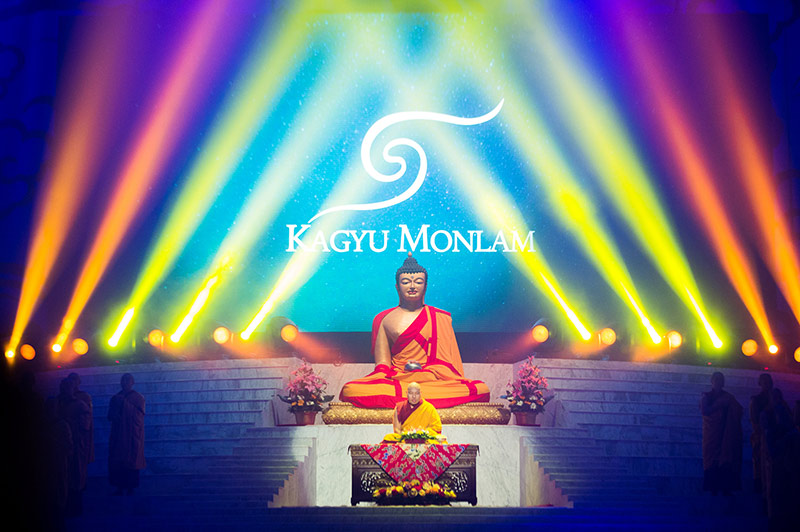
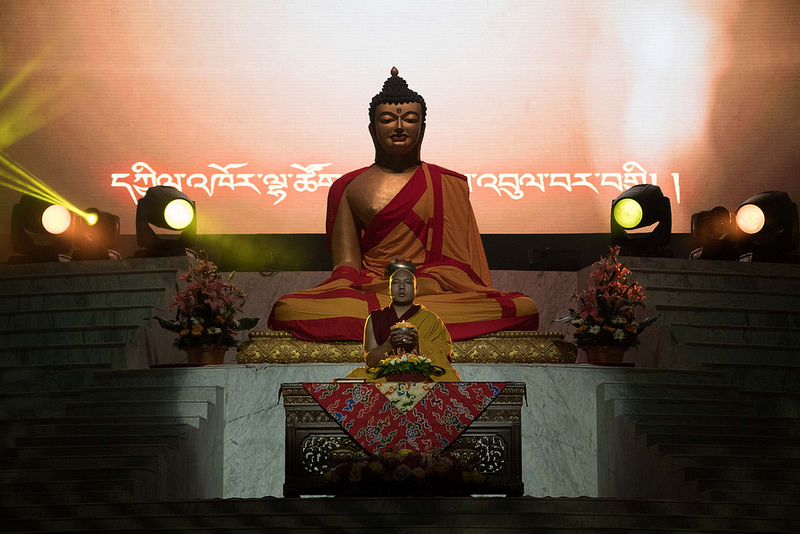
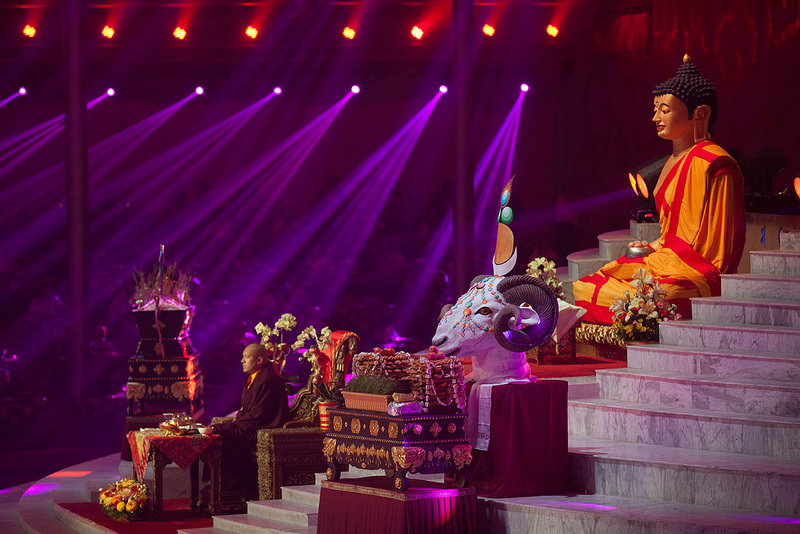
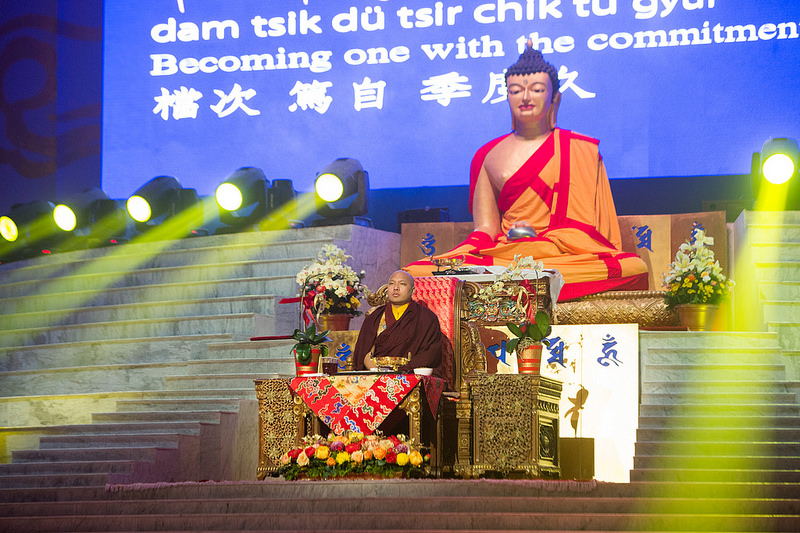
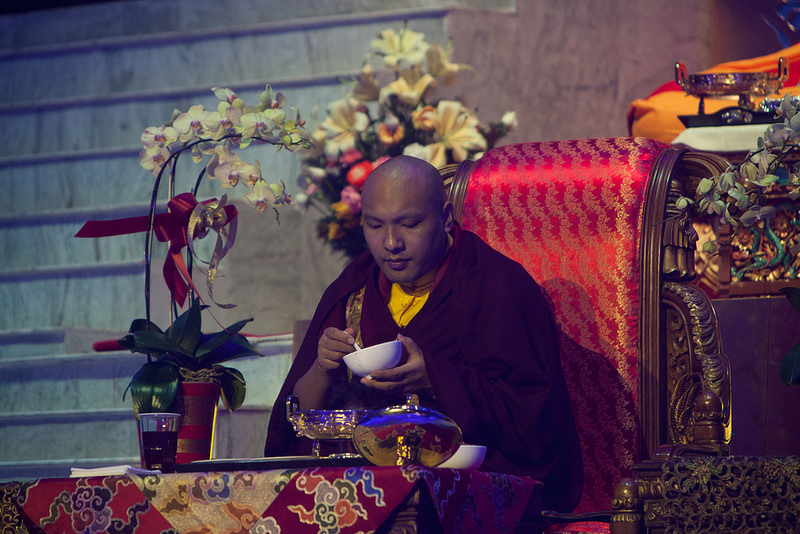
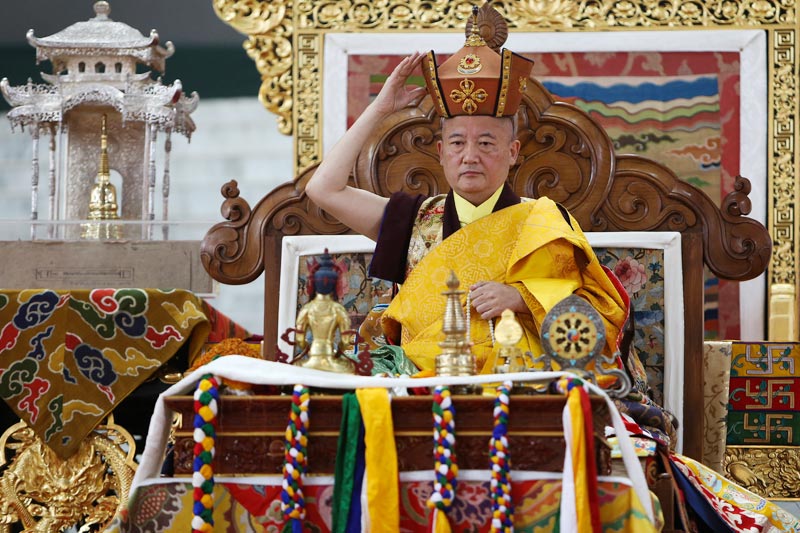
The 17th Gyalwang Karmapa took his seat on a low throne with a Buddha statue above him.
The evening’s festivities took place in the context of a tantric feast or ganachakra. The first part of the text was chanted before the entertainment began.
Golden lights beamed down upon the Karmapa, lending an air of majesty to the setting.
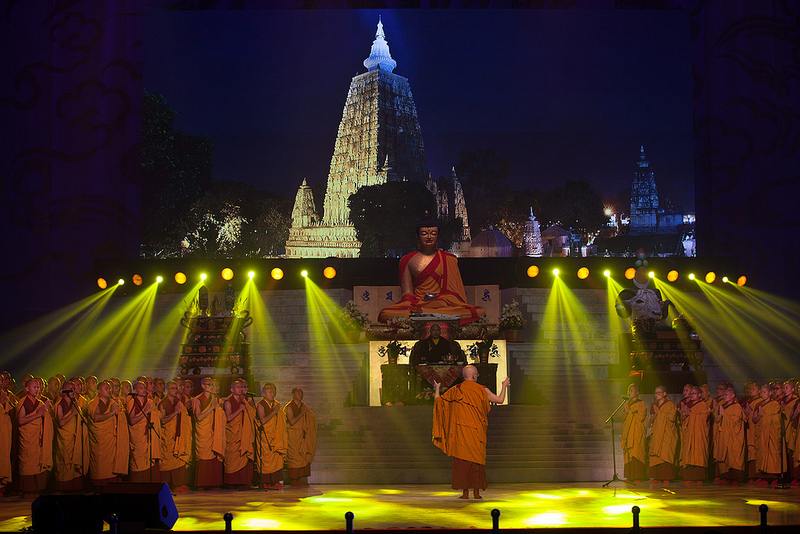
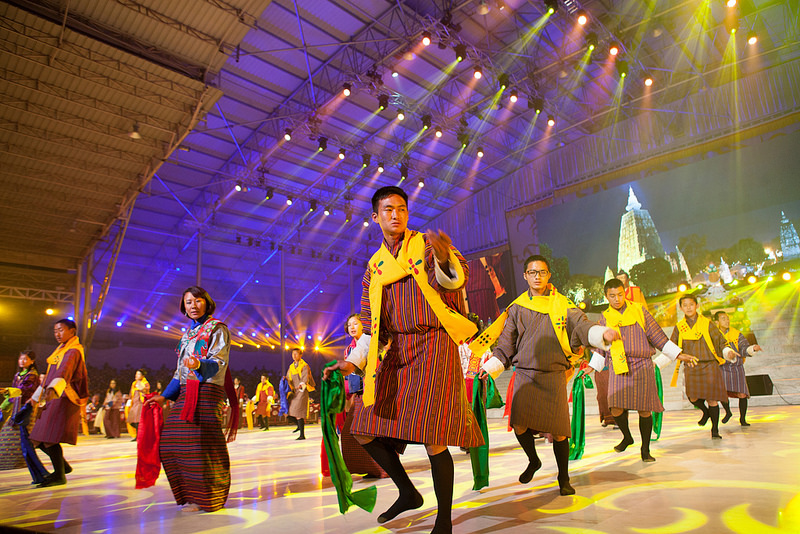
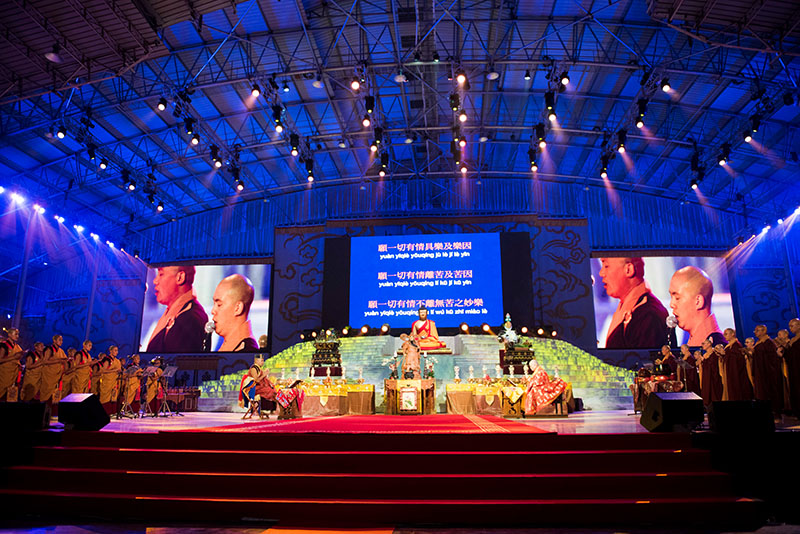
The central screen displayed a beautiful shot of the Mahabodhi Stupa. A monastic choir performed, with Khenpo David Choephel conducting.
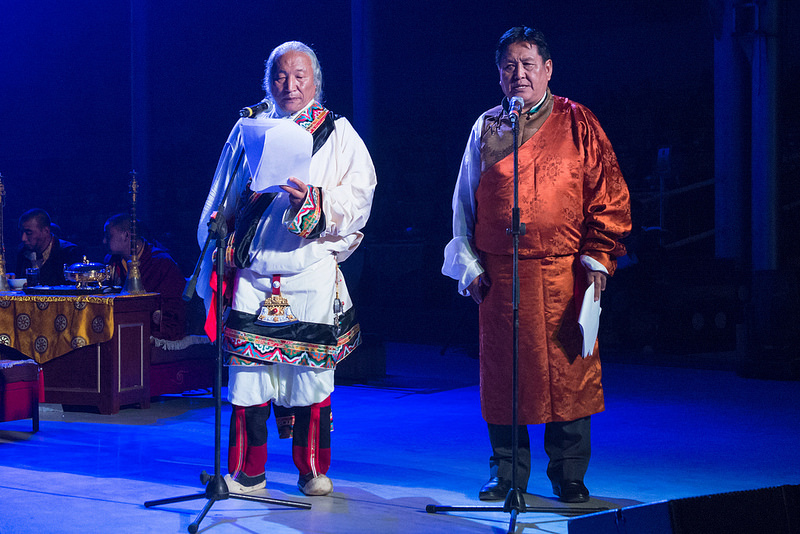
Two Masters of Ceremonies, Ngodrup Tsering and Sherab Tharchin, took the stage to provide context for the evening’s events and to introduce the performances.
Meanwhile, scores of young Indian waiters in uniform white shirts and blue caps issued forth to serve the delicious dinner to the audience.
This was carried out in an orderly and timely fashion so that thousands of guests were served a resplendent meal, reminiscent of a five-star hotel dining experience.
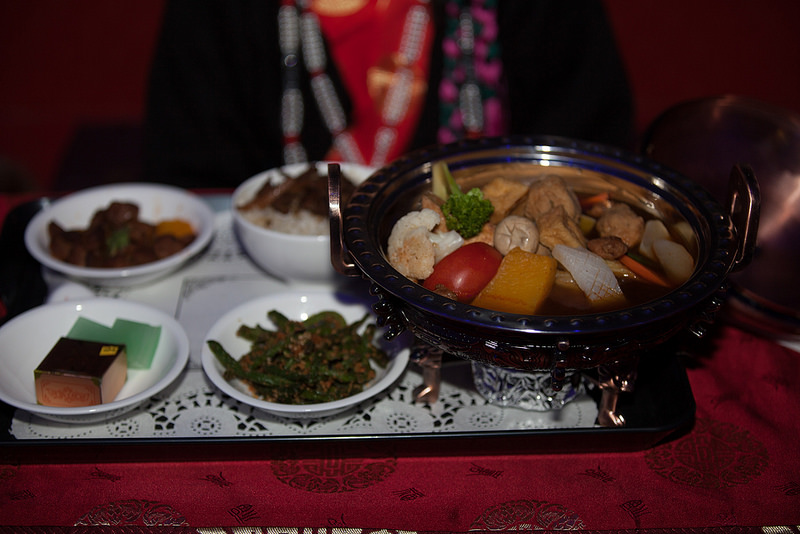
A Chinese hotpot-style meal was served to His Holiness and the VIPs on the stage.
The guests on the stage wore costumes from their homelands.
His Holiness enjoyed his meal in a dignified manner.
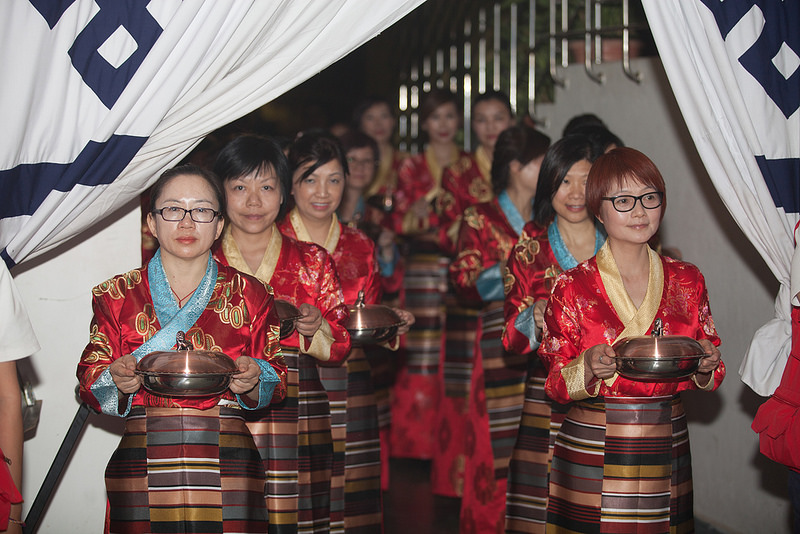
Columns of offering dakinis served the feast to the VIP guests.
Members of the Monlam working committee also sported traditional outfits from their homelands, in this case, Poland (left and right) and Scotland (center).
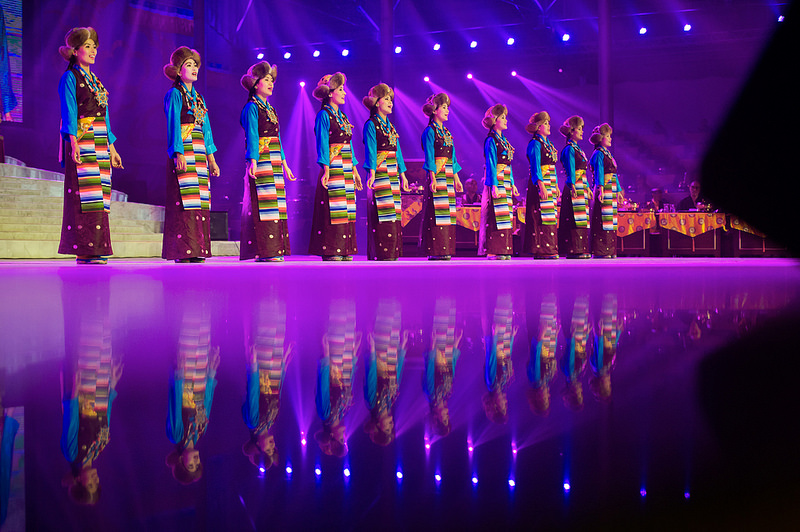
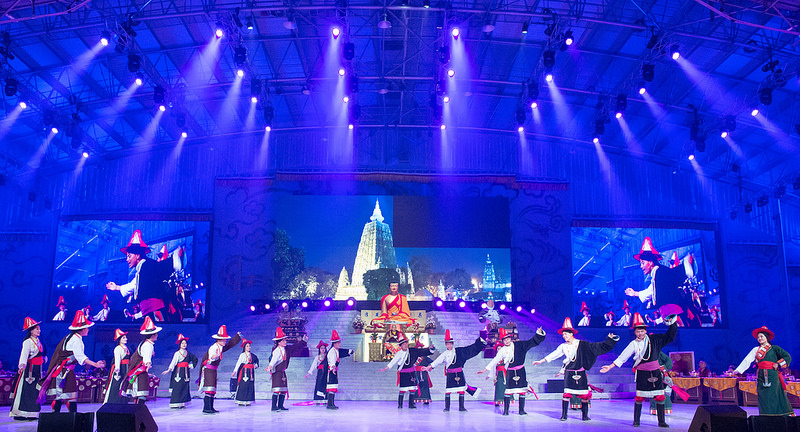
The cultural program was vast and comprehensive. Here, singers from TIPA perform dressed in traditional finery.
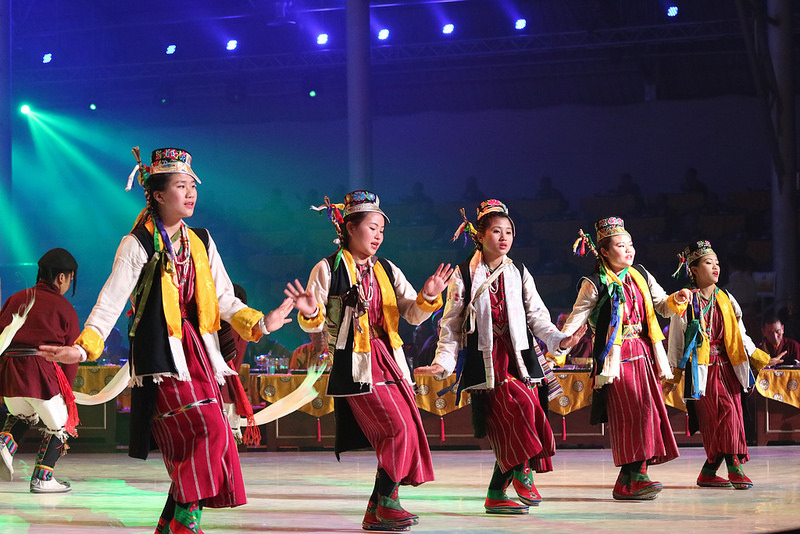
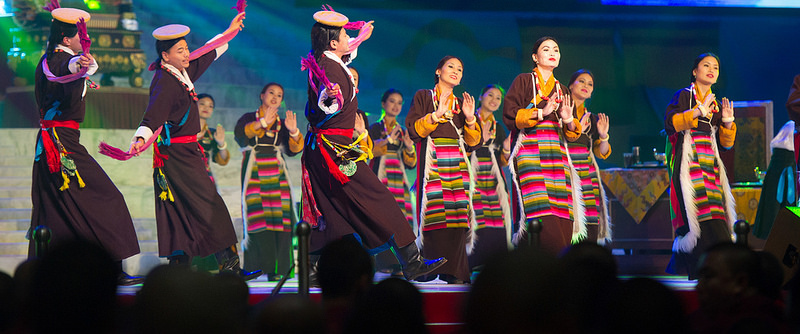
Traditional songs were performed by singers and dancers from several Himalayan regions.
A traditional Bhutanese song was performed by a group of artists from Bhutan.
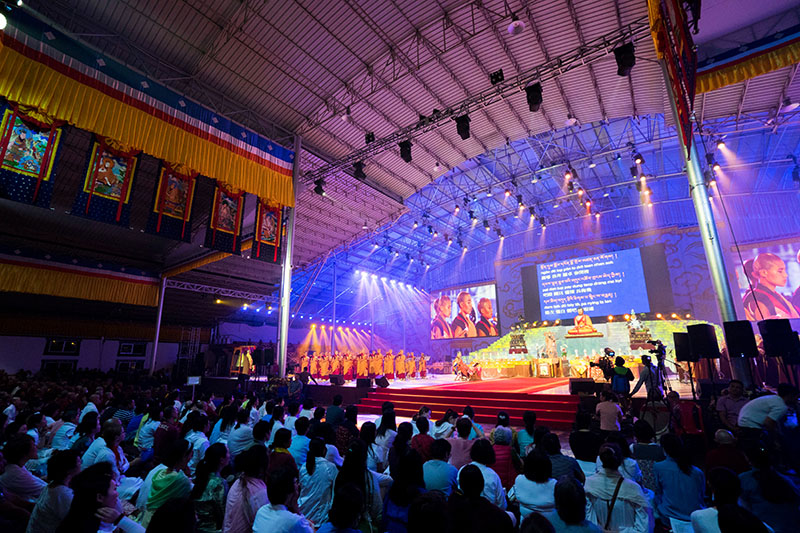
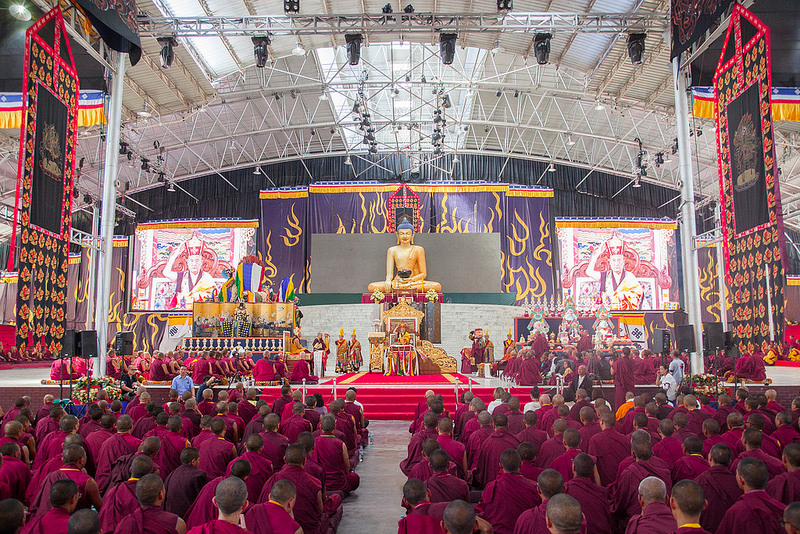
The Pavilion was packed with fortunate spectators.
A grand total of fourteen different acts were performed by various artists.
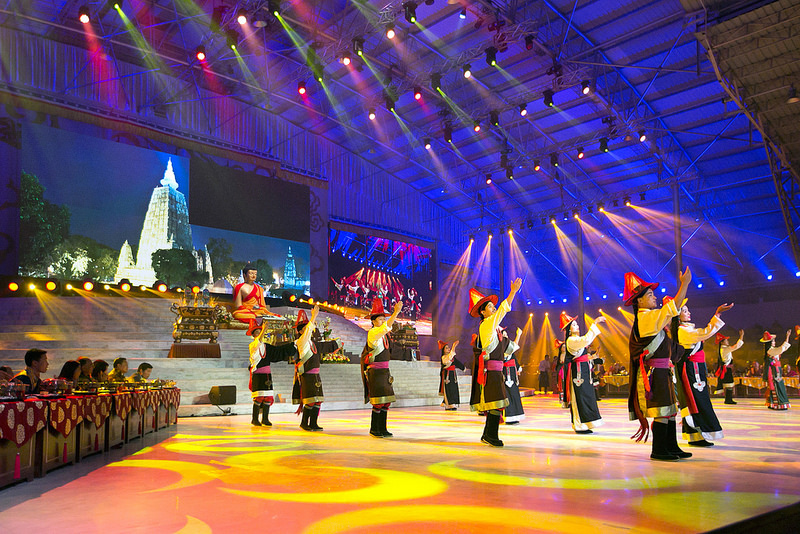
The costumes and hats were exotic and colorful, reflecting the different regions the performers hailed from.
The professionally-lit stage and multiple screens provided a vibrant backdrop to the performances.
His Holiness, the Gyalwang Karmapa was the mastermind behind this magnificent spectacle.
Green, blue, and pink lights enhanced the performances, enchanting the audience.
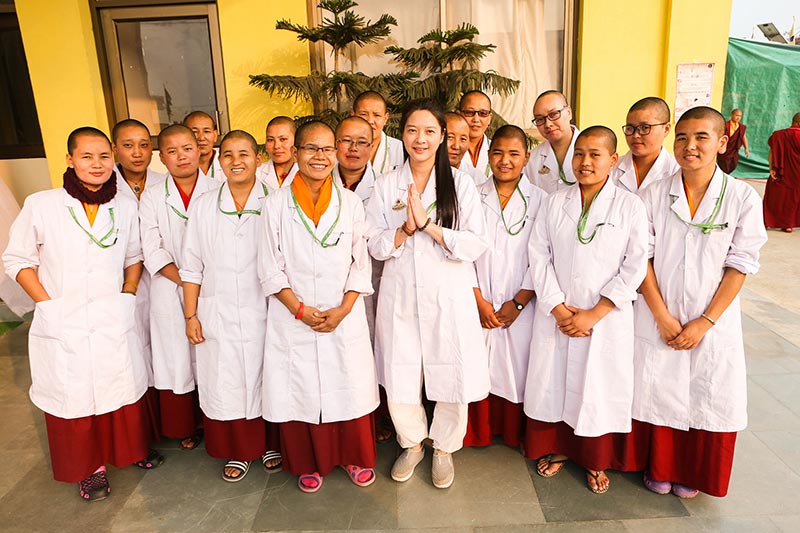
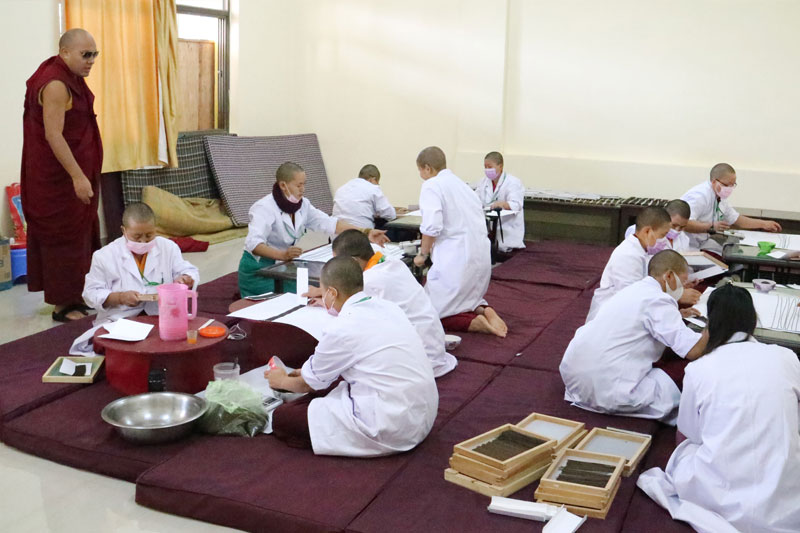
15 nuns joined forces with professional Chinese incense maker Ru-Ruei Chung, translator Ani Jangchub and Dr Dawa to make high-quality Tibetan incense, an income generation project to support the education of the nuns.
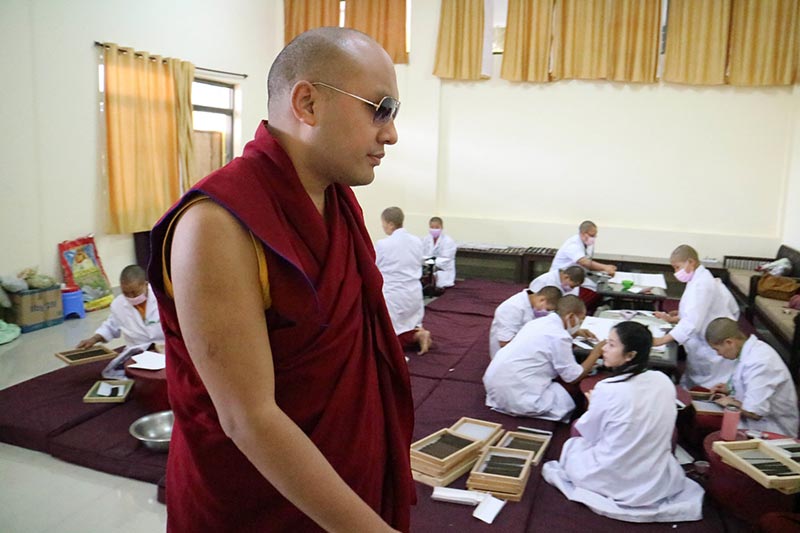
Gyalwang Karmapa visited the workshop every day to check on their progress.
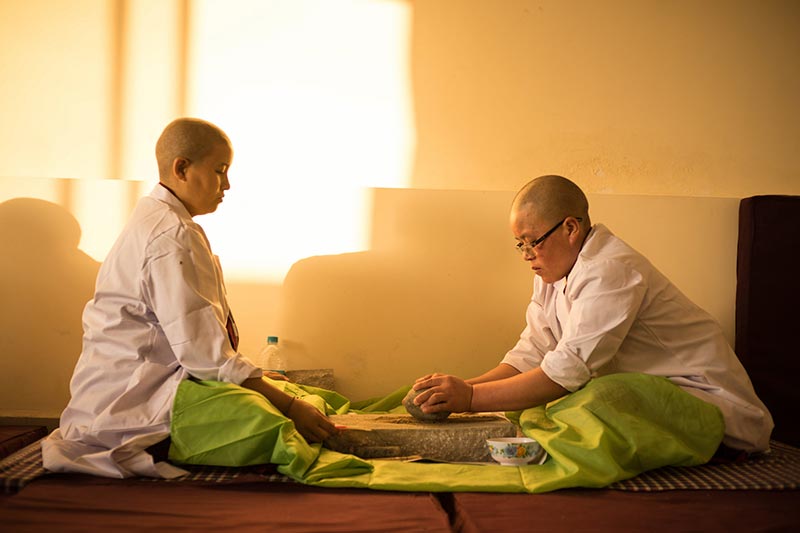
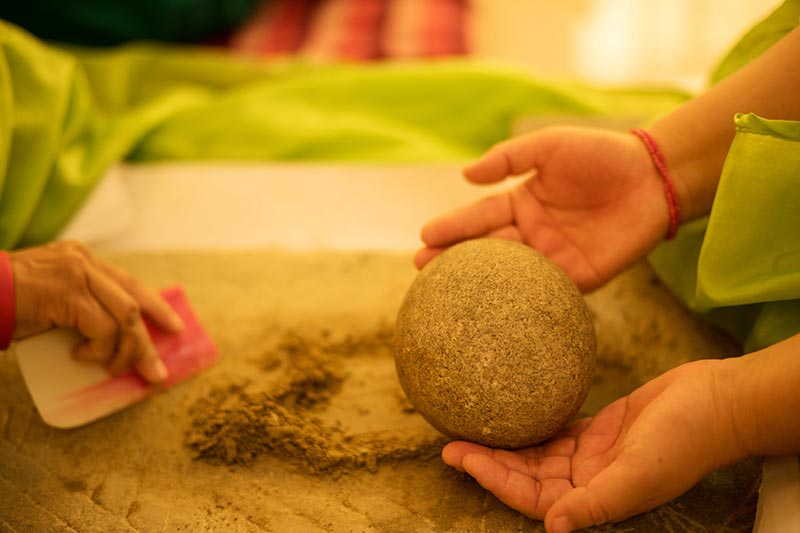
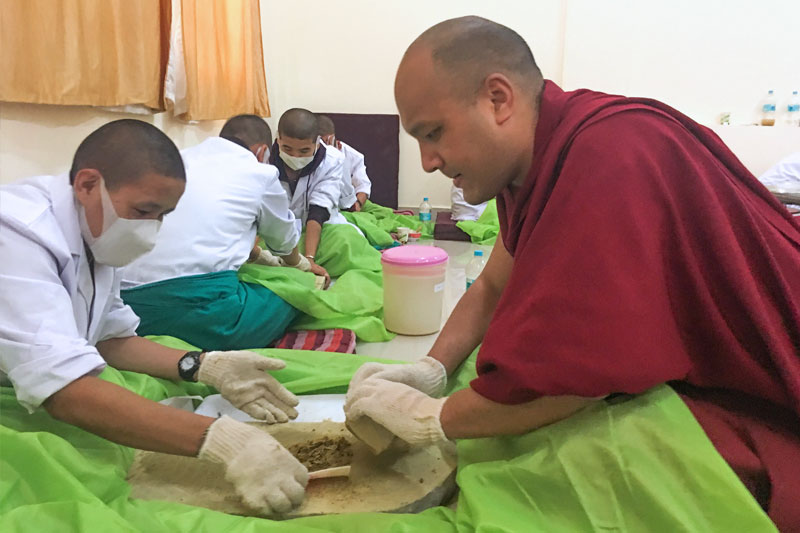
Using only the best quality, natural ingredients, the nuns’ first task was to grind down the herbs and special substances.
This was done by hand using traditional methods: a large round stone was used on a stone surface. It was physically demanding work and many nuns suffered blisters during the nine days it took to prepare all the ingredients.
His Holiness worked alongside the nuns.
And also spent time conferring with Dr Dawa and Ani Jangchup Dolma.
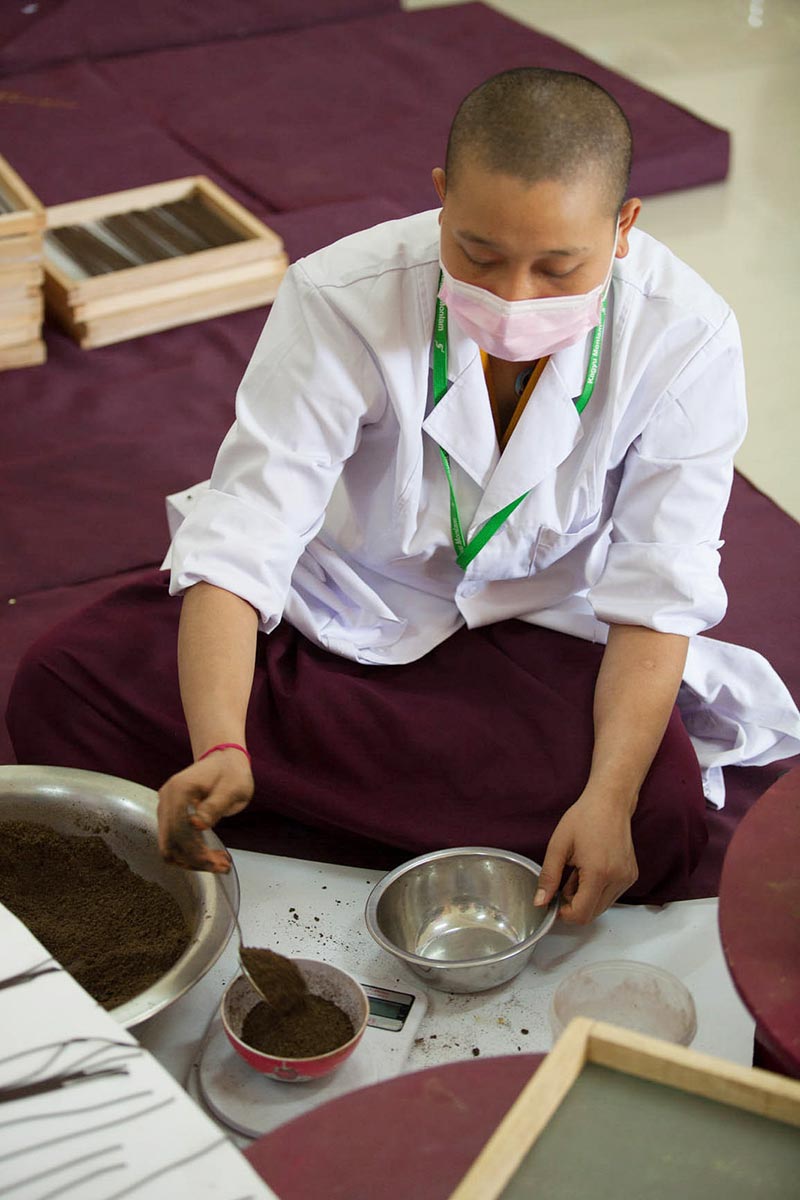
The ingredients had to be measured carefully and mixed together.
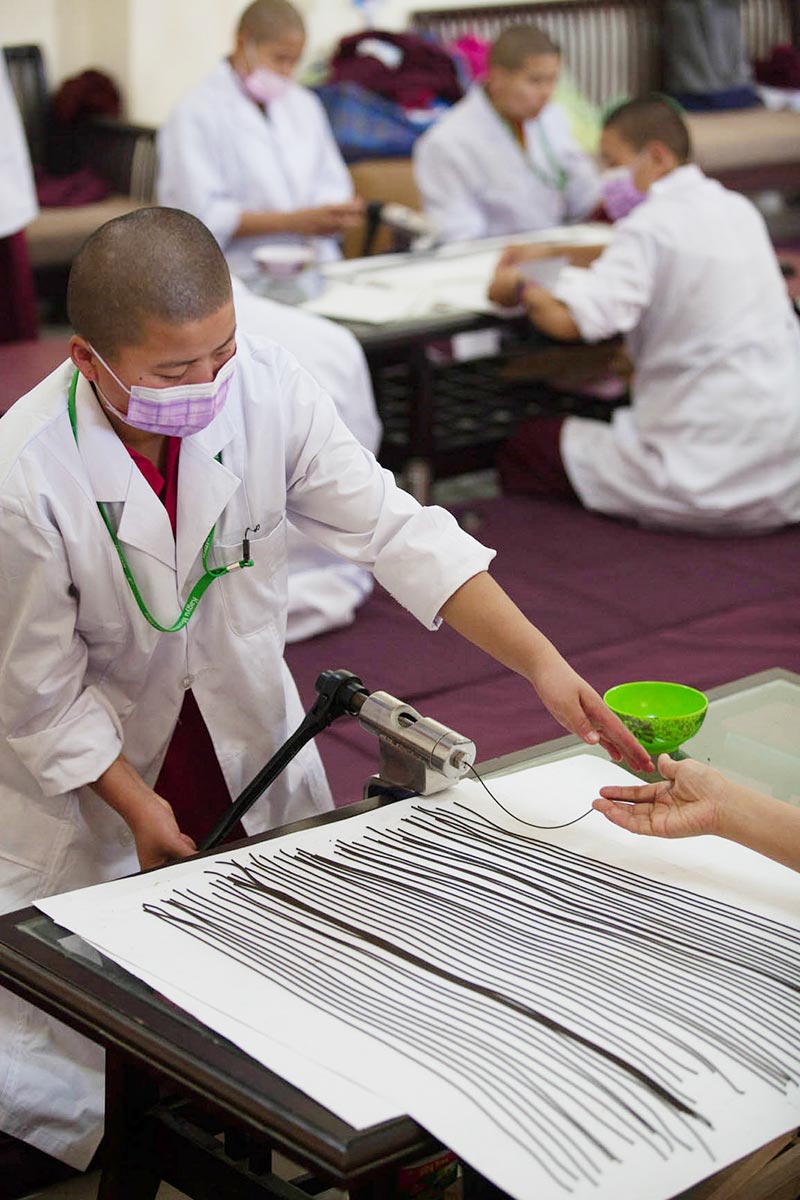
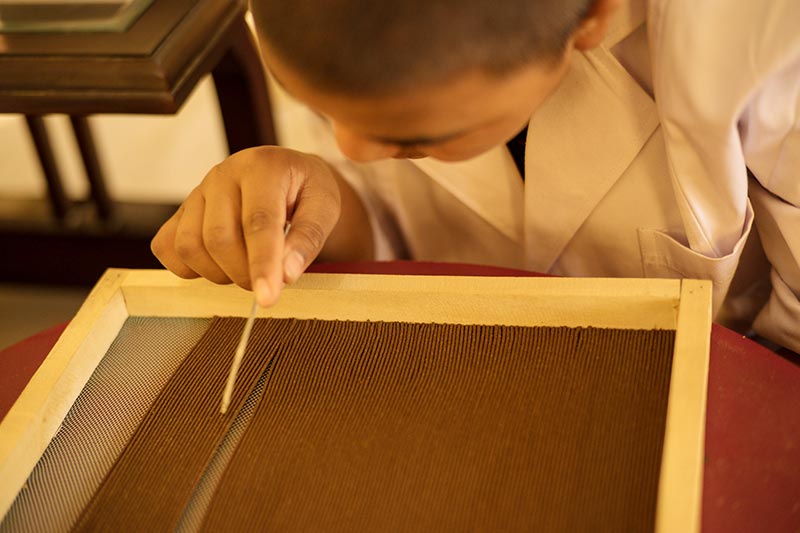
The mixture was then fed through a special machine to produce long spaghetti-like strands of incense.
These strands were carefully separated…
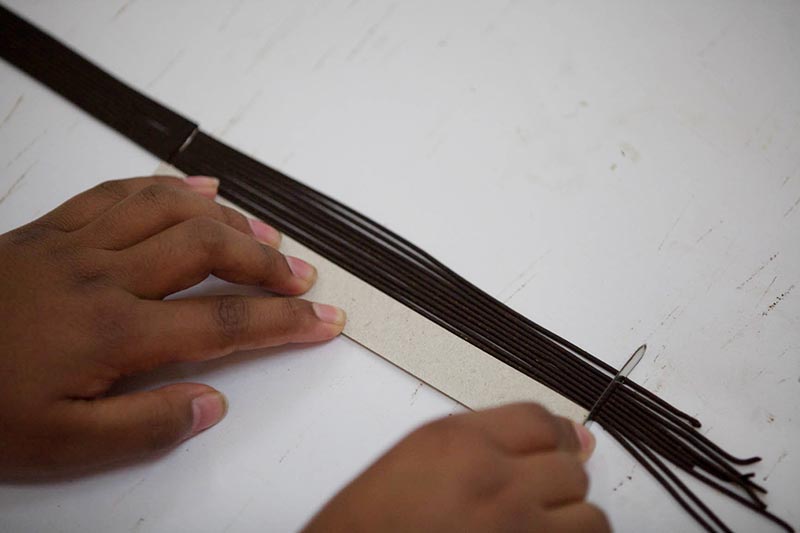
And cut to the same length...
His Holiness took a keen interest in all parts of the process.
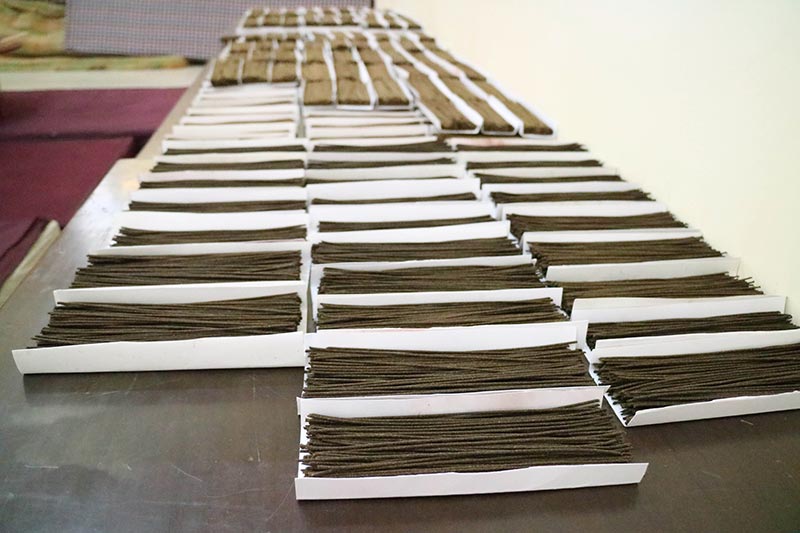
The incense was laid carefully in wooden boxes and placed on the roof to dry.
Once dry, the sticks of incense were divided equally
And packed into bundles.
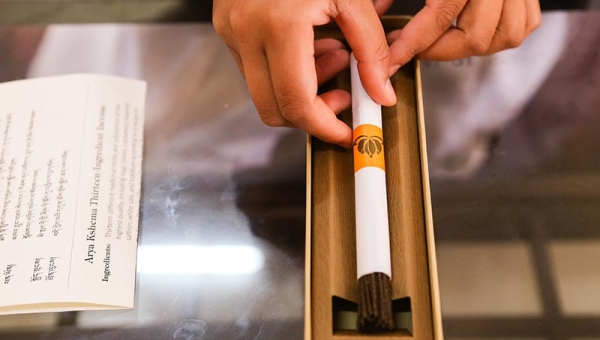
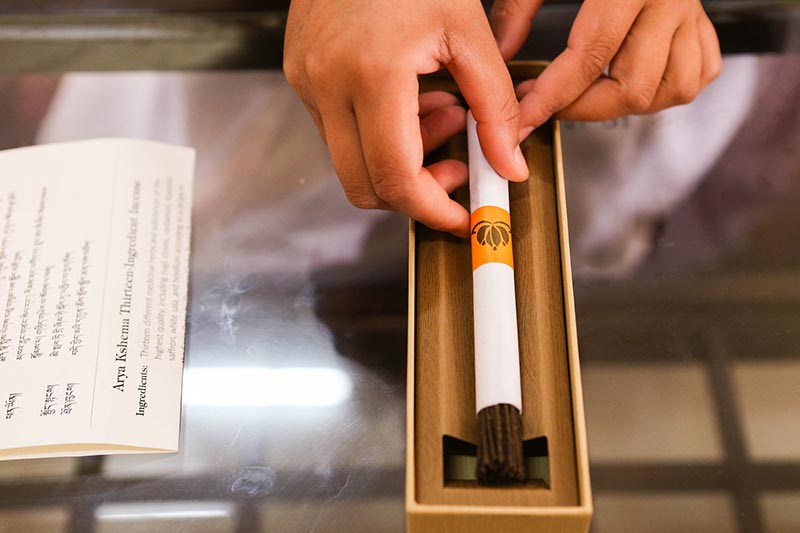
The bundles were placed in individual boxes with an explanatory leaflet describing the contents and benefits of the incense.
This is the most expensive incense made from 13 special ingredients.
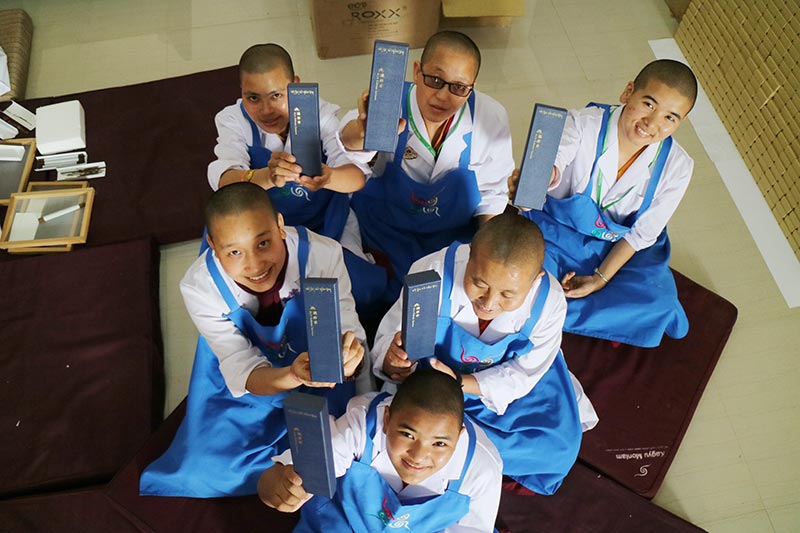
The blue boxes contain the cheaper one which contains only 2 ingredients.
Altogether the nuns made 1600 boxes of incense for sale.
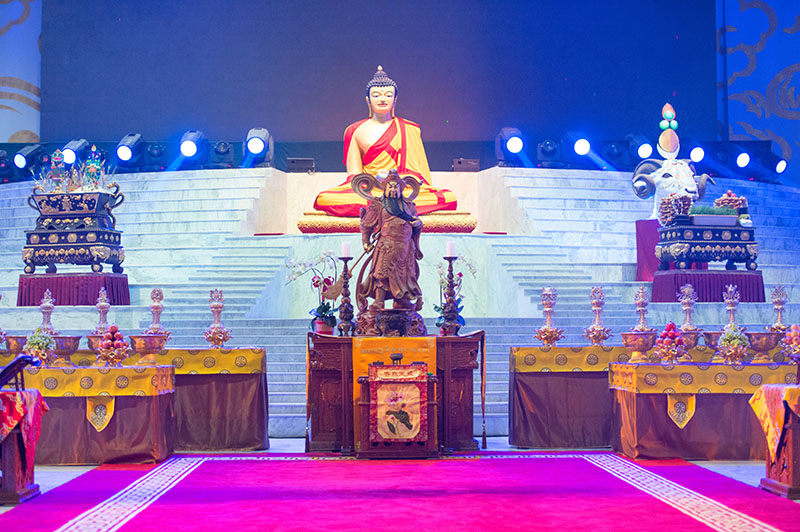
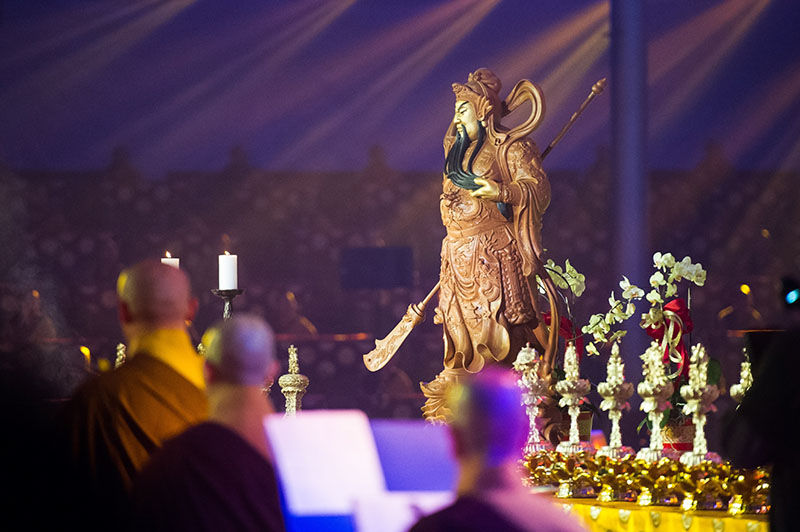
A shrine to and image of the protector Sangharama occupies centre stage.
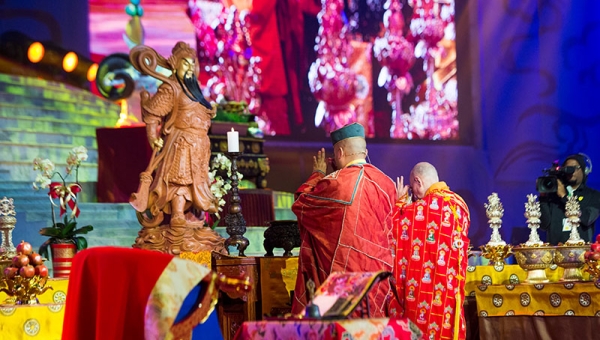
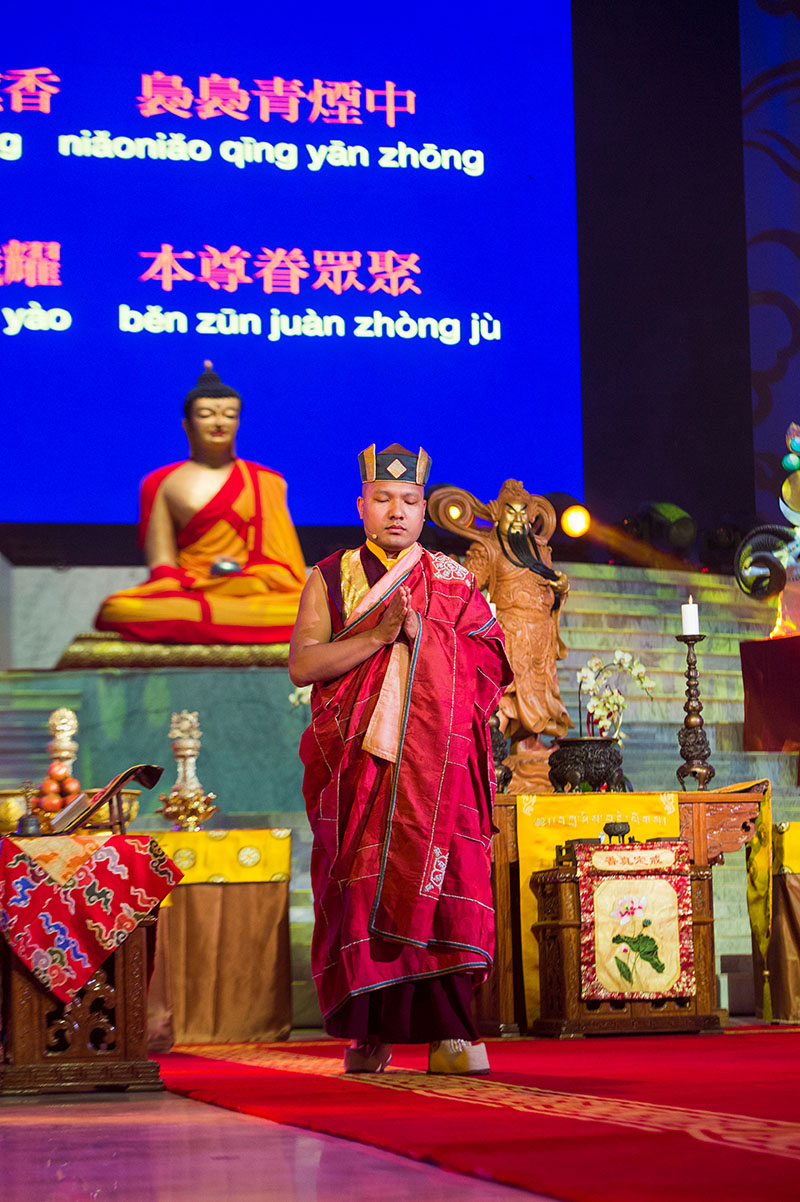
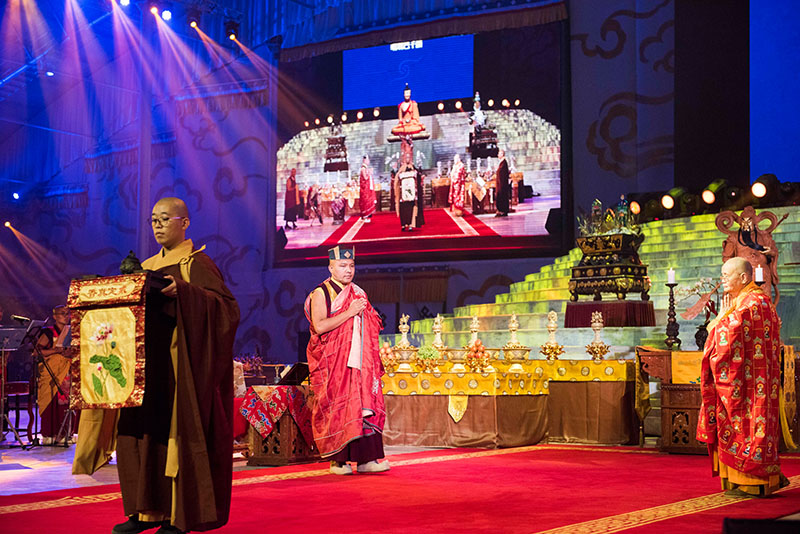
In procession, preceded by a Chinese-style incense bearer, the Venerable Siu Kun enters first, followed by His Holiness the Karmapa.
Together they pay respects to the Sangharama shrine…
and offer incense.
Sangharama carries a special reclining-moon-blade weapon engraved with a dragon in his right hand. With his left, he holds his long beard.
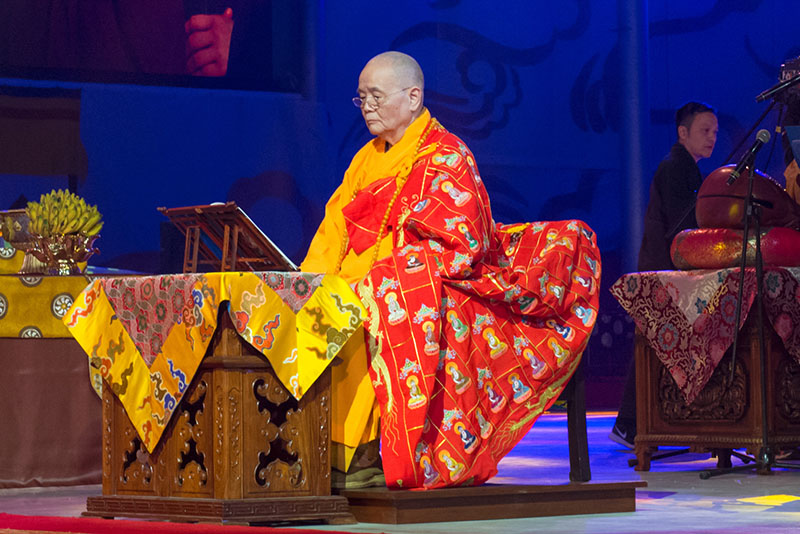
The Venerable Siu Kun is a highly respected monk from Hong Kong, and the chairman of Hong Kong Buddhist Sangha Association and previous Vice-Chairman of Hong Kong Buddhist Association. He wears traditional Chinese ceremonial robes.
The Karmapa wears a special Chinese-style chögu [prayer shawl] and his le-sha [black activity hat].
Nuns from Drubdey Nunnery in Bhutan lead the chanting in Tibetan.
A choir of 32 Chinese monks and nuns from different monasteries in Hong Kong lead the chanting in Chinese. The Venerable Tsang Chit, Abbot of Tung Lin Kok Yuen [first row, second on left] is one of three chantmasters.
The stage is organized symmetrically. The choirs face each other and the Karmapa and Ven. Liu Kun sat in chairs facing each other.
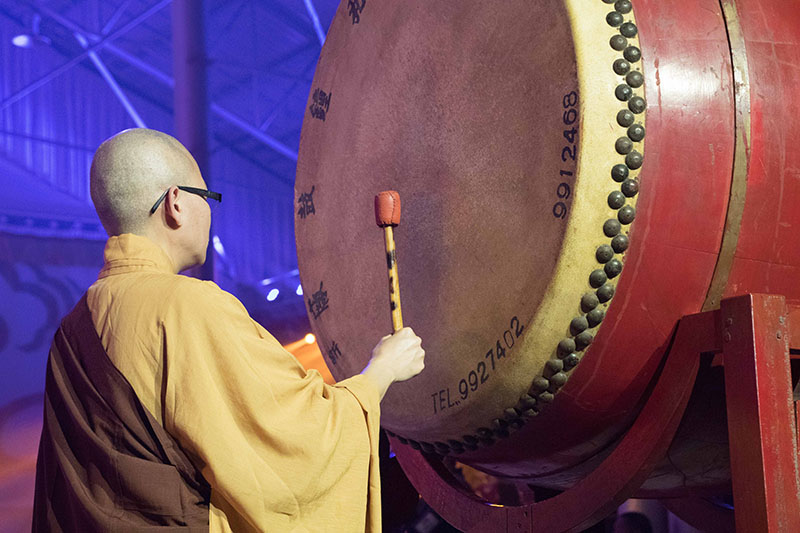
Because Sangharama came from China, many elements used in the ritual come from the Chinese tradition, such as the large temple drum…
and the temple bell, rung with a huge wooden clanger.
The ritual is partly in Tibetan, partly in Chinese, but there were phonetics for English speakers and for Chinese when necessary…
so that the thousands of people who had come can join in the prayers.
The ritual ends and His Holiness the Karmapa and the Ven. Siu Kun prepare to leave.
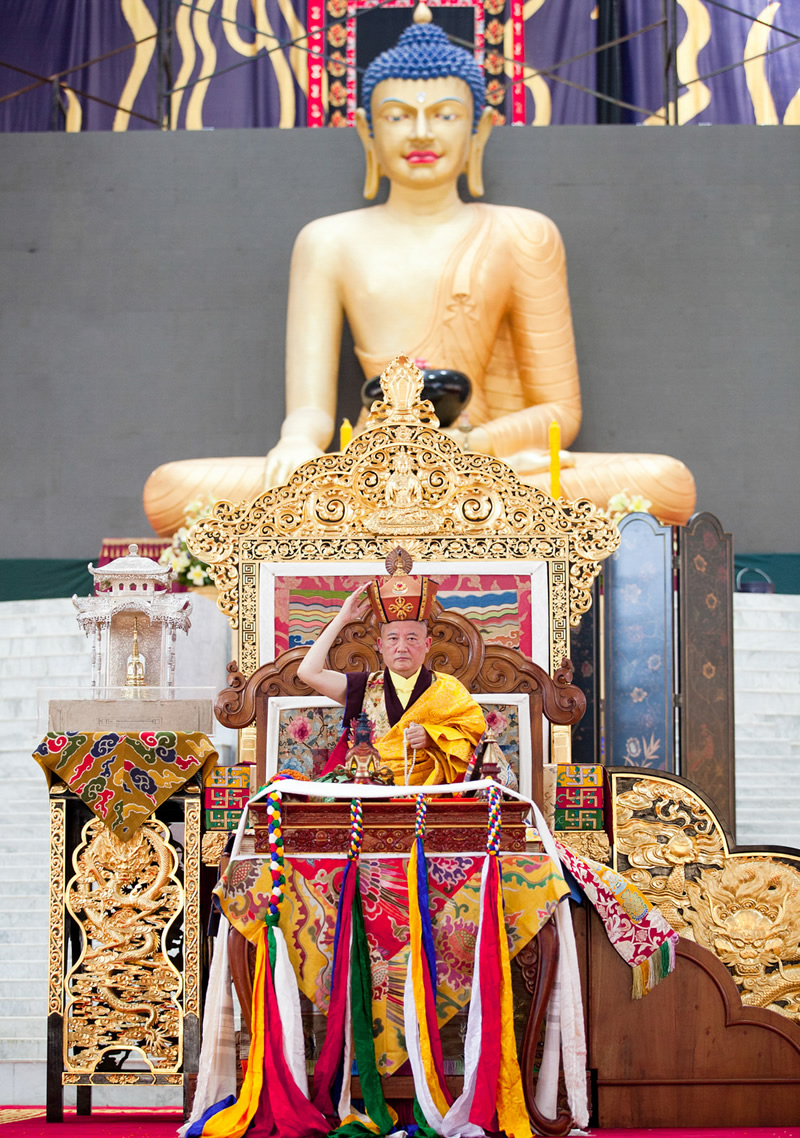
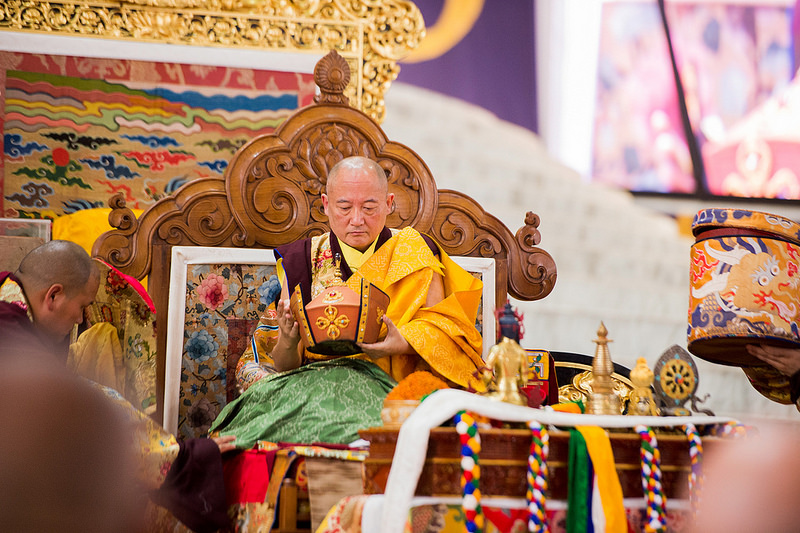
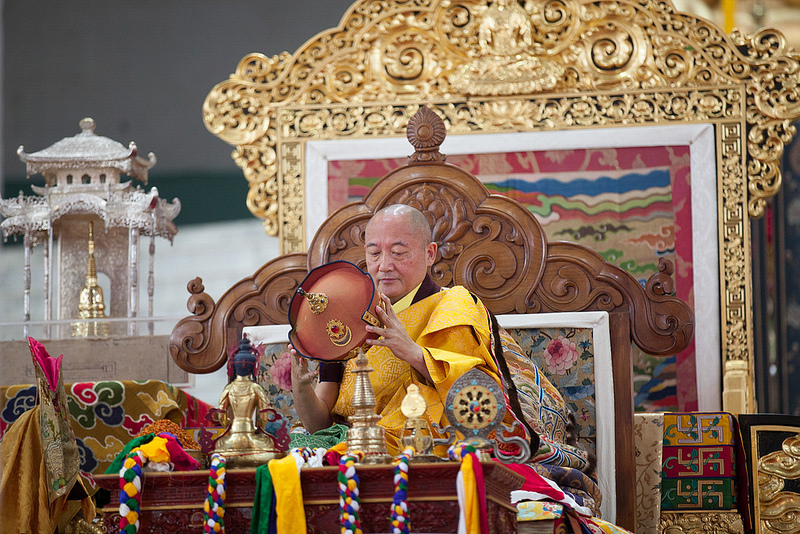
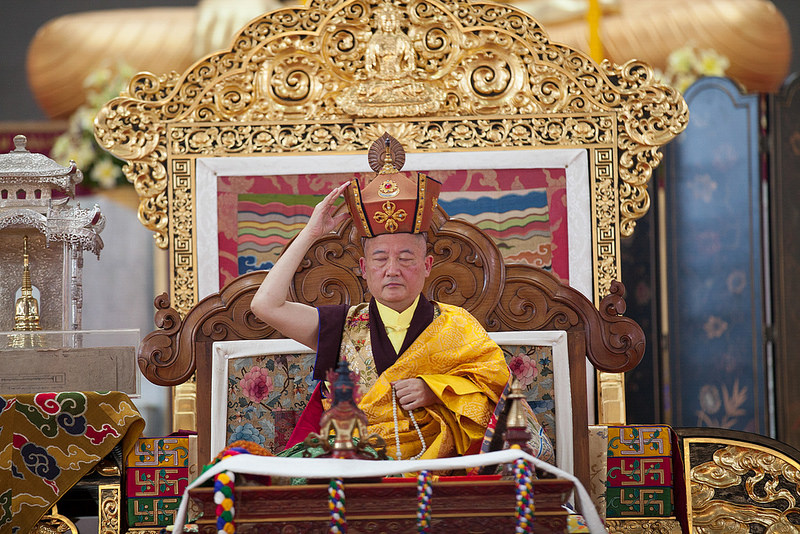
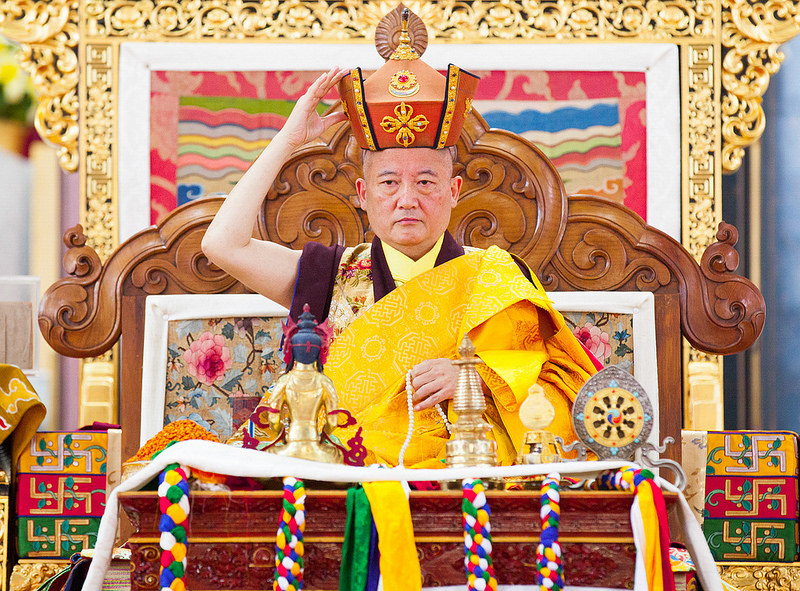
Under instructions from the 17th Karmapa, the 12th Goshir Gyaltsab Rinpoche had agreed to perform the Vajra Crown ceremony this year during the Kagyu Monlam’s extended program.
This would be of special historical importance since it was the first time that a Vajra Crown ceremony had ever been performed in Bodhgaya, the site of Buddha Shakyamuni’s enlightenment.
The Gyalwang Karmapas began the tradition of Vajra Crown ceremonies utilizing the Black Crown, which is particular to them.
Karma Pakshi, the Second Gyalwang Karmapa, stated that whoever witnesses the crown ceremony will not fall into the lower realms.
Later, various Gyalwang Karmapas bestowed red crowns upon Shamar Rinpoche, Situ Rinpoche, and Gyaltsab Rinpoche.
Thus crown ceremonies became an important aspect of the Kamtsang Kagyu lineage.
Beholding the Vajra Crowns is said to grant liberation upon sight.
This doesn’t mean that one is liberated in the very moment of seeing them, but rather that beholding the crowns plants the seed of future liberation in one’s being.
When witnessing the Vajra Crown ceremony, you should sustain the mind’s natural state without altering it, and should strive to train in loving kindness, compassion, and bodhichitta.