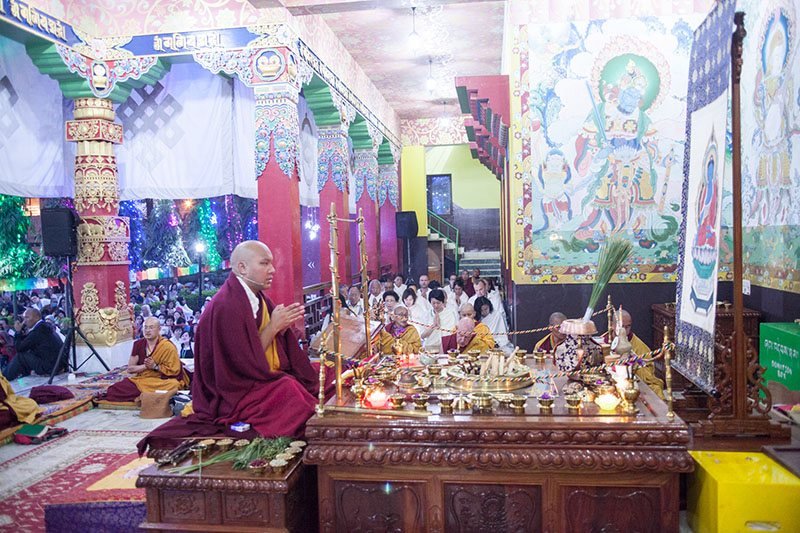
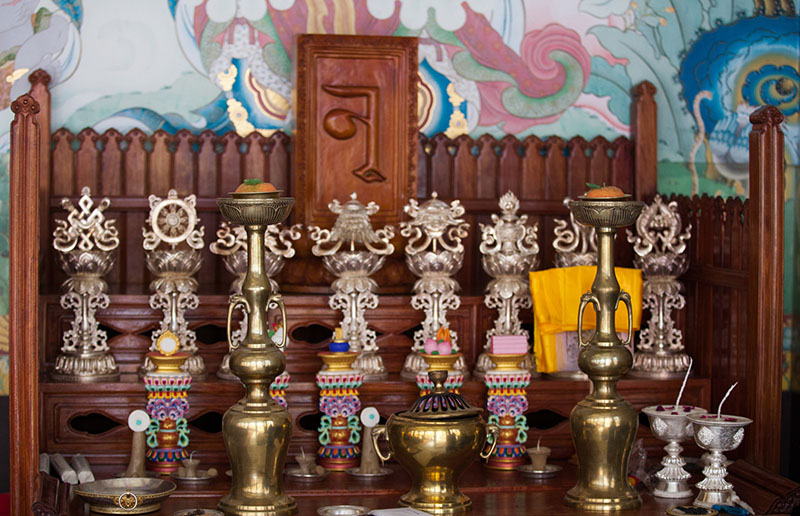
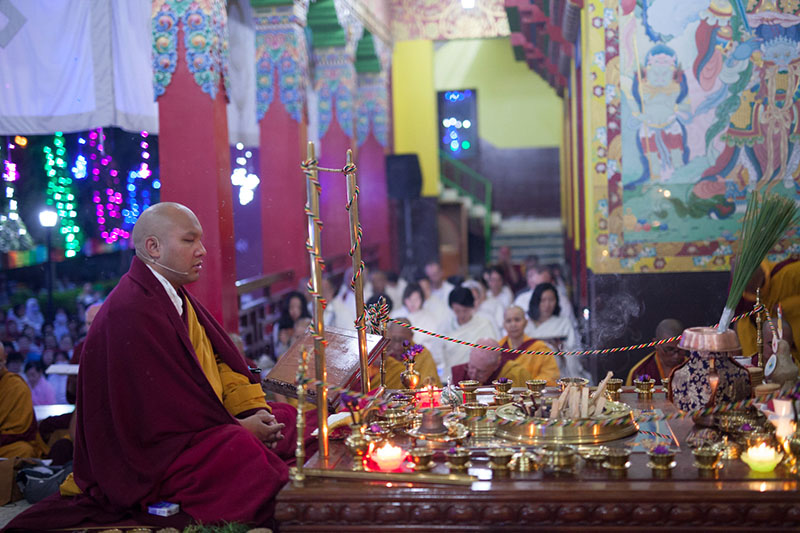
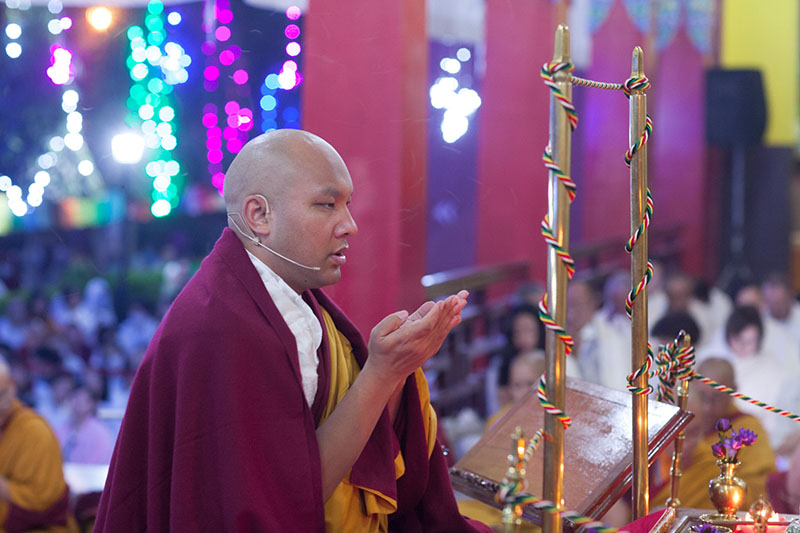
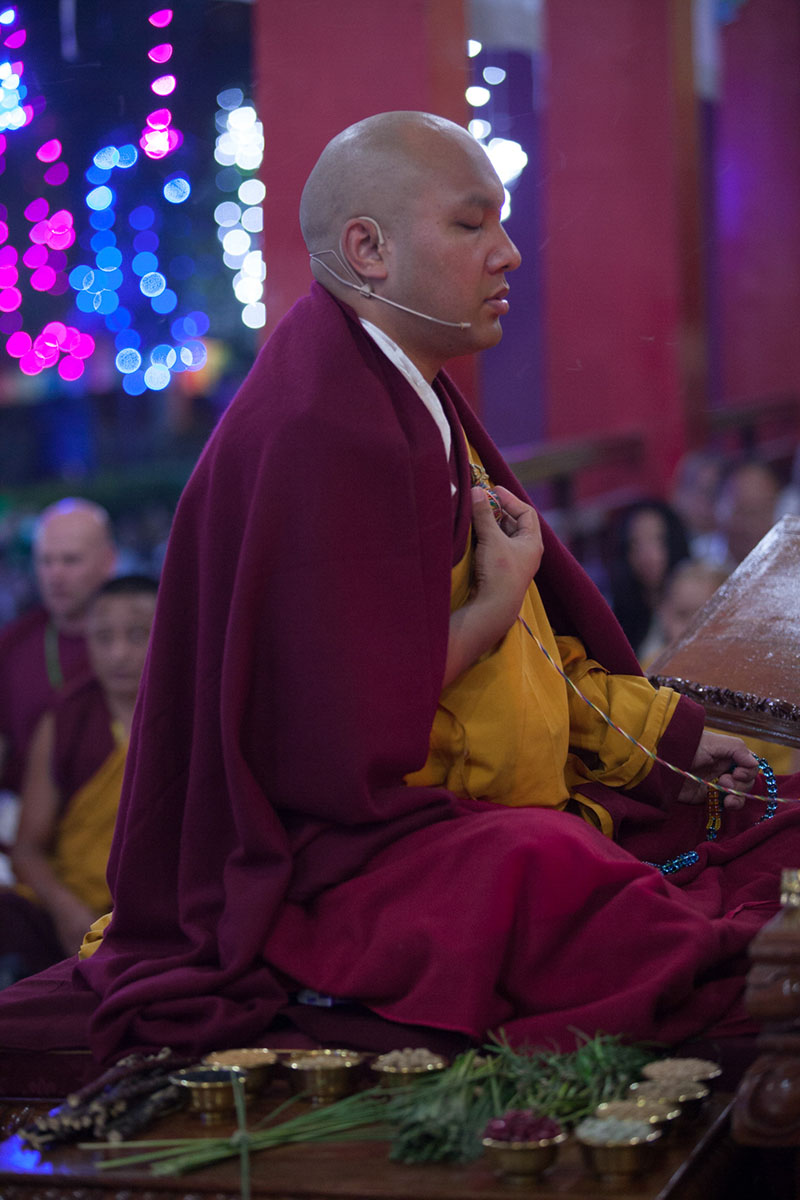
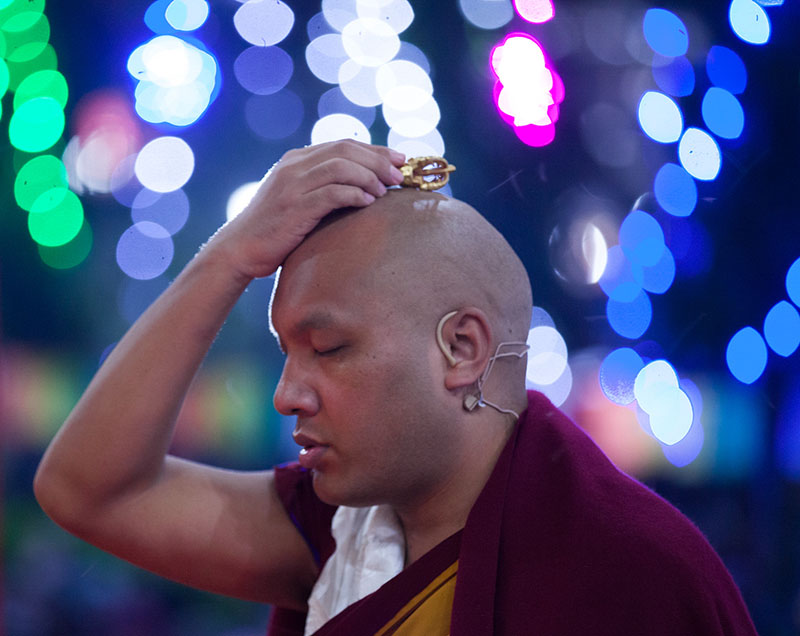
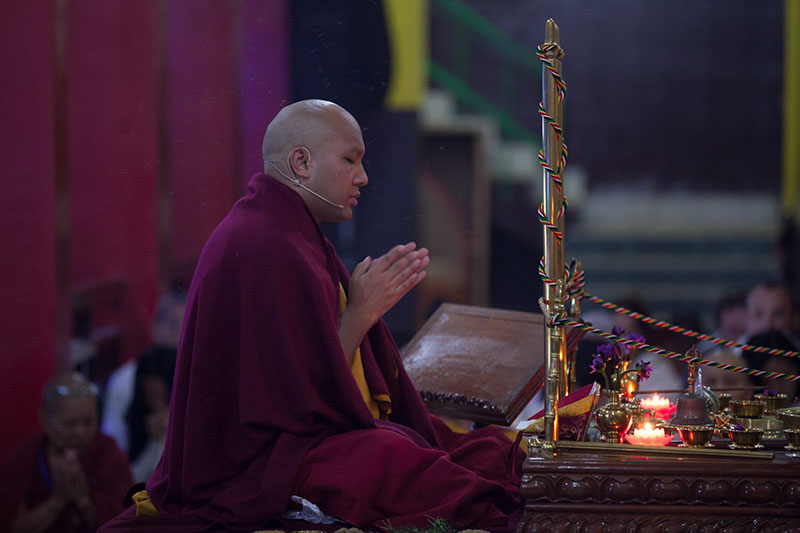
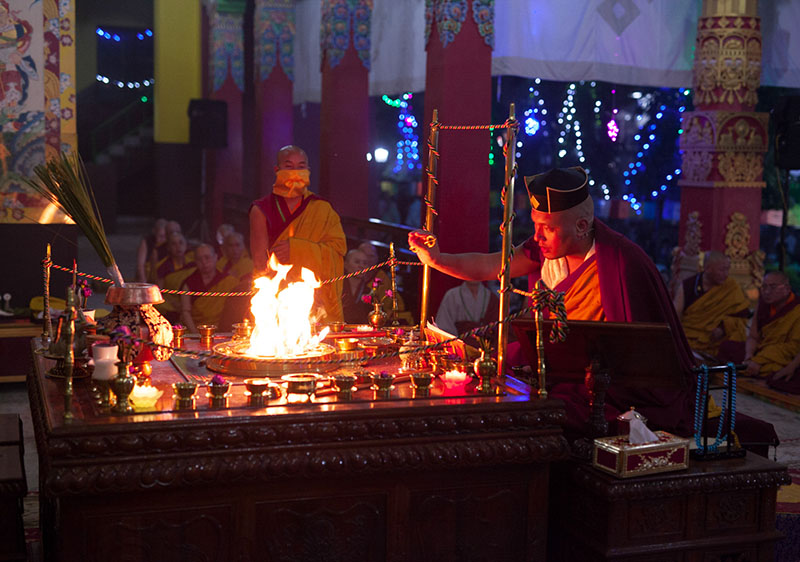
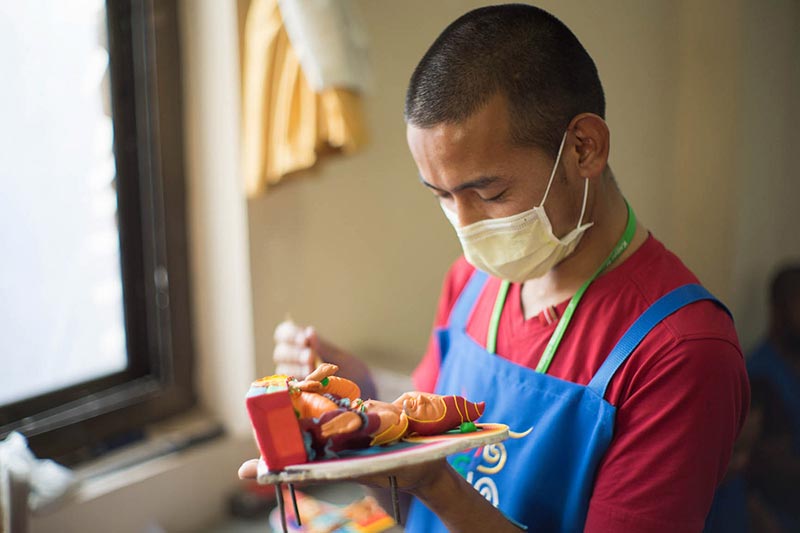
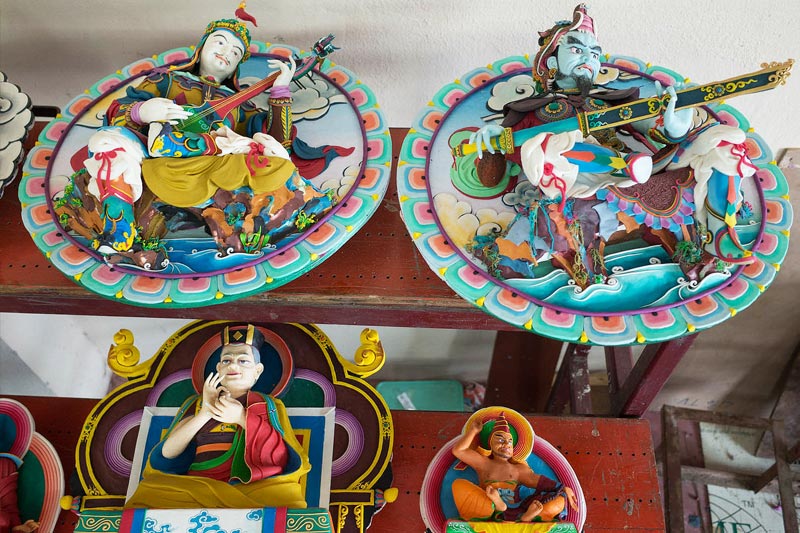
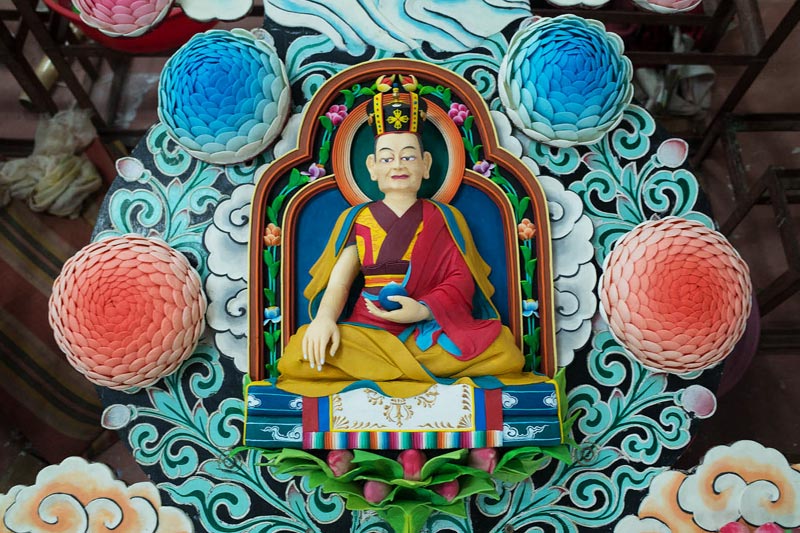
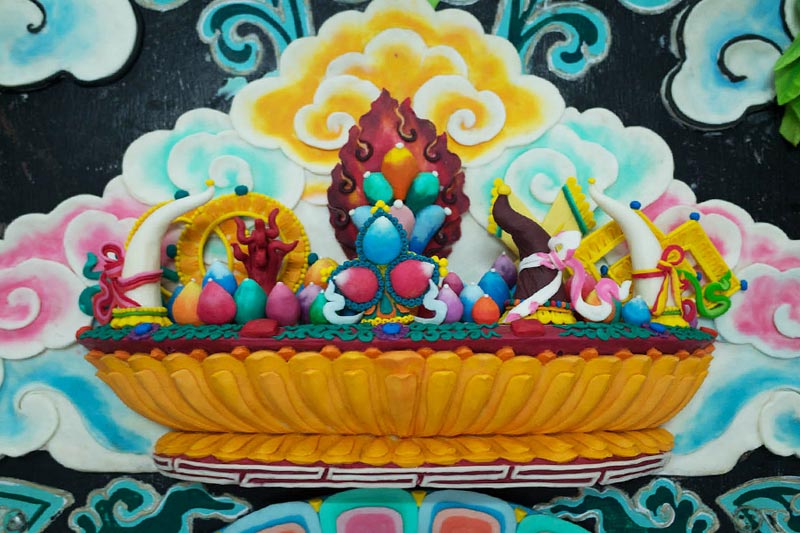
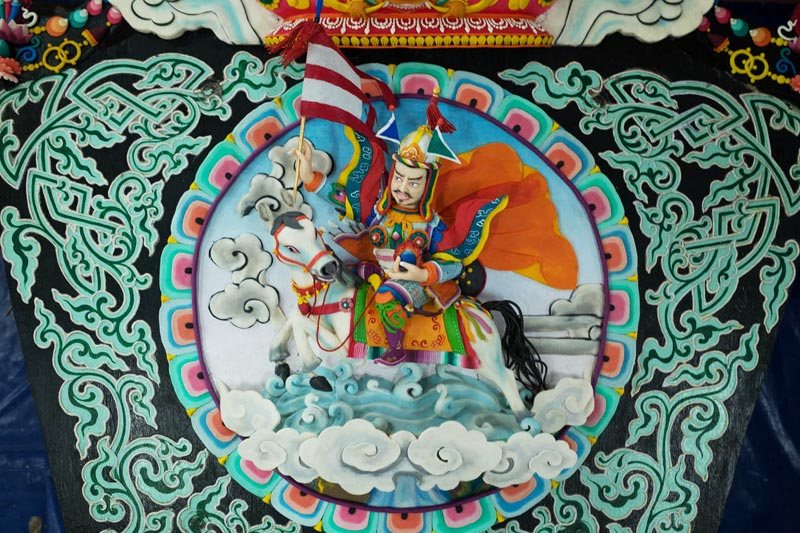
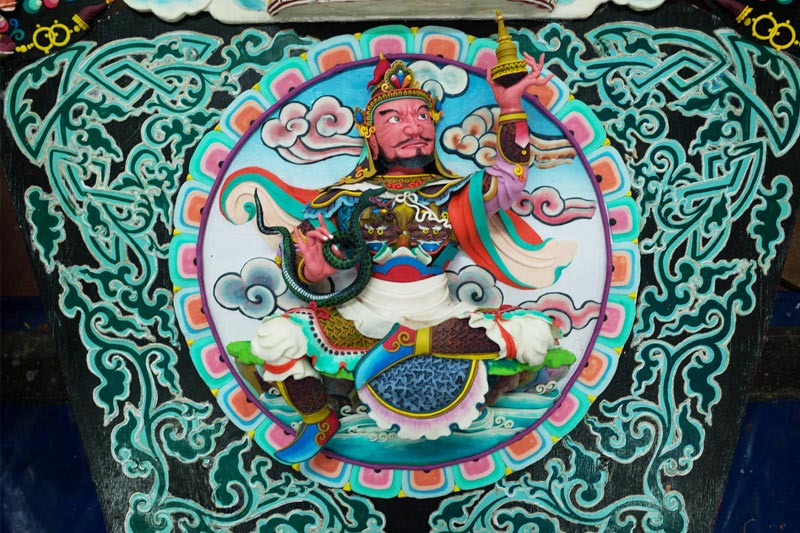
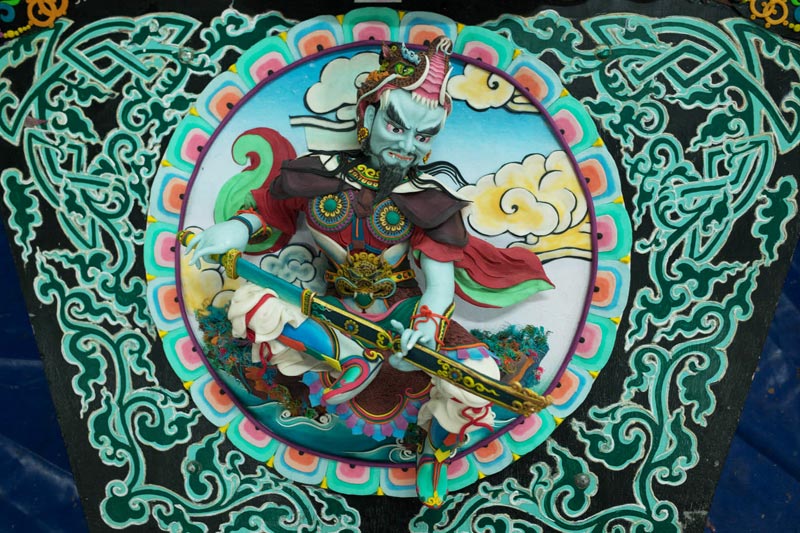
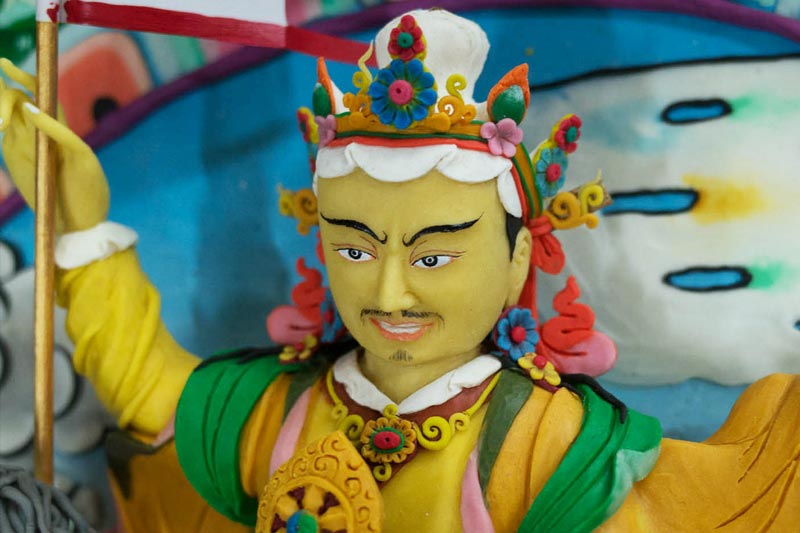
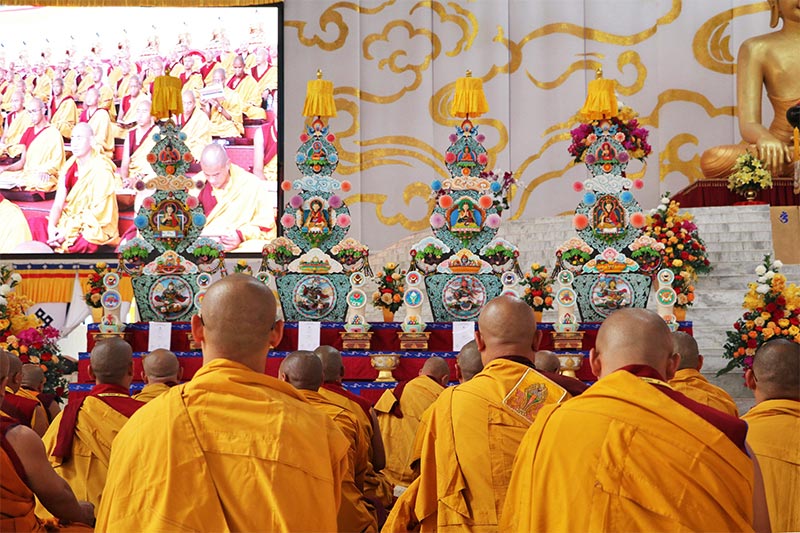
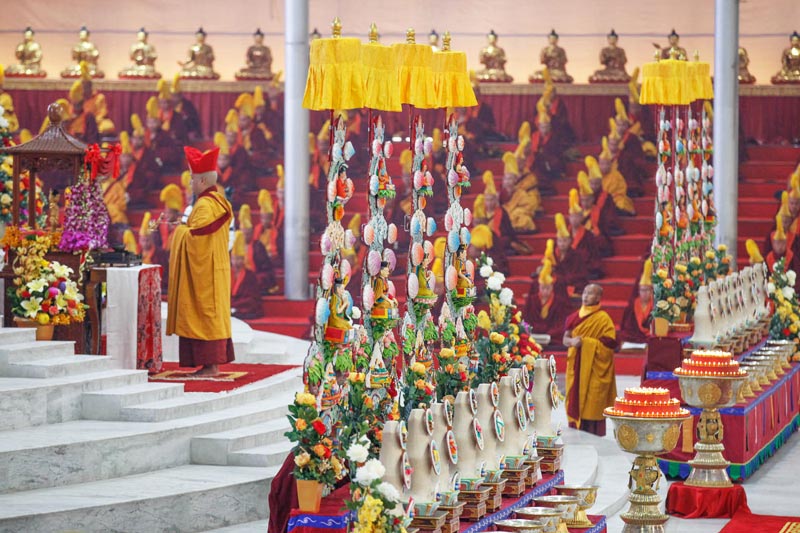
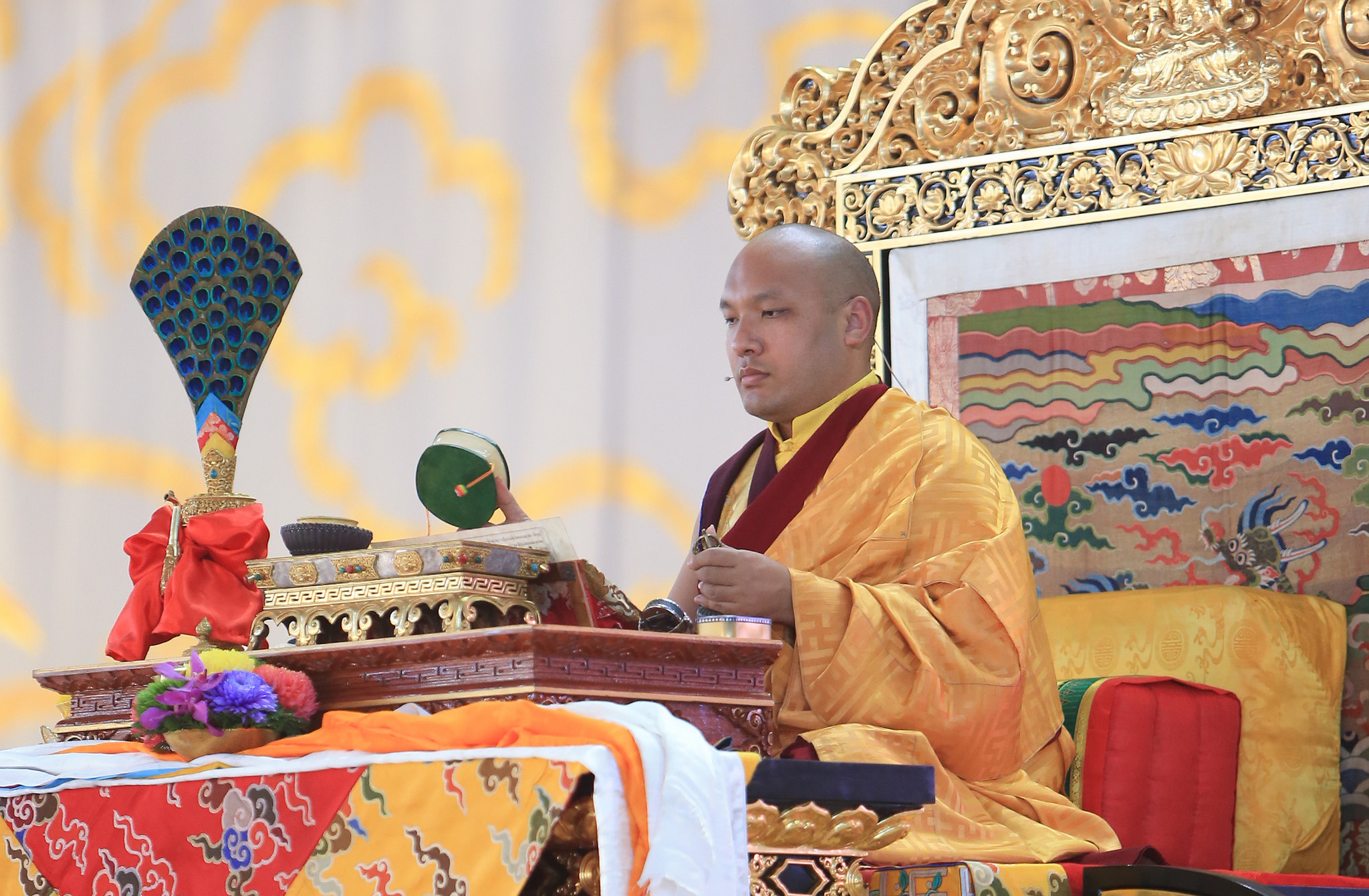
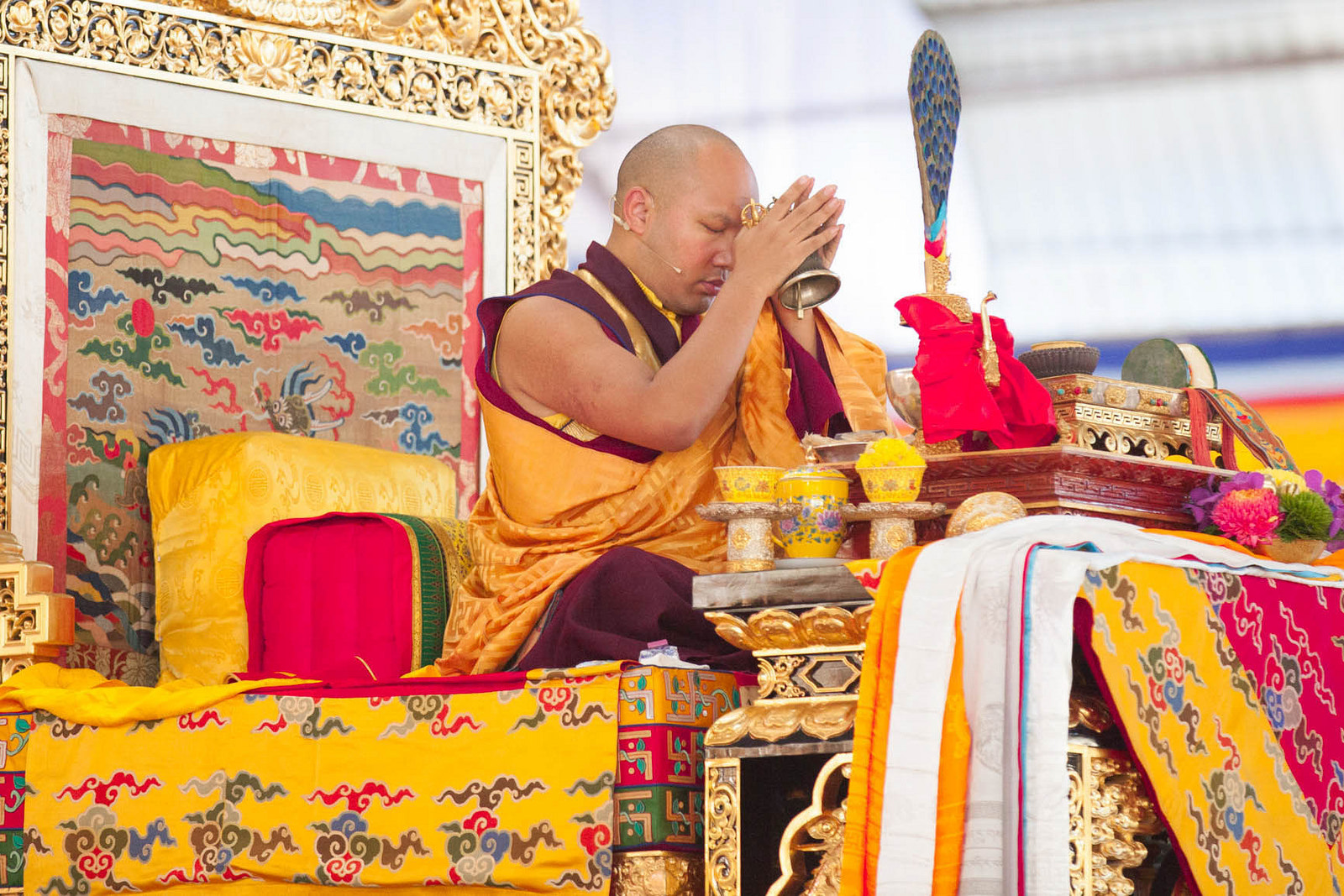
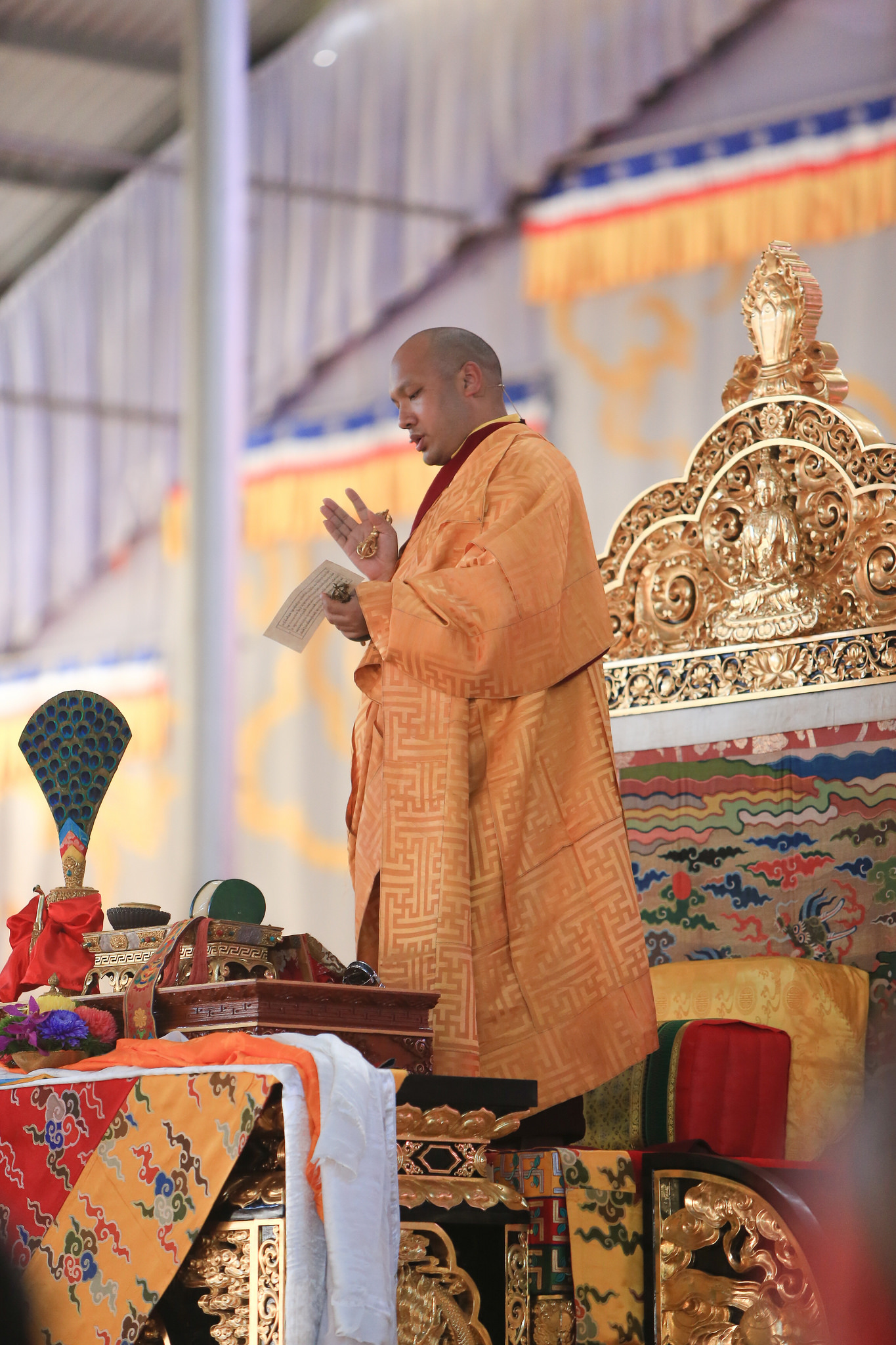
The special Akshobhya shrine is set up on the porch outside the Tergar Monastery Shrine Room. His Holiness wears a white kata around his neck during the ritual.
Monks prepare the bonfire over the pacification mandala.
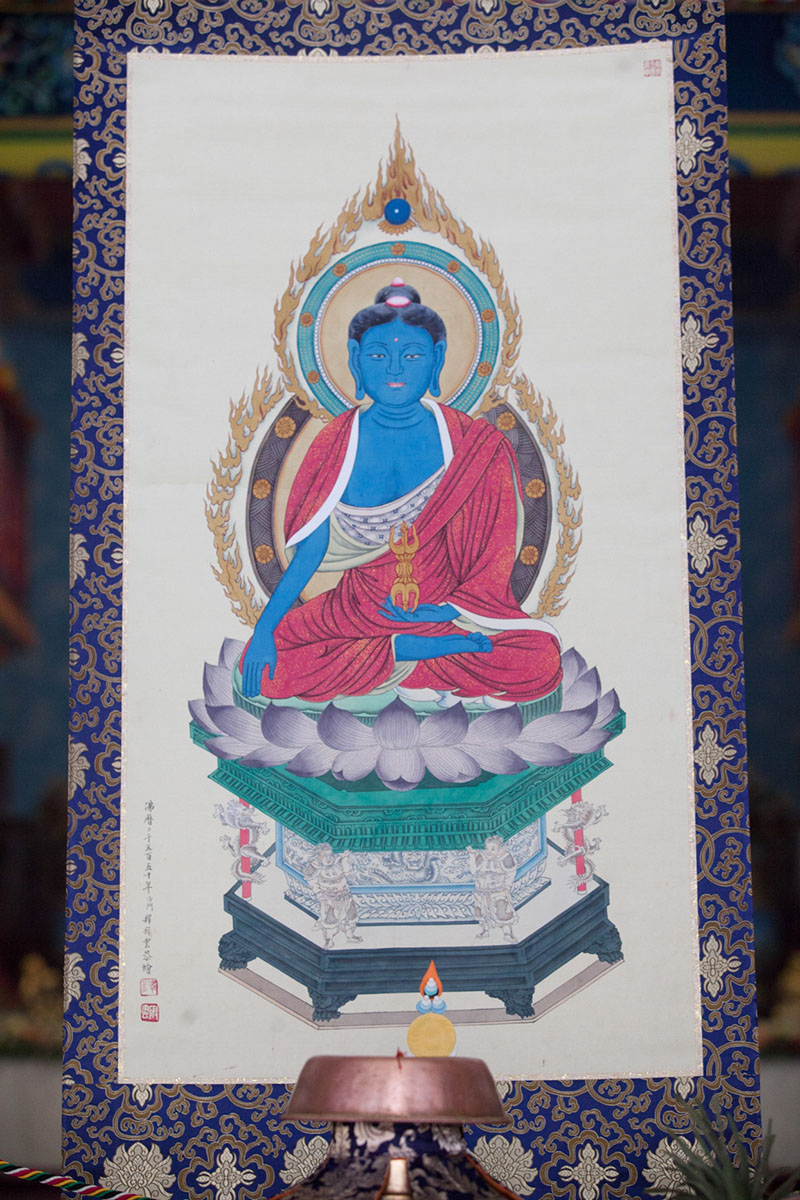
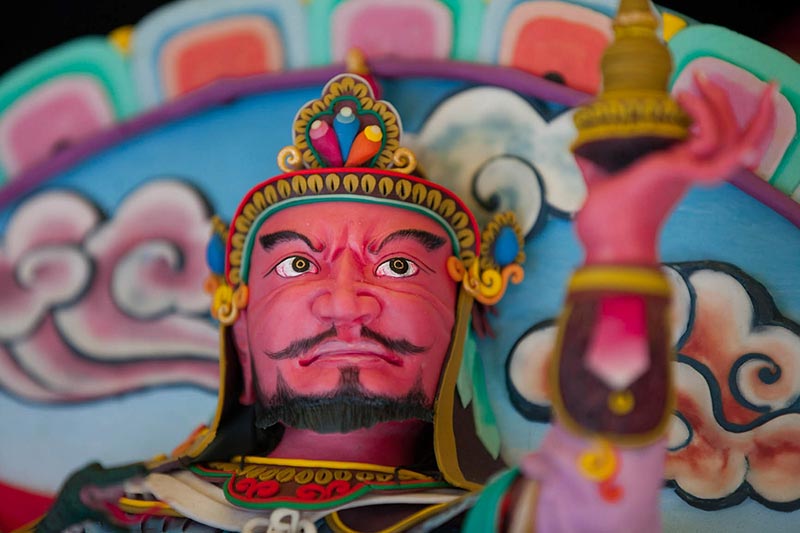
Buddha AkshobhyaAkshobhya is one of the five dhyani buddhas (wisdom buddhas), blue in colour. He symbolises overcoming negative emotions such as anger and hatred towards other sentient beings.
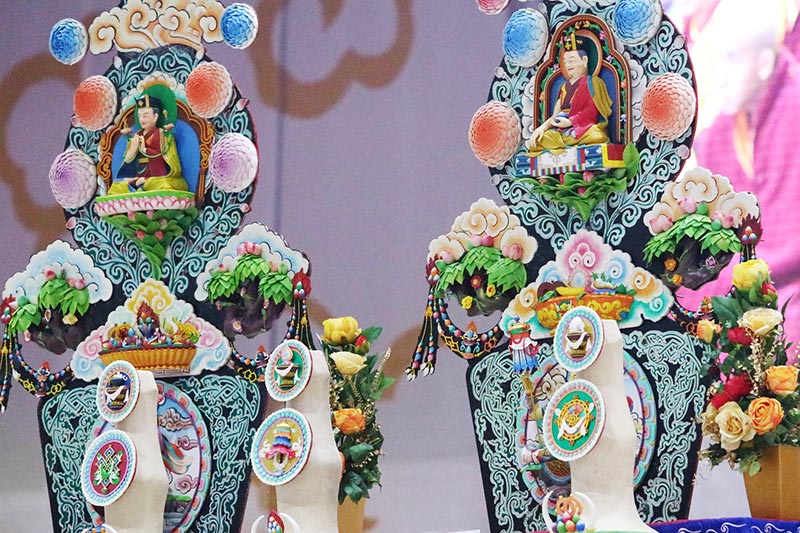
The eight auspicious symbols - the sacred knot; the Dharma wheel; the lotus; the victory banner; the parasol; the vase; the conch; the golden fish- will be offered during the ritual
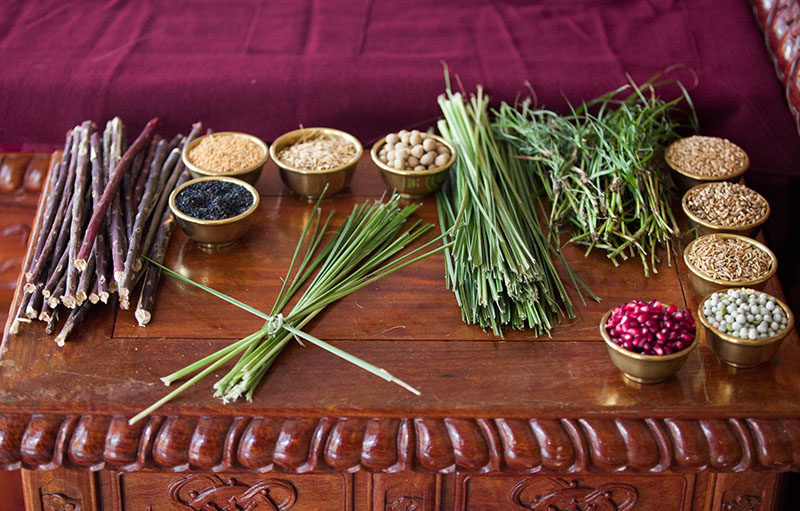
Auspicious substances: grains, grasses and seeds for the burnt offering.
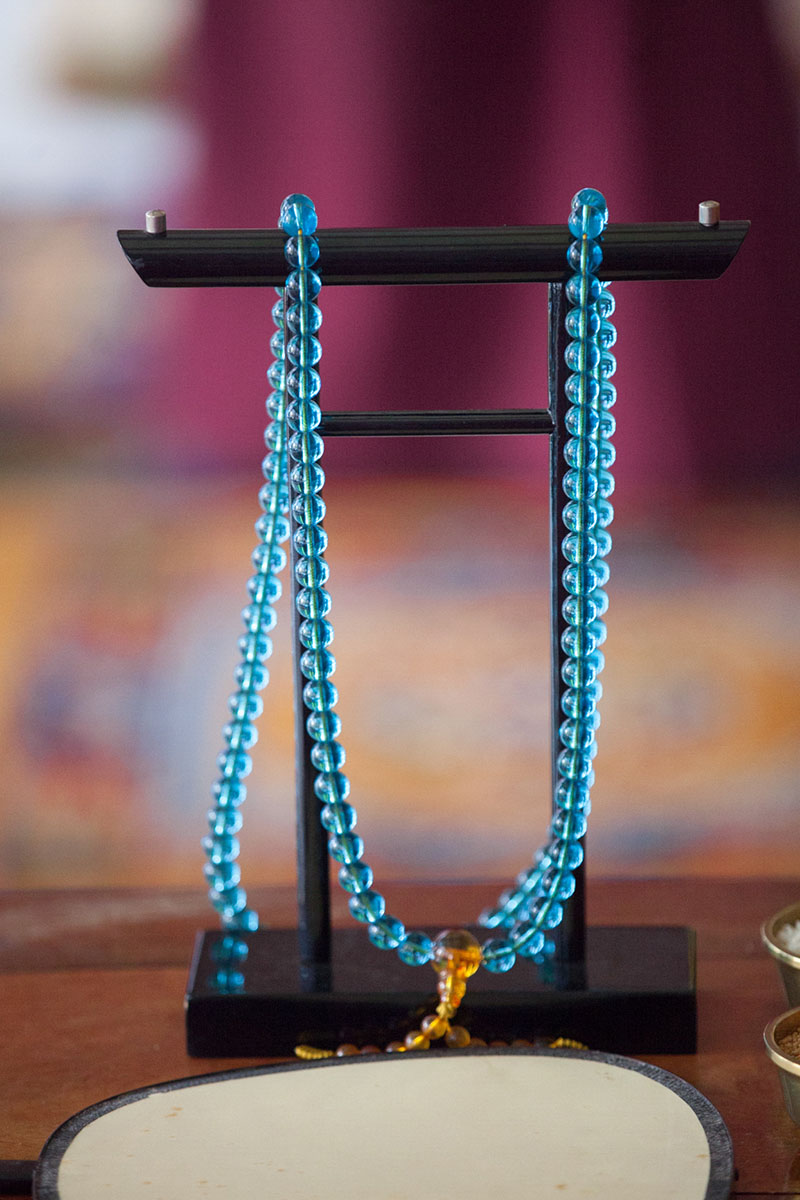
Special blue mala that His Holiness uses for the ritual; blue is the colour of Akshobhya Buddha.
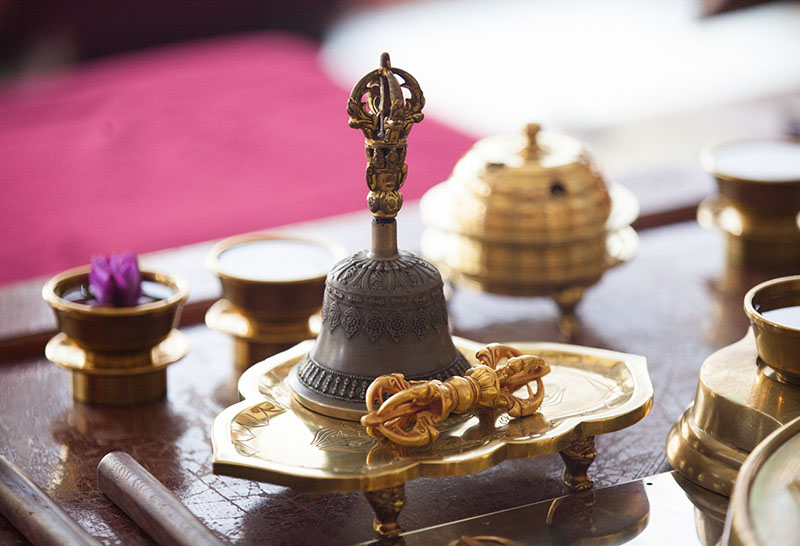
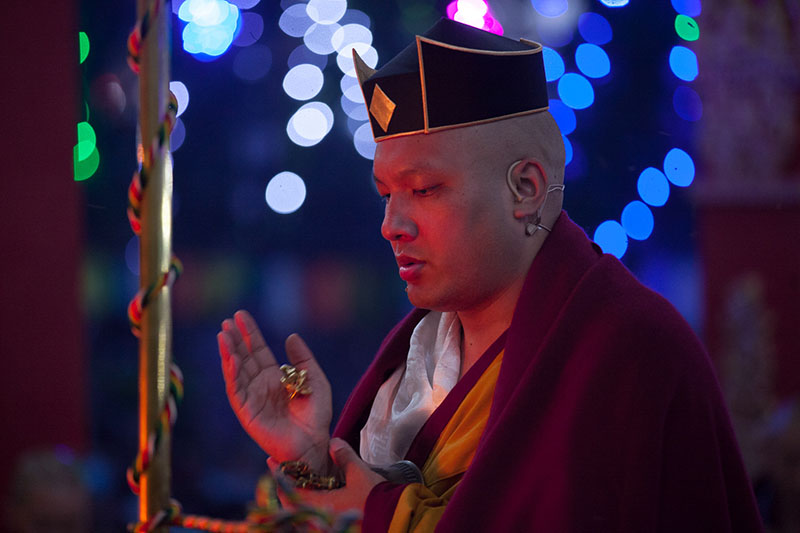
17th Karmapa’s Dorje and Bell
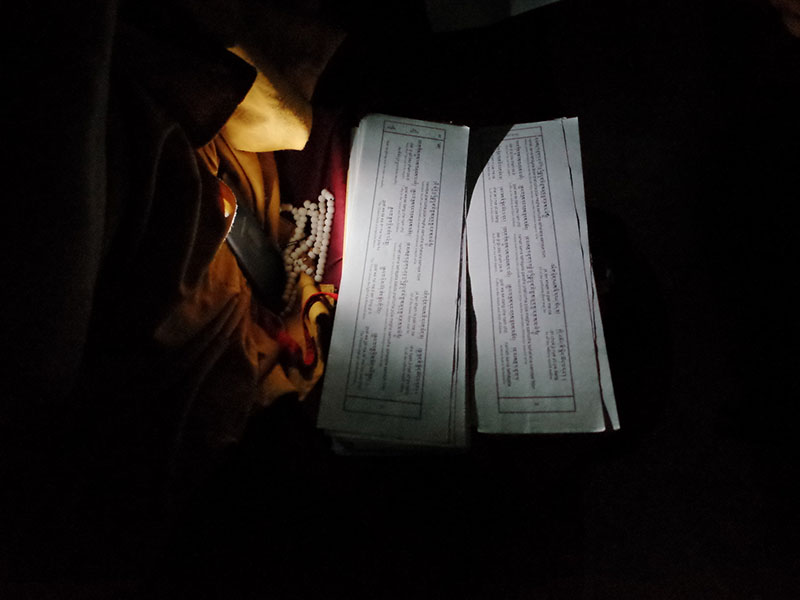
The Tibetan-style pecha used for the ritual.
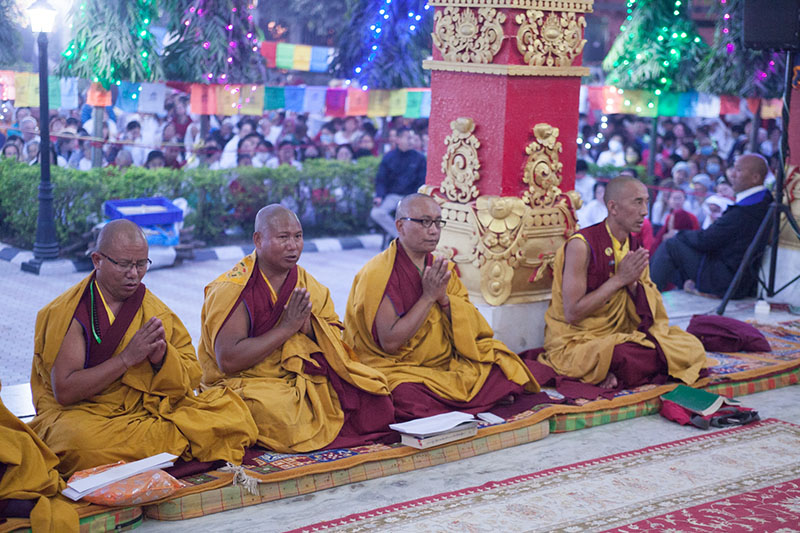
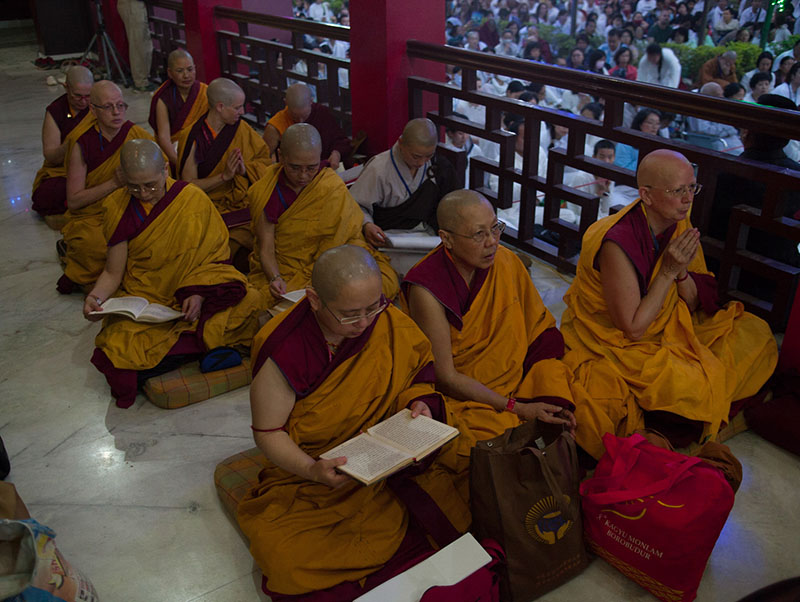
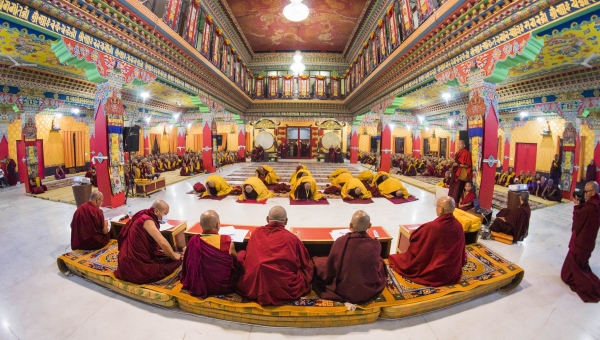
Behind the monks hundreds of people watch from the lawns in front of Tergar and the patio. AA rope cordon keeps them from interrupting the ritual.
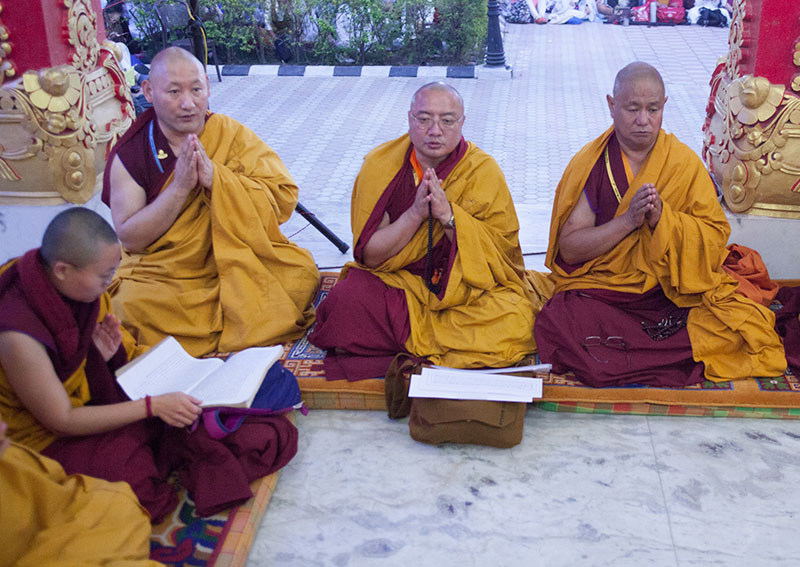
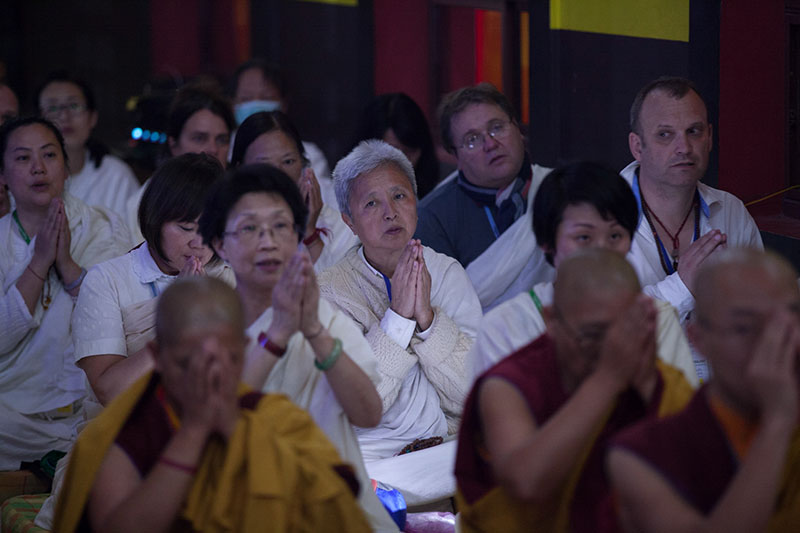
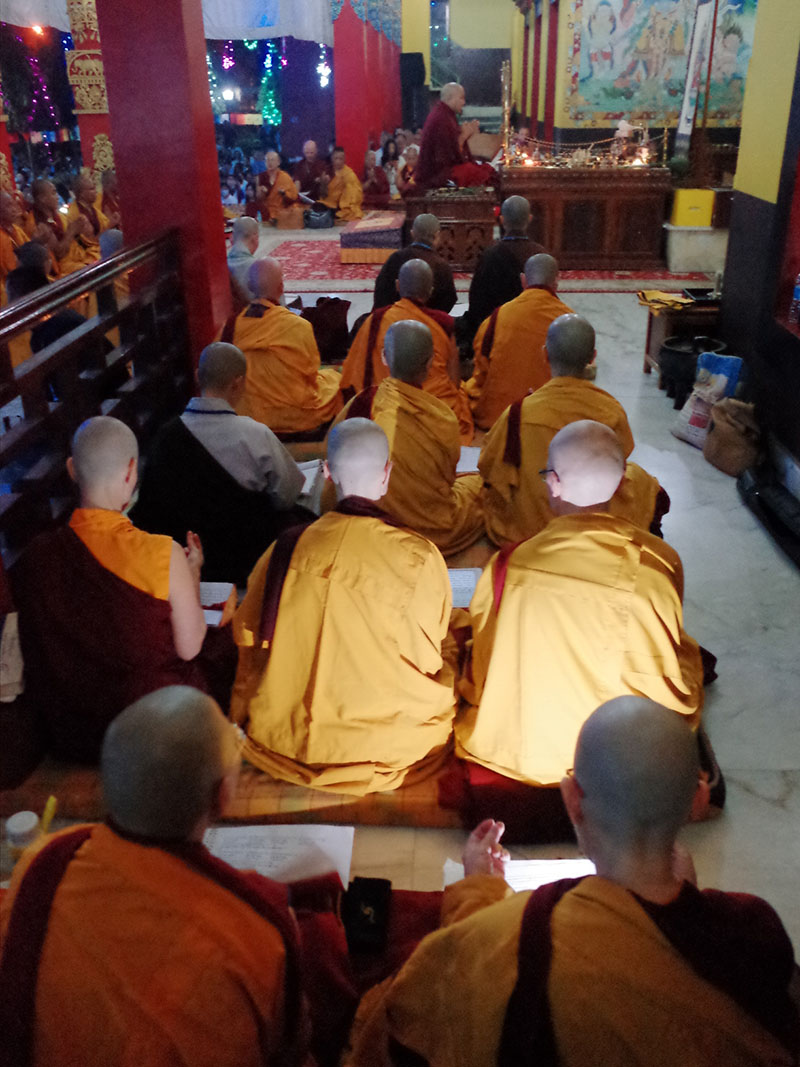
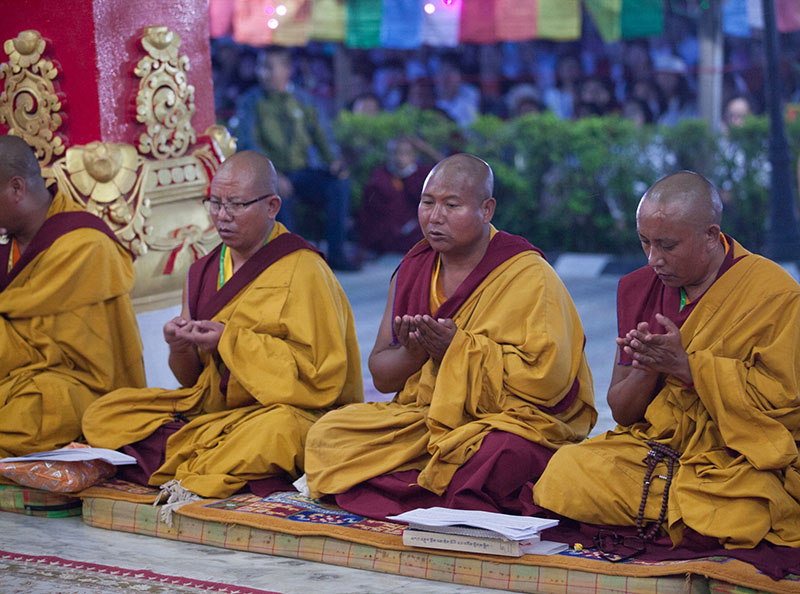
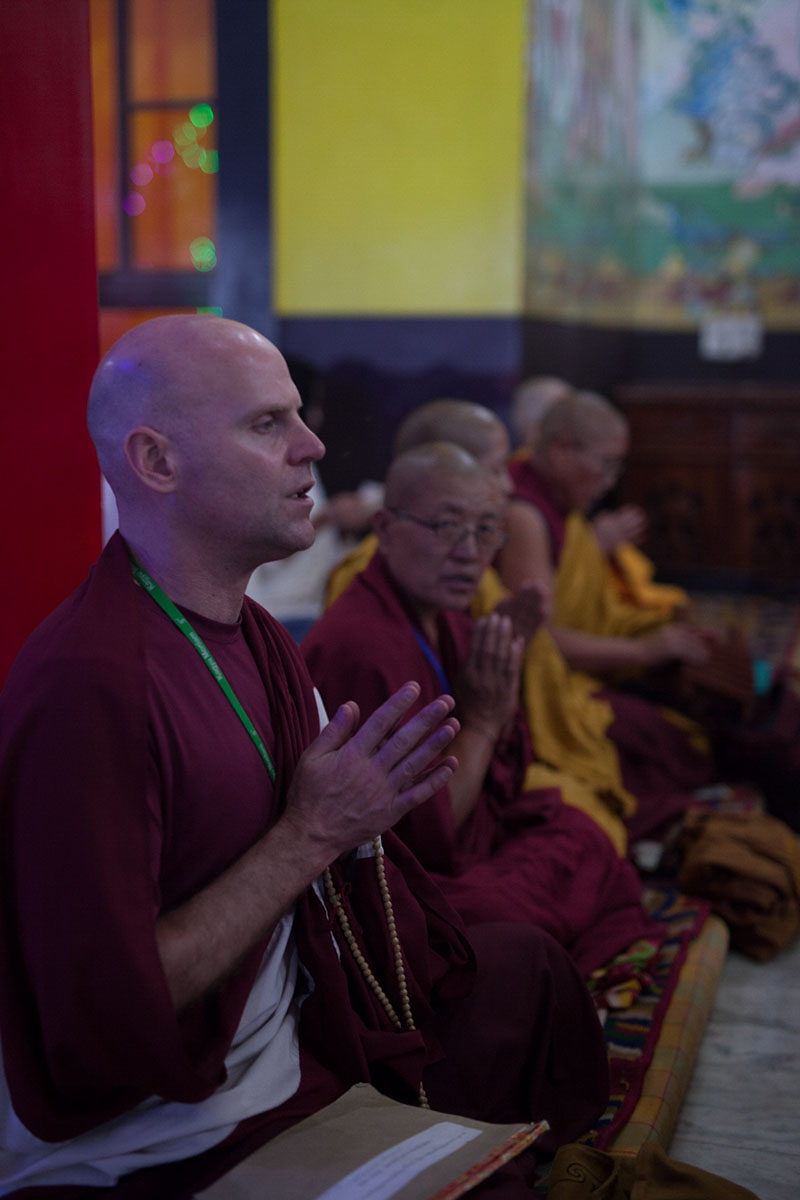
Monks who have received the Akshobhya empowerment and completed the retreat.
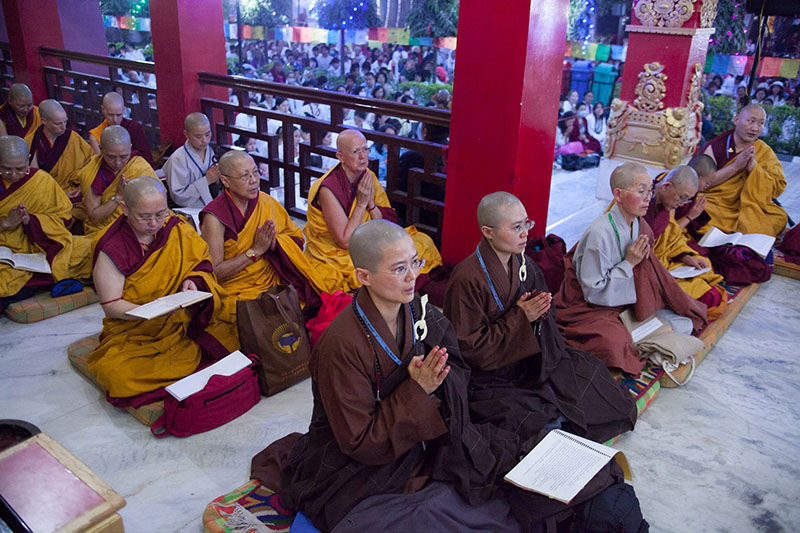
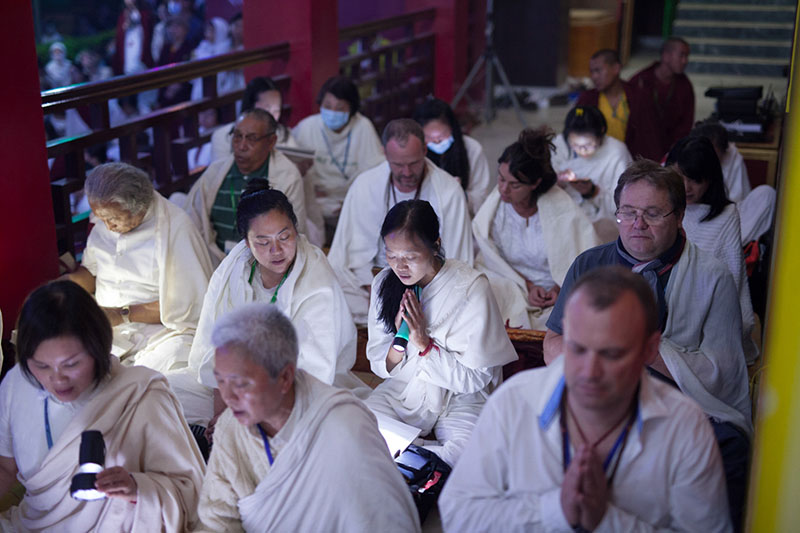
Foreign nuns from the Tibetan and Chinese traditions assist in the ritual.
Laypeople dressed in white also assist in the ritual. All of them have received the empowerment and completed the retreat in previous years.
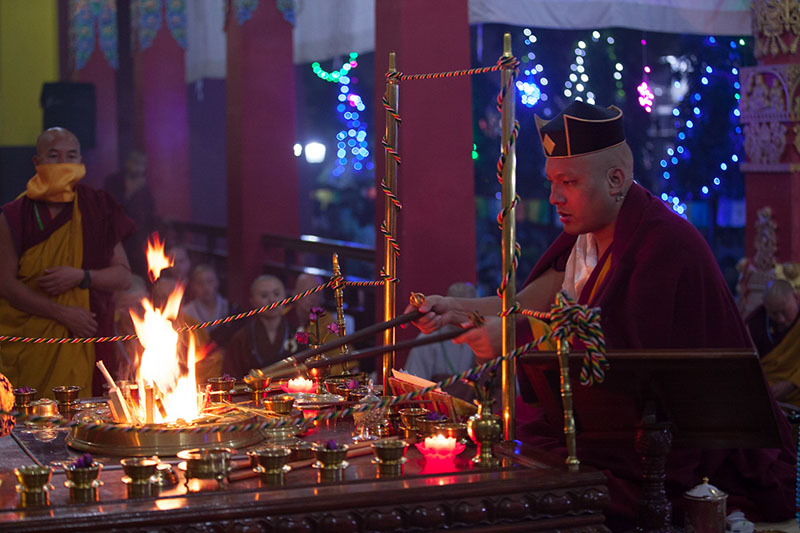
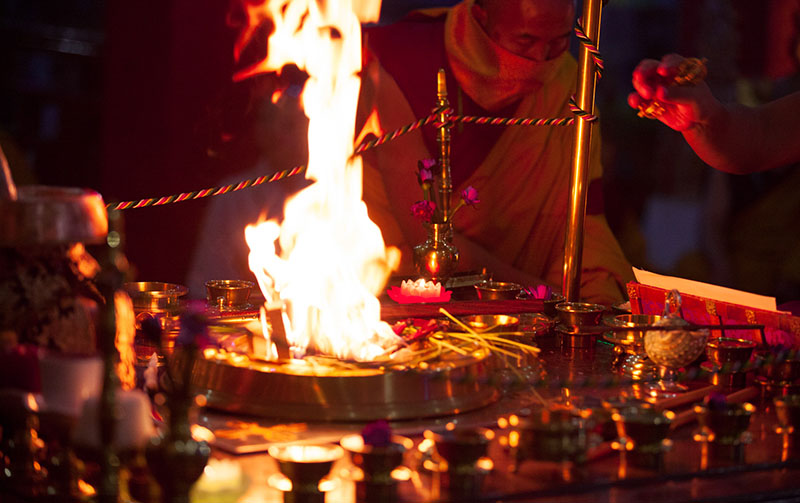
The coloured string and a metal gate symbolise the boundaries of Buddha Akshobya's pureland, Abhirati.
The invocation
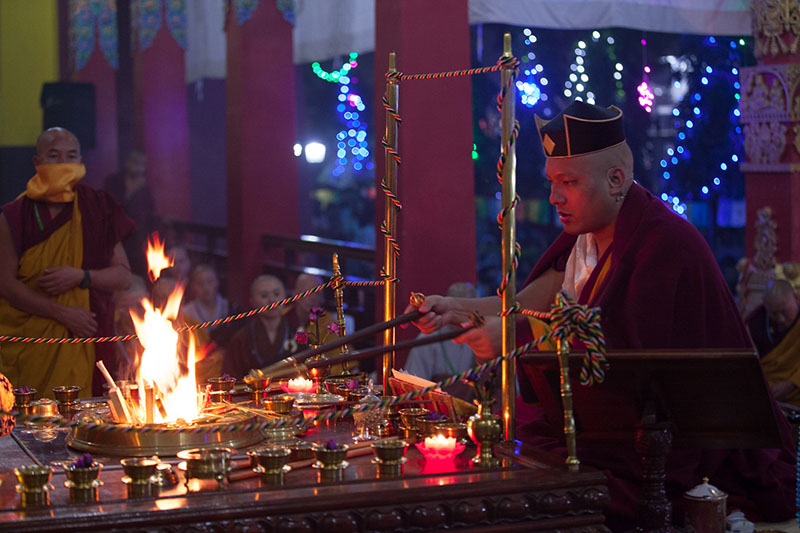
The fire for the offerings.
Darkness falls...
17th Gyalwang Karmapa leads the ritual...
and dons his black activity hat as he prepares to begin the burnt offerings..
Using long tongs the Gyalwang Karmapa carefully adds offerings to the small fire on the shrine.
The flames rise as more offerings are added
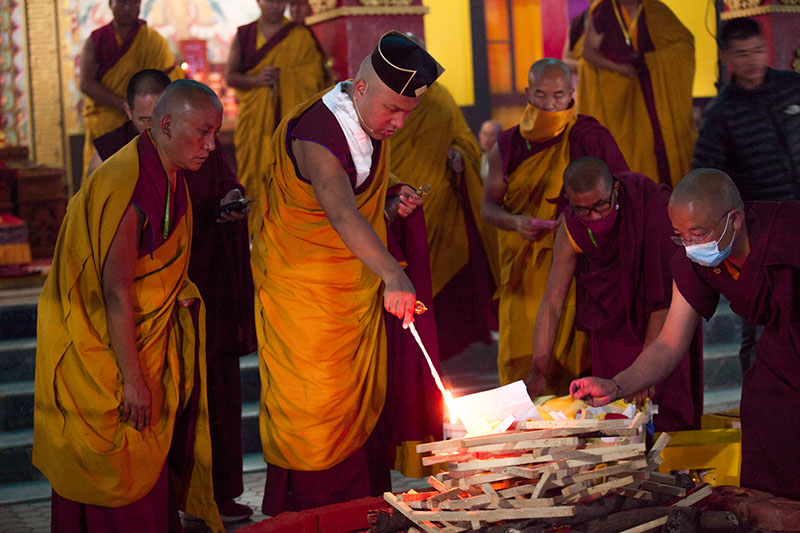
The Gyalwang Karmapa leaves the shrine and goes to light the bonfire.
Inside on the shrine the small fire blazes...
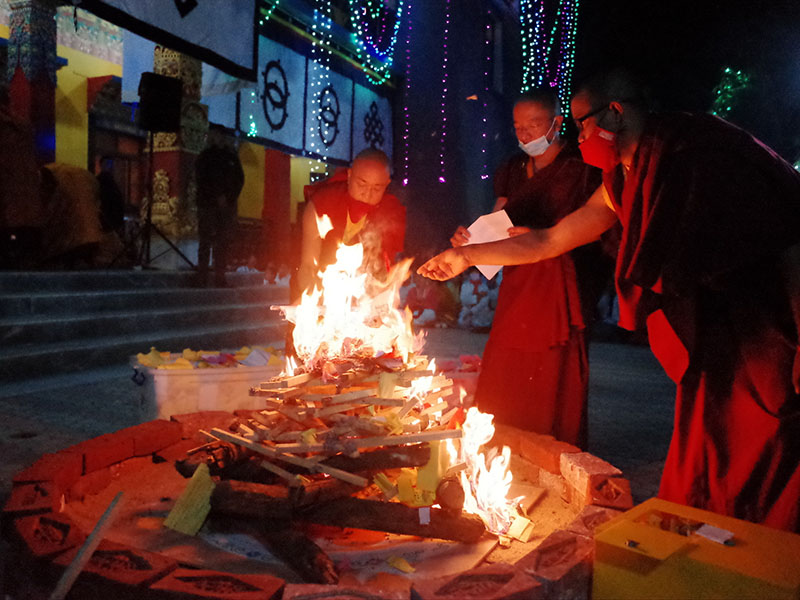
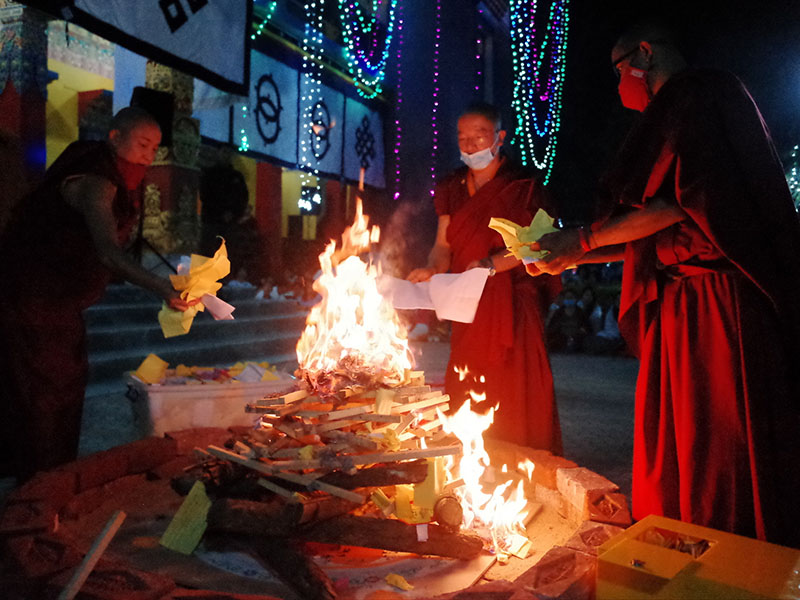
Outside the names of living and deceased are burned on the bonfire.
There are thousands of names to be added to the flames: yellow denotes the deceased, pink is for those who are living but facing obstacles such as physical or mental illness, unhappiness and so forth.
In 1407, the 5th Karmapa Dezhin Shekpa (1384–1415), arrived in the Imperial Chinese capital of Nanjing at the invitation of the Yongle Emperor Cheng Zu, who ruled from 1402 -1424 CE.
The Emperor required religious ceremonies to be performed for his deceased parents, and to this end, he requested the 5th Karmapa to offer the Ritual of Universal Salvation, at Linggu Monastery.
In return for performing ceremonies for the Emperor's family, the Emperor gave him the title 'Precious Religious King, Great Loving One of the West, Mighty Buddha of Peace', and presented him with a material representation of the famous 'Vajra Crown‘.
This was the crown which Dusum Khyenpa received from the dakinis, woven from their hair. It is said to be invisible to all except those pure in spirit.
The Emperor’s version of the crown was woven in black brocade and studded with jewels and is one of the Karmapa lineage treasures still in existence.
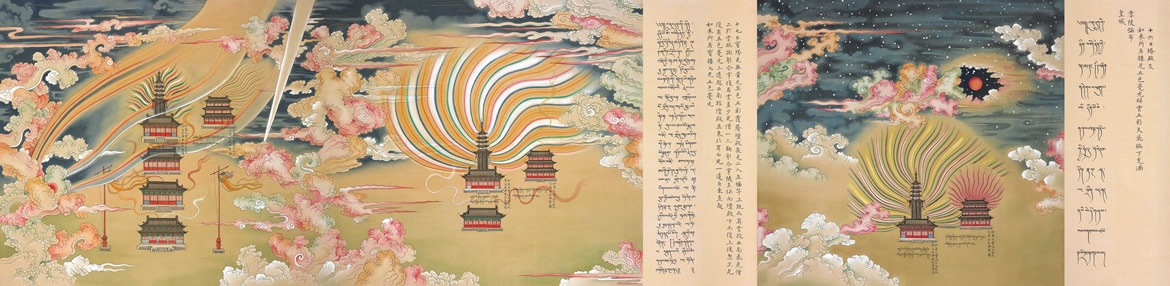
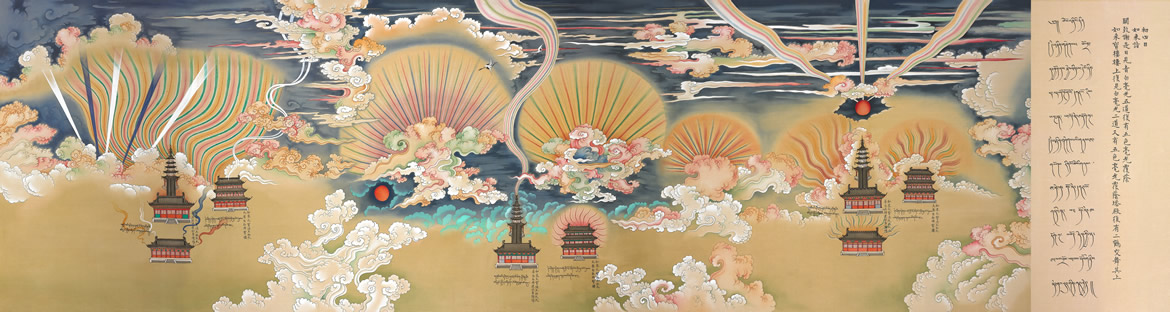
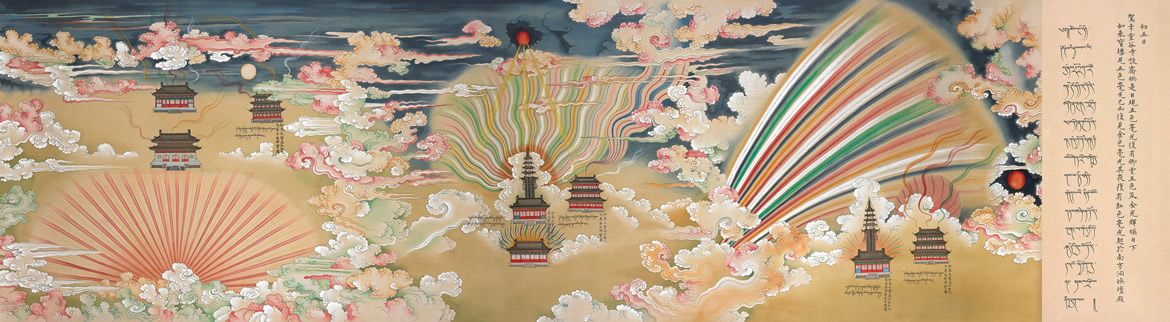
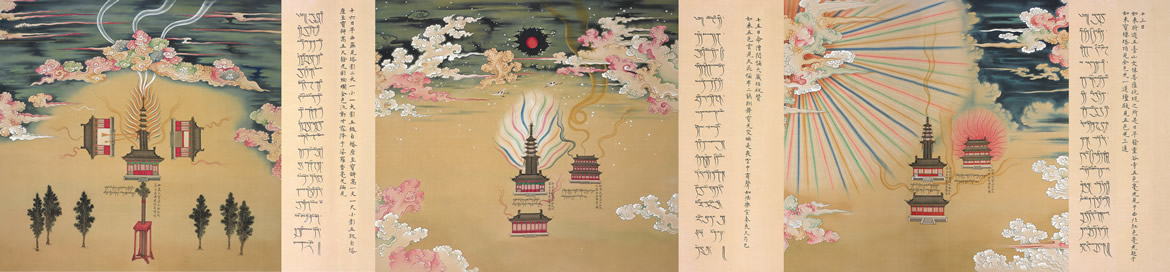
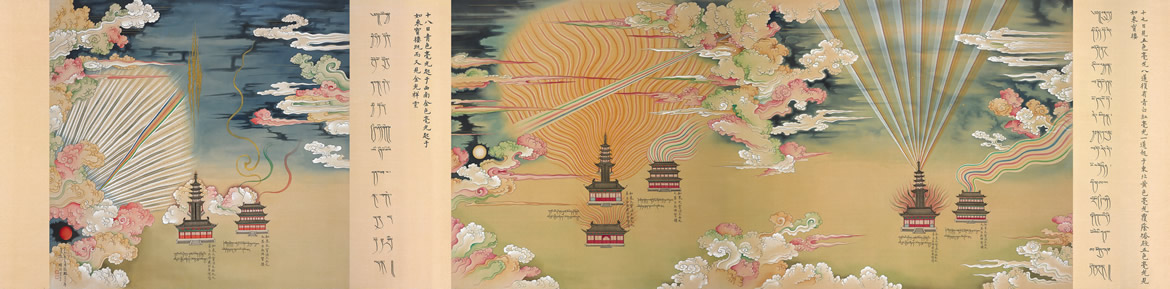
The Karmapa Scroll was commissioned by the Emperor and records the events that occurred during Dezhin Shekpa’s visit.
50 metres long and painted on silk, the scroll depicts scenes of miraculous signs that took place over twenty-two days during the performance of the ritual. These are described in Chinese, Arabic, Uighur, Tibetan and Mongolian.
An original of the scroll has been preserved in the Tibet Museum, Norbulingka Palace, and Lhasa. Based on photographs of this scroll, an elderly Taiwanese monk, who tutored the 17th Karmapa in classical Chinese drawing and painting, was able to reproduce the original in collaboration with His Holiness.
His Holiness himself painstakingly completed the Tibetan calligraphy on each panel and commissoned a high-quality photographic enlargement. It was made in Taiwan and is on display at the Kagyu Monlam this year.
The extensive test of protocol for monks and nuns was established in 2004 when the Gyalwang Karmapa issued a code of conduct for monastics based on both the Vinaya precepts set out during the life of the Buddha himself and ritual aspects unique to the Tibetan context.
One by one the monasteries and nunneries presented themselves in front of a panel of seven judges.
Getsuls (novice monks) had to show that that they knew how to wear all the robes properly.
Putting on the red zen and the chögu (yellow prayer shawl) properly were some of their tasks.
Gelongs (fully ordained monks) had many extra tasks, such as putting on the tsesha [the large yellow hat] was one of them.
Gelongs also had to show their skill in putting the namjar (the additional yellow monastic robe) and the dagam (the warm winter cloak).
They had to walk in a dignified manner while carrying dharma texts over their left shoulder in the prescribed way.
Getsulmas (novice nuns) as well had to display their prowess in monastic forms. Just like Getsuls, they had to show how to place the sitting cloth, the dingwa, on the floor properly, and how to receive tea and recite the tea offering prayers.
Making prostrations while wearing a prayer shawl was one of the tasks they all had to demonstrate.
They also had to display that they knew how to wear their robes properly.
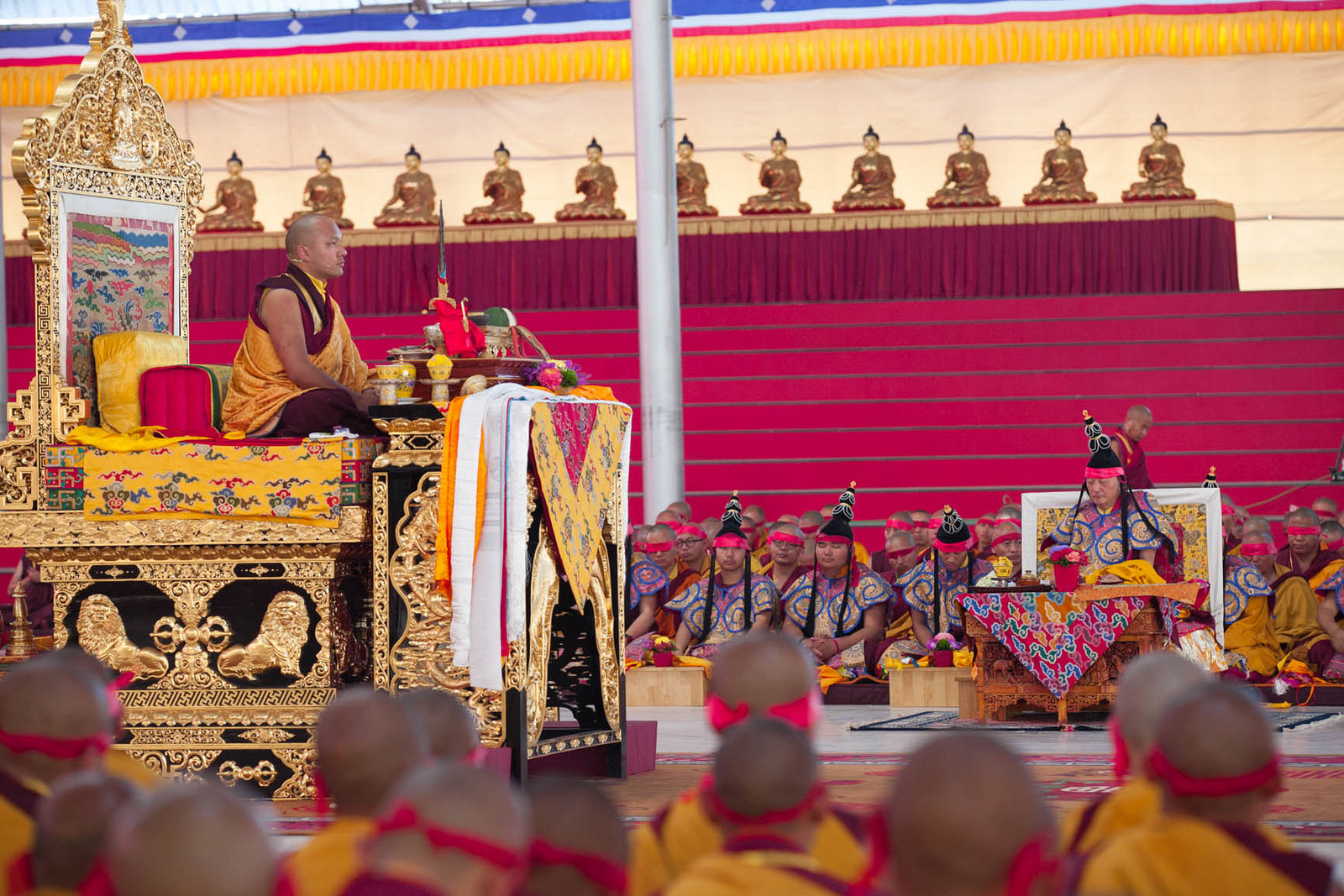
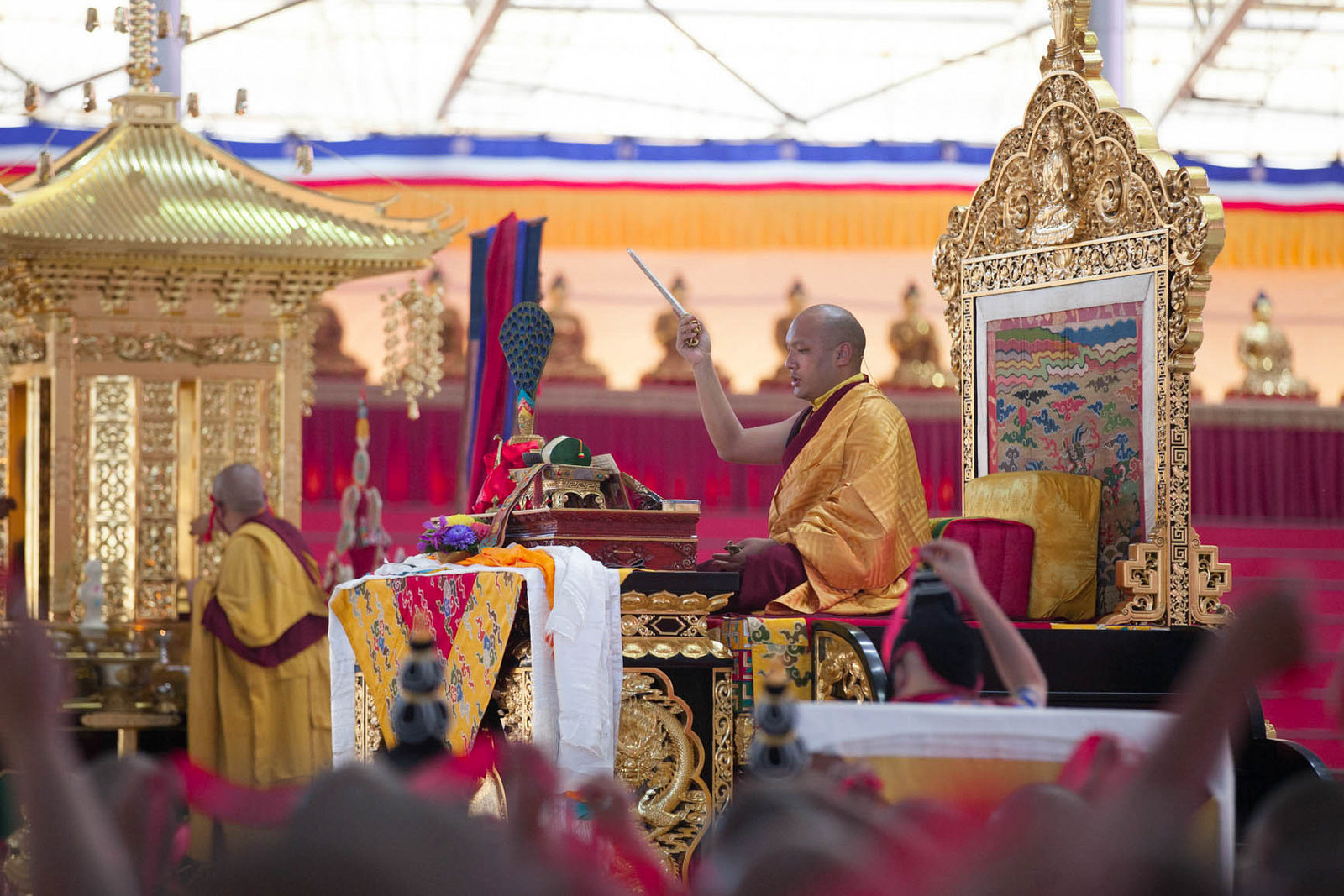
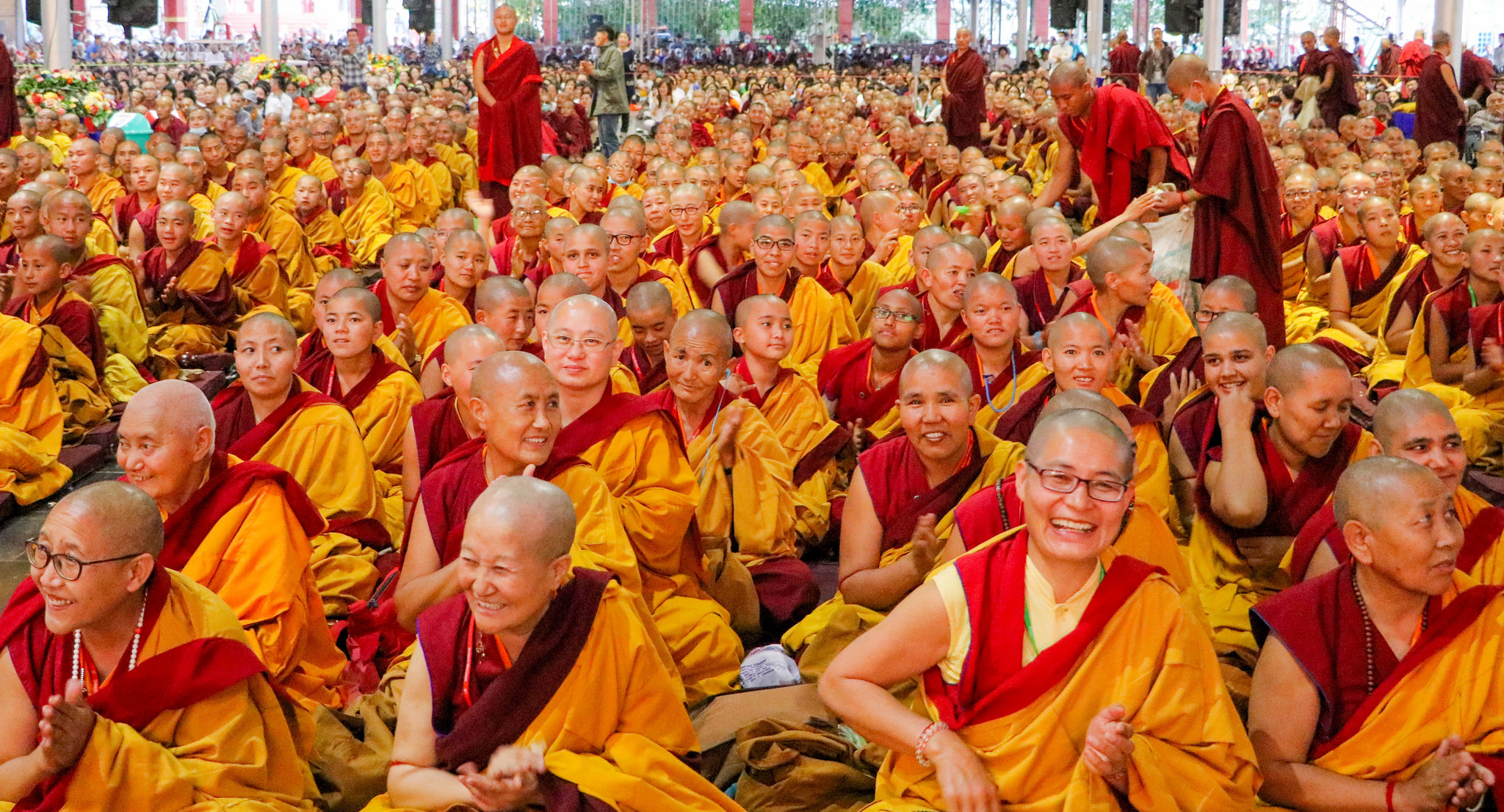
After two days of preparations, His Holiness the Gyalwang Karmapa bestowed the grand empowerment of Chakrasamvara from the tradition of the mahasiddha Luipa to over 10,000 initiates.
It was the first time that the followers of the 17th Gyalwang Karmapa had the opportunity to receive such an important empowerment from the head of the Kagyu lineage.
His Holiness supplicated on behalf of all of the gathered initiates.
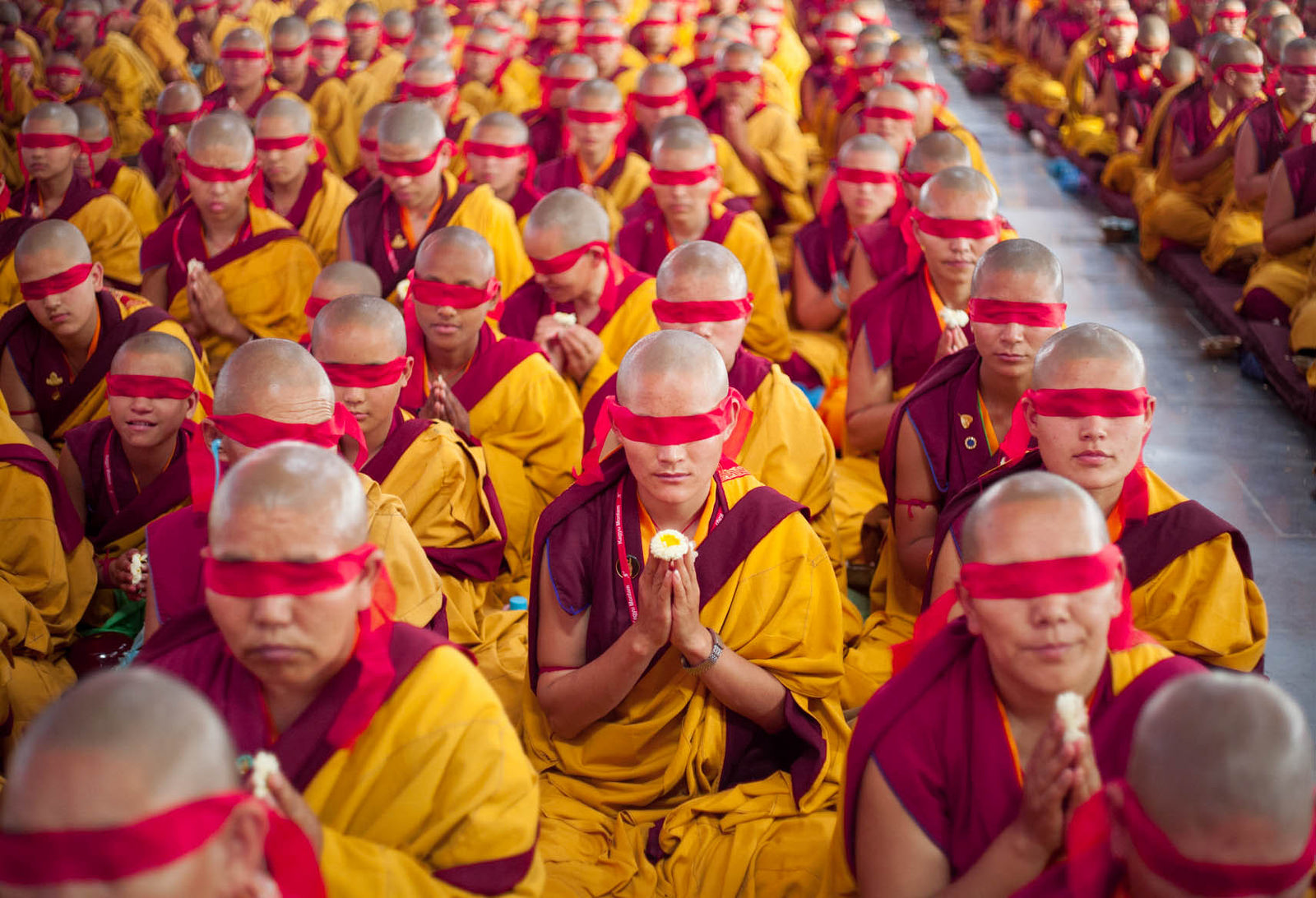
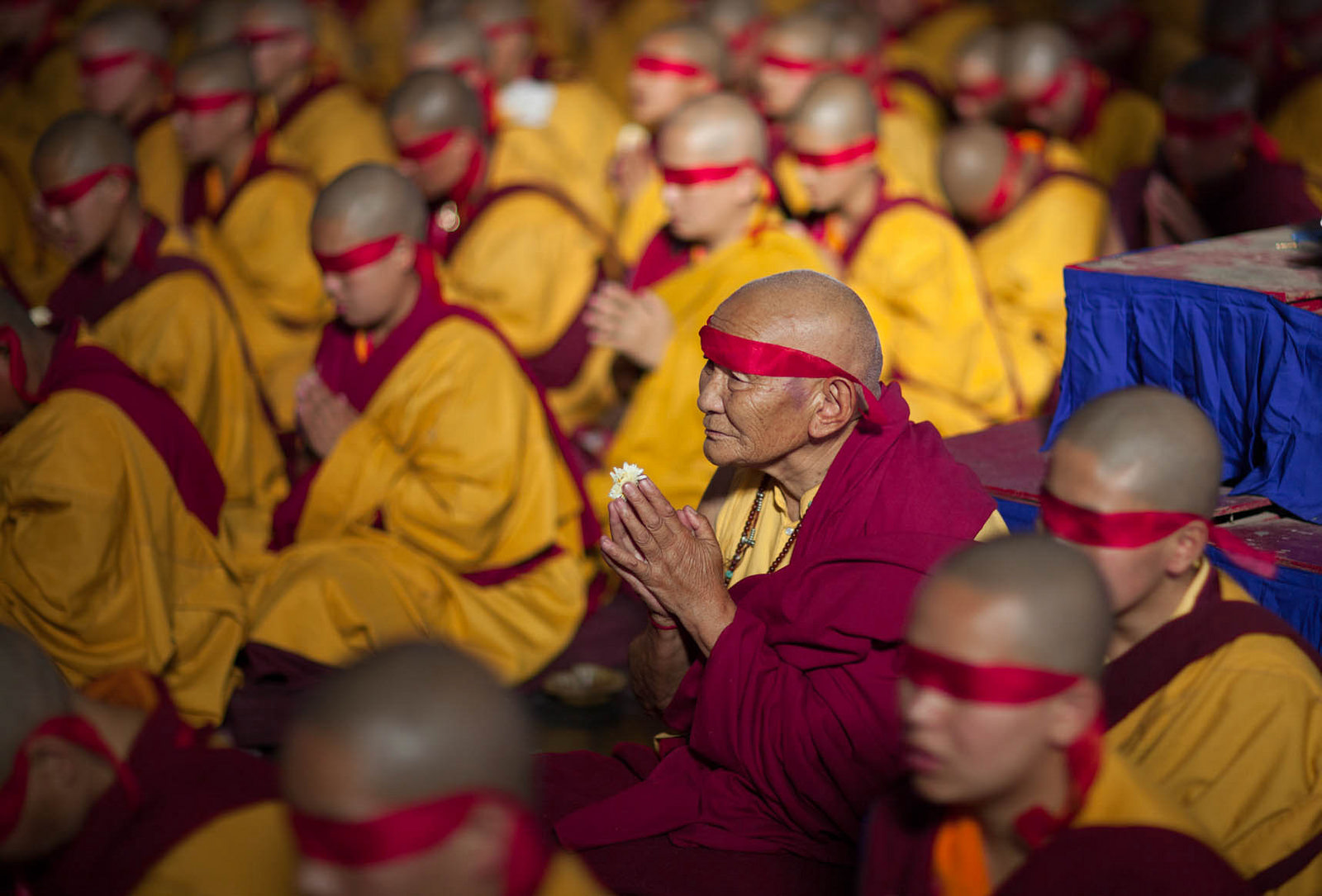
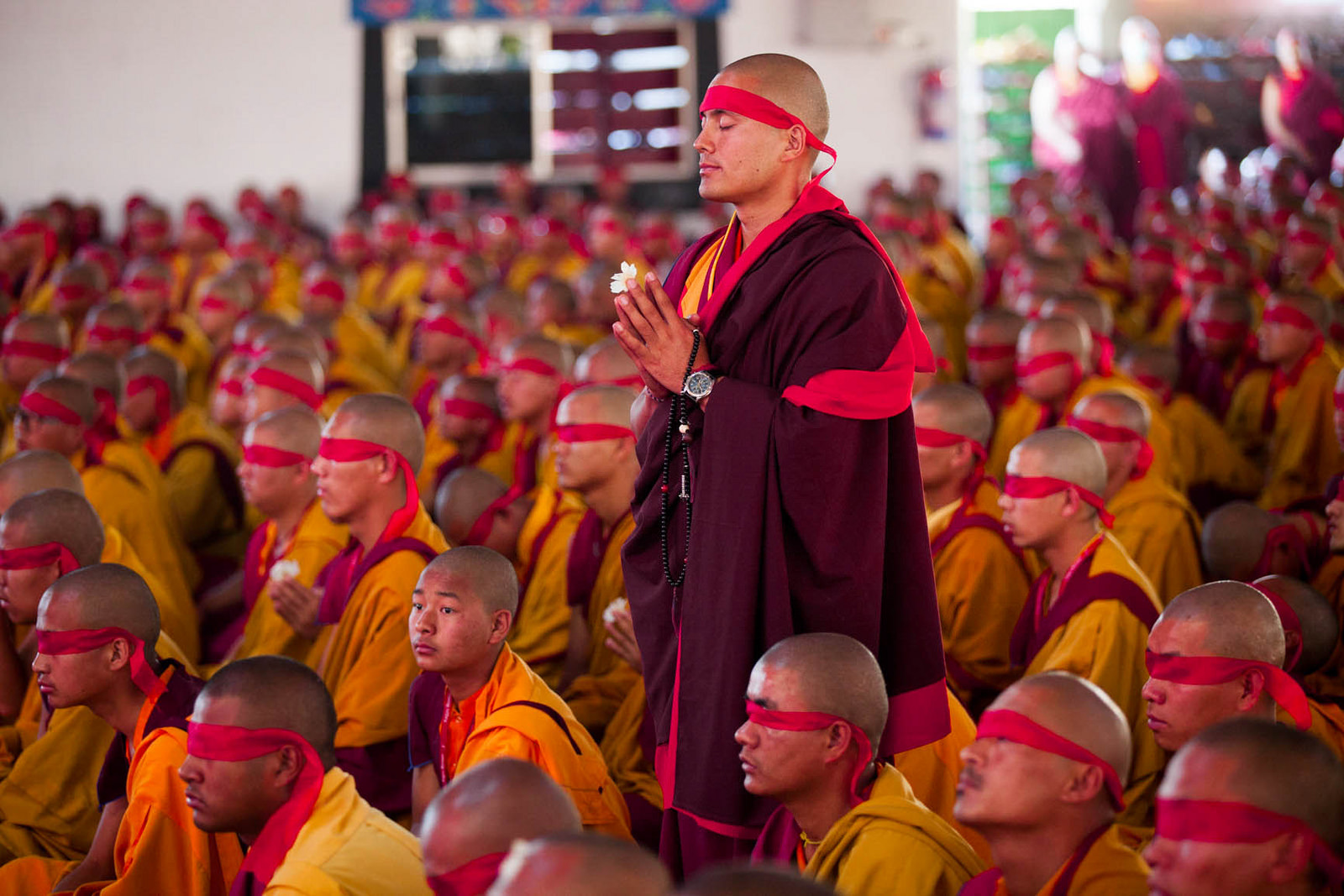
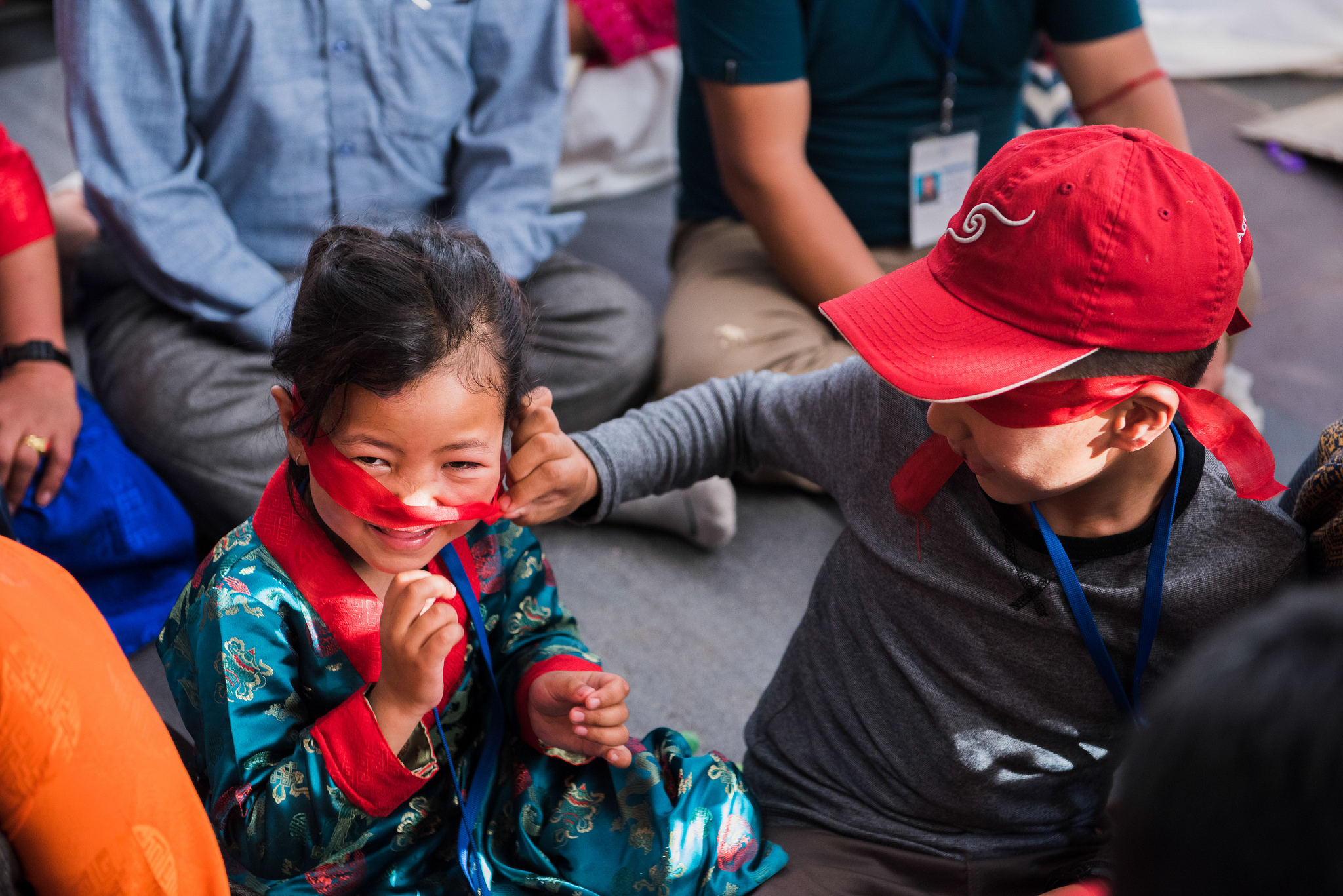
According to the tradition, red blindfolds are placed covering the eyes entirely. At this moment, His Holiness delivered some essential teachings on the path of Secret Mantra.
The Gyalwang Karmapa introduced the initiates into the meaning of the Secret Mantra by delineating the essence of the word “mantra” as “words of truth”. “It is when we speak in accordance with the nature of how things are, the power of those words, and the way of bringing benefit to the world through that power”, he said.
His Holiness explained that though it is said that there are millions of Mother tantras, Chakrasamvara is the quintessence of them all.
He imparted the Madhyamaka tradition of the Bodhisattva vows in Tibetan following the words found in the Way of the Bodhisattva, then repeated in English and Chinese.
The 17th Karmapa expounded on the meaning of vajra as ultimate bodhicitta which, as the “prajna that realizes emptiness”, breaks the iron cage of ego clinging.
After a long time, the initiates were instructed to remove their blindfolds.
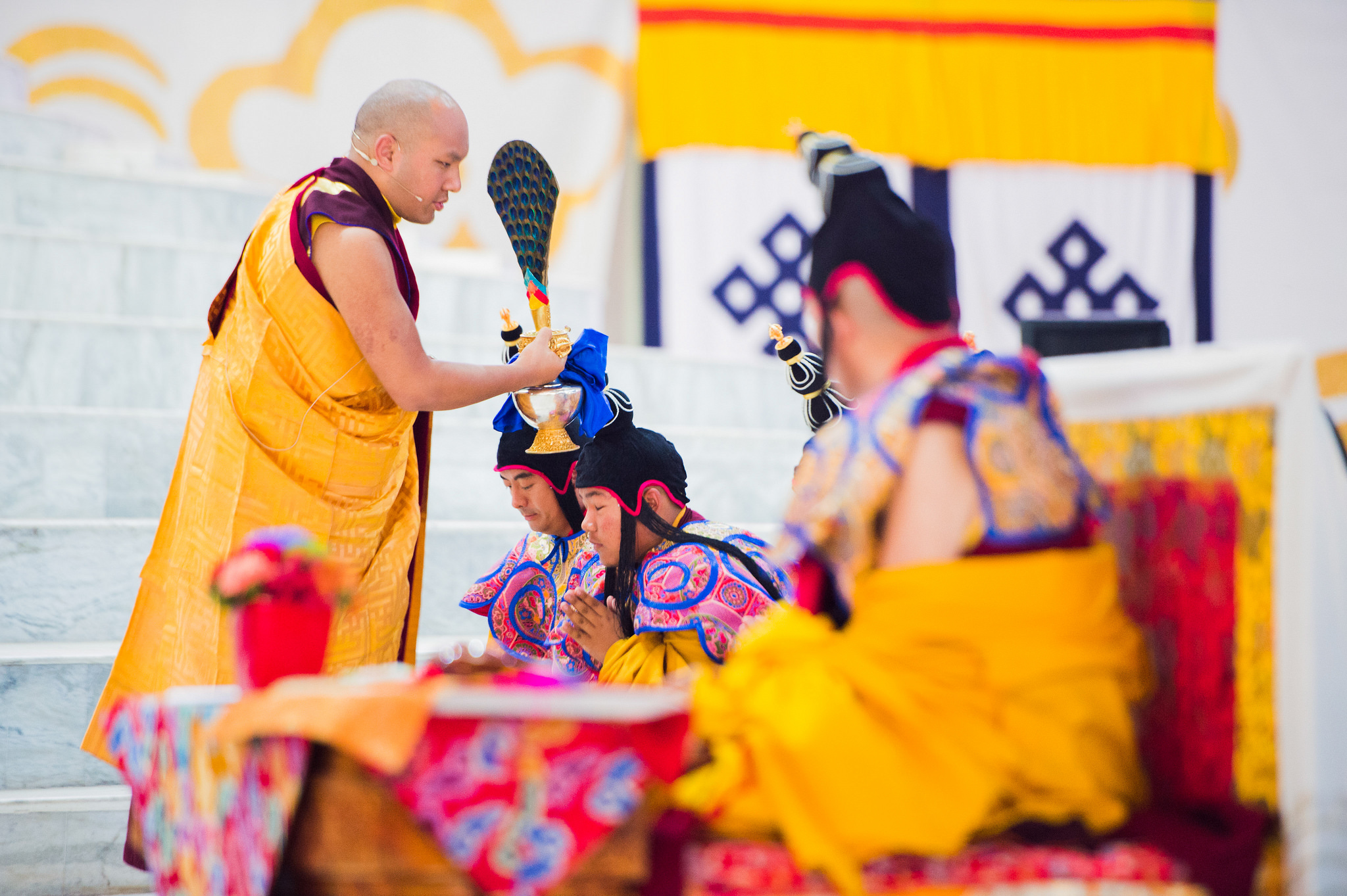
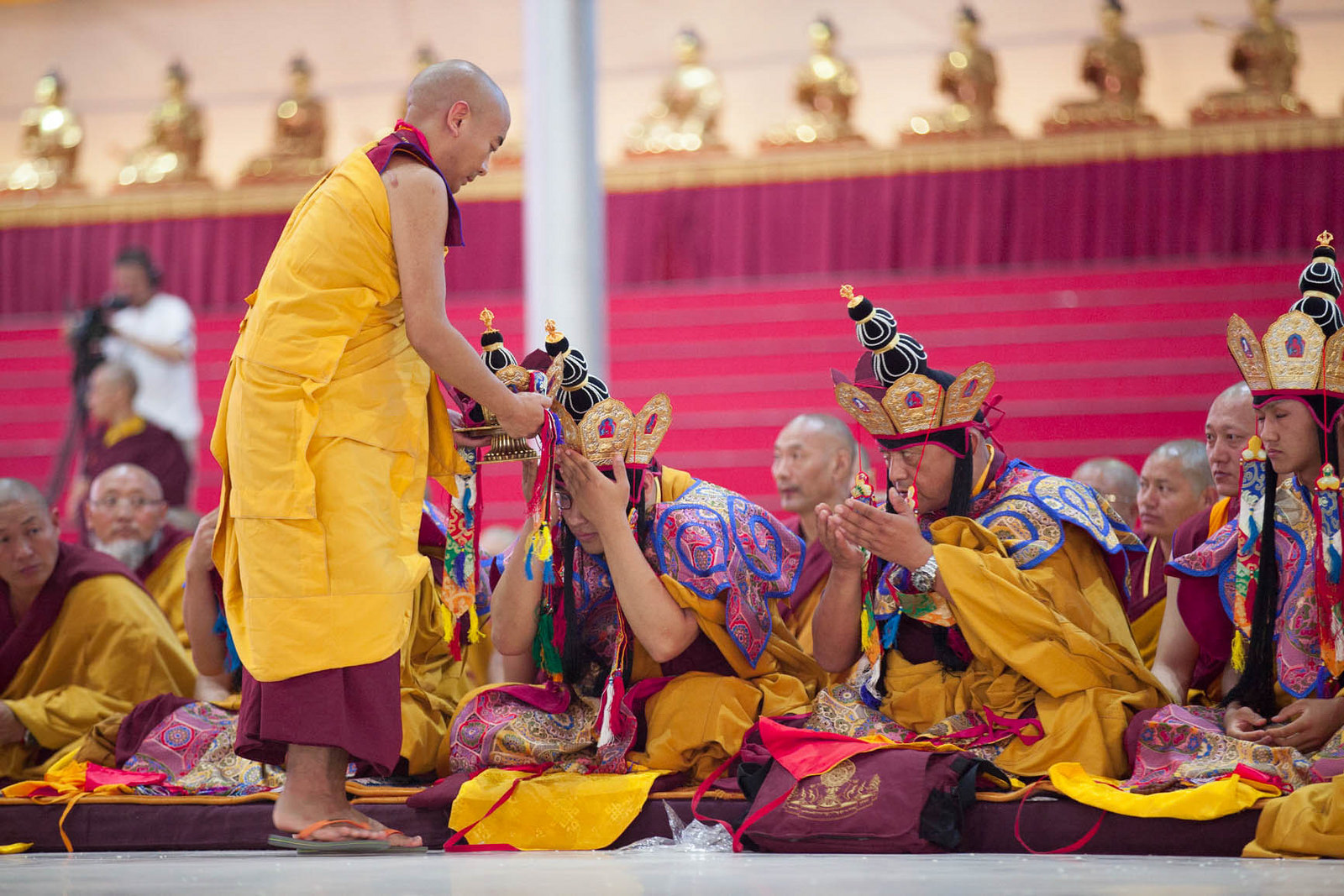
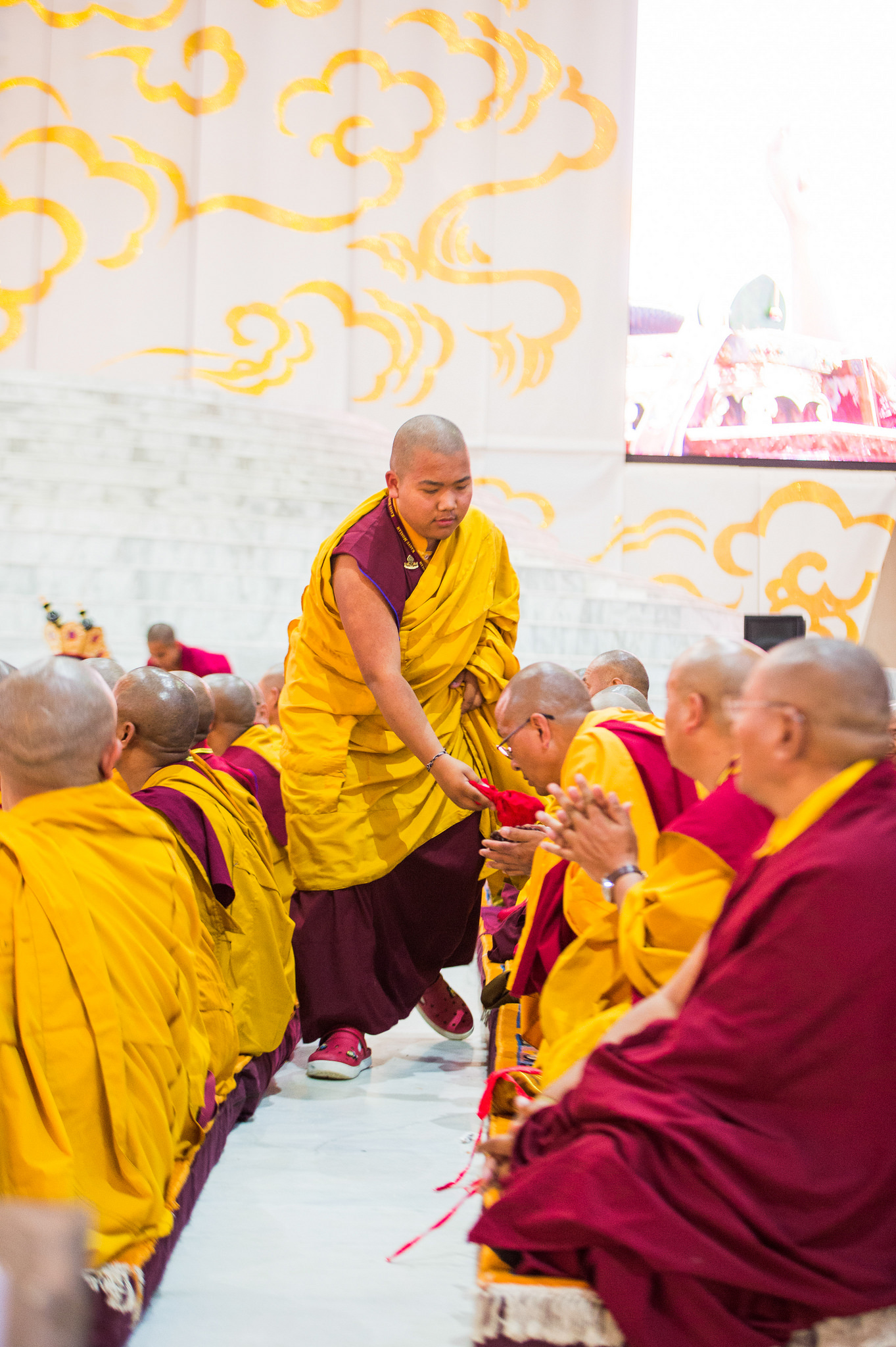
The siddhis were given to the foremost disciples first, Goshir Gyaltsap Rinpoche, Yongey Mingyur Rinpoche and Drupon Dechen Rinpoche.
Yongey Mingyur Rinpoche conferred the siddhis to the entire assembly of over 10,000 people.
Drupon Dechen Rinpoche, following Yongey Mongyur Rinpoche, bestowed the siddhis to all of the initiated students.
As the joy spreads following the great blessings, His Holiness reminded everyone that on the path of the bodhisattva we should never give up on sentient beings.